Ethiopian military and pro-government forces have recaptured Alula Aba Nega Airport in Mekelle, driving Tigray People’s Liberation Front fighters from the regional capital as an offensive launched on September 23 escalates the conflict across northern Ethiopia and triggers diplomatic ruptures.
Ethiopian federal forces and pro-government militias have advanced into Tigray, seizing Alula Aba Nega Airport roughly 10 kilometers east of Mekelle. The push follows a counter-offensive along three axes toward the regional capital after TPLF fighters launched attacks into neighbouring states on September 23. Local journalists and residents reported that rebel fighters and leaders were abandoning Mekelle, leaving government offices and police stations without security personnel as federal troops approached the city limits.
Frontline Movements Across Tigray, Afar, and Amhara
Combat has stretched across multiple fronts in northern Ethiopia, drawing in the Tigray Defense Forces, the Afar Revolutionary Democratic Unity Front, Fano fighters in Amhara, and federally aligned groups including the Tigray Peace Force. Early in the offensive, insurgent forces captured the strategic Afar towns of Abala and Erebti along secondary highways linked to the Ethio-Djibouti highway, which handles most of landlocked Ethiopia’s imports, including fuel. According to the Security Council Report, northern Ethiopia’s crisis is shaped by this broader regional volatility, where the civil war in Sudan opposing the Sudanese Armed Forces to the Rapid Support Forces is actively altering regional alliances.
Federal troops countered by pushing north from Alamata, capturing Korem and advancing along the A2 highway toward Maychew while engaging in heavy clashes involving artillery and mechanized units. A humanitarian source told France 24 that the TPLF had been entirely pushed out of Afar, while the Ethiopian military reported that about 270 Tigrayan fighters had been killed and more than 200 wounded around North Wollo in the Amhara region. Over the past week, intense battles have erupted across southern Tigray, Northern Amhara, and Western Afar, involving Tigrayan forces and their partners—including Amhara Fano units—on one side, and the Ethiopian National Defence Force alongside its allies on the other.
Drone Strikes Shake Addis Ababa Amid Diplomatic Expulsions
The conflict reached the national capital early Thursday when explosions rattled Addis Ababa near the military headquarters in the west and near a security base in the south. A source linked to the opposition fighters told Reuters that anti-government forces conducted a drone strike campaign.
In response to mounting security threats, the National Intelligence and Security Service imposed an indefinite ban on drone flights over the capital and surrounding areas. The unrest also triggered immediate diplomatic fallout. Simultaneously, Ethiopia declared Egyptian diplomatic staff member Ahmed Moharam Ahmed Soliman persona non grata, giving him 48 hours to depart without explanation, which prompted a reciprocal move by Cairo.
Communications Blackouts Hinder Humanitarian Access in Northern Ethiopia
Communications blackouts have left northern Ethiopia largely cut off from the outside world. Tesfaselassie Medhin, the Eparch of Adigrat, issued an urgent appeal for humanitarian access via a message supported by UNICEF, stating that banks are closed and local clergy are relying on divine providence to manage provisions. Pope Leo XIV expressed his deep concern over the renewed outbreak of hostilities during a General Audience, extending a heartfelt plea to all parties to choose the path of dialogue.

It is extremely urgent to facilitate humanitarian access, dialogue for peace and every form of dialogue. We are completely isolated, communications are blocked, and we have no contact with anyone.
Tesfaselassie Medhin, Eparch of Adigrat
International bodies have pressed for immediate intervention. Amnesty International urged the African Union’s Peace and Security Council to convene an emergency session, warning that authorities are repeating a documented pattern of disrupting communications to conceal atrocities. Meanwhile, the UN Security Council scheduled closed consultations to address the escalating crisis, with an official from the UN Department of Political and Peace-building Affairs expected to brief Council members during the session.
The African Union’s Peace and Security Council cannot wait for mass atrocities to unfold or for a surge in civilian casualties before placing Ethiopia, its host country, on the agenda.
Tigere Chagutah, Amnesty International’s Regional Director for East and Southern Africa
Keep reading

G7 Leaders Agree to Release 100 Million Barrels of Oil and Diesel
Group of Seven leaders agreed on Friday to release 100 million barrels of emergency oil and diesel reserves...
Ethiopian Federal Forces Capture Strategic Town of Alamata in Tigray
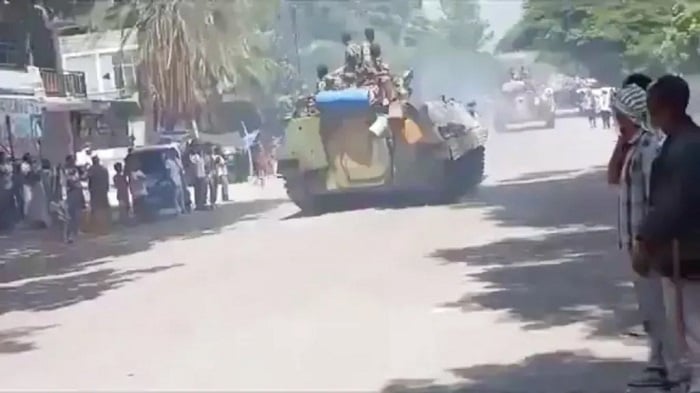
Federal forces in Ethiopia have captured the strategic town of Alamata in Tigray following three days of heavy...

Two Iranian Nationals Charged in Plot to Target Manchester Jewish Community
Two Iranian nationals from Salford and Liverpool have been charged with terrorism offences over an alleged bomb plot...

Mona McSharry Wins 100m Breaststroke Gold at World Cup in Baku
Ireland's Mona McSharry secured her first gold medal of the 2026 World Aquatics World Cup series on Friday,...