
Ethiopian Health Minister Dr Mekdes Daba Feyssa challenged all seven candidates for the World Health Organization’s next director-general to state three concrete offers for Africa during the Conference on Public Health in Africa on Monday, Health Policy Watch reported.
The questioning took place in front of African health ministers gathered for CPHIA. Each candidate answered with distinct priorities ranging from life expectancy targets to institutional reform and manufacturing sovereignty.
Sadikin pledges affordable health gains for Africans
Indonesia’s Budi Gunadi Sadikin pledged that Africans should live to at least 70 years old, live healthy lives, and achieve those gains “at an affordable price.” He offered to help ministries develop national health plans and budgets, engage finance ministries, and bring development banks and other funders to the table.
Neira focuses on facilities, workforce and manufacturing
Dr Maria Neira committed to improving healthcare facilities — particularly access to safe water, sanitation, and electricity including solar power. She promised to invest in Africa’s “talent” by improving health worker training and to align WHO resources “to make sure that you obtain this sovereignty that you are very proud and dreaming about it.”
She clarified that this means helping African manufacturers develop capacity to produce medical supplies, improve quality control, and develop markets for their products, adding a fourth pledge: climate-resilient health systems.
Al Kuwari emphasizes primary care and medicine access
Qatar’s Dr Hanan Al Kuwari summarized her platform as “your health; your health systems, and your future.” She aims to build primary healthcare for universal health coverage, create resilient systems with a trained workforce prepared for pandemics and climate risks, and establish country-based local manufacturing capacity. Her third target: medicines reaching Africa “as quickly as high-income countries.”
Song Li centers health systems and local production
China’s Dr Song Li made strengthening health systems, especially primary healthcare, her cornerstone. She advocated for local production of vaccines, diagnostics and therapeutics alongside technology transfer, pooled procurement and affordable prices. She also pledged support for country-led national health plans and the “three zeros” — zero home deliveries, zero preventable maternal deaths and zero unvaccinated children.
Tamamyan sets 2032 benchmarks for outbreaks and cancer survival
Armenia’s Dr Gevorg Tamamyan, nominated by Botswana, focused on stronger health systems. He said outbreaks such as Ebola should not threaten Africa by 2032 and that African children with cancer should reach the same survival rates as children in wealthy nations.
“In 2032, we should not say that in Africa, kids with cancer have survival 20-30% while in high-income countries, it’s 80-85%,” he said. “It’s about the systems. If we treat kids with cancer, it means we build the system.”
Balkhy promises performance and workforce diversity
Saudi Arabia’s Dr Hanan Balkhy offered “a WHO that Africa can count on” by making it “one of the most critical agencies on the ground that supports the agenda of African countries.” She said: “My promise to you is not headlines. My promise to you is performance.”
She undertook to ensure a more diverse WHO workforce, stronger accountability, and transparent job descriptions and selection processes for senior roles, noting she already serves seven African member states as WHO Eastern Mediterranean Regional Director.
Ethiopian Health Minister Dr Mekdes Daba Feyssa, appointed in February 2024, challenged all seven WHO director-general candidates at the Conference on Public Health in Africa on Monday to state three concrete offers for the continent. She previously served as president of the Ethiopian Obstetricians and Gynecologists Association and as team lead at the Deputy Director General Office of the World Health Organization in Geneva.
Dr Mekdes Daba Feyssa earned the FIGO Award in November 2021 for contributions to obstetrics and gynecology and is recognized by Ethiopia’s Ministry of Health as the country’s first female Family Planning and Reproductive Health sub-specialist. She completed a post-doctoral fellowship at WHO alongside her medical training at Hawassa University and Addis Ababa University.
Kluge proposes African deputy and pharmaceutical sovereignty
Belgium’s Dr Hans Henri Kluge offered institutional positions: an African Deputy Director General, making Africa CDC and the African Medicines Agency his “primary interlocutors in Africa and beyond,” and keeping four young people from Africa’s Anglophone, Francophone and Lusophone subregions in the Director-General’s Office at all times.
He also promised a “council of elders from Africa” and “pharmaceutical sovereignty,” enabling Africa to produce up to 20 of its most used essential medicines within six years. He described WHO as “providing science, standards and global outbreak coordination, with regional institutions such as Africa CDC leading regional health security.”

Mother and Son Jailed for Ballymena Race Riots
Tracy Kane, 51, stood in the dock at Antrim Crown Court and watched footage she had recorded herself:...

Epic Players Opens Neurodivergent Cast Curious Incident Tech Rehearsal
Epic Players opened a tech rehearsal of The Curious Incident of the Dog in the Night-Time this month...
Nvidia Reinstates Jensen Huang as CEO After Board Reversal, Shares Surge 30%
Board voted unanimously to reinstate Huang after receiving input from senior U.S. officials Nvidia shares surged roughly 30%...
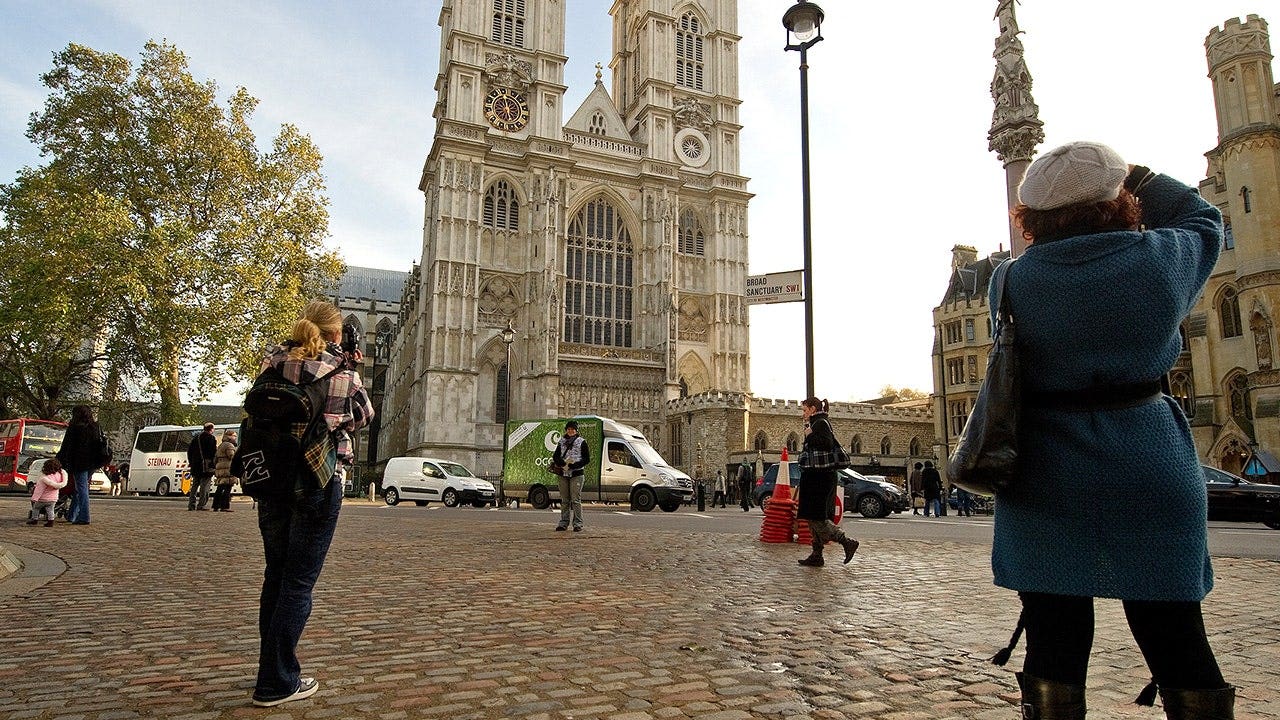
Study Suggests 11th-Century Abbot in Roman Sarcophagus, Identity Uncertain
A Roman sarcophagus unearthed at Westminster Abbey in 1869 held bones that predated the coffin by six centuries,...