
Seven candidates nominated by member states will compete to lead the World Health Organization when Tedros Adhanom Ghebreyesus steps down in August 2027.
African health ministers pressed each contender this week to name three concrete deliverables for the continent. The field ranges from former health ministers and sitting WHO regional directors to a paediatric oncologist nominated by Botswana who has never held a UN post.
Their pledges — made at the Conference on Public Health in Africa in Addis Ababa — reveal starkly different theories of how the agency should operate, where its money should come from, and whether its next leader needs deep institutional experience or a clean break from it.
- Ethiopia’s health minister asked all seven candidates to name three deliverables for Africa at CPHIA.
- Candidates include two WHO regional directors, three national ministers, a Chinese senior official, and an Armenian oncologist.
- The WHO Executive Board will shortlist three names by early February 2027; the World Health Assembly votes in May 2027.
- U.S. and Argentine withdrawals have left a 20 per cent budget gap the next director-general must close.
Outsider makes cancer survival the system test
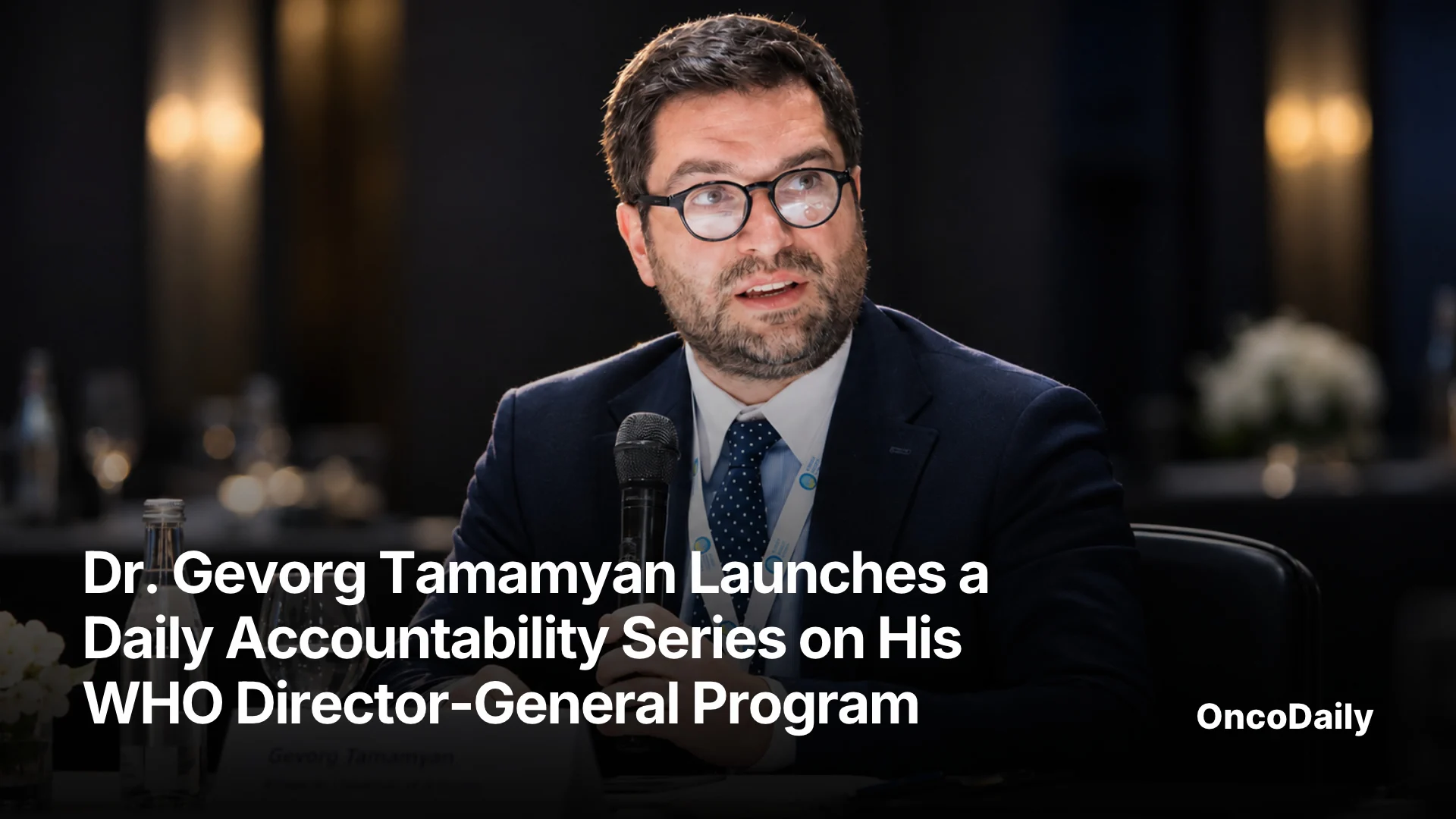
Armenian paediatric oncologist Gevorg Tamamyan, 39, is the youngest contender and the only one without UN experience. Nominated by Botswana rather than his own government, he frames his outsider status as the qualification itself. Human is human. It doesn’t matter where they come from, he told euronews from Geneva, arguing that equity must be structural, not rhetorical.
His platform, “Geography Must Not Decide Who Lives,” sets a 2032 deadline: African children with cancer should reach the 80–85 per cent survival rates seen in high-income countries, up from the 20–30 per cent he cited at CPHIA.

If we treat kids with cancer, it means we build the system, he said. He also pledged a daily accountability series — one programme commitment per day, with a named owner, a solution, and a deadline — to prevent the usual cycle where election promises are published and forgotten.
At the candidate forum in Geneva, Tamamyan was blunt on financing: If we show impact, the finances will come. On independence, he noted he cannot offer any member state a vote in return in another election.
But his lack of diplomatic track record is also the main critique: the Geneva Solutions report noted his outsider status could be his greatest weakness in a race where most contenders come from diplomatic heavyweights.
Regional directors run on institutional influence
Hanan Balkhy and Belgium’s Hans Henri Kluge both hold WHO regional director posts — Balkhy for the Eastern Mediterranean (EMRO), which includes seven African member states, and Kluge for Europe. Each argues that running a WHO region is the best preparation for running the whole agency.

Balkhy promised a WHO that Africa can count on and stressed performance over headlines: a more diverse workforce, transparent senior appointments, and stronger accountability. I am already serving this amazing continent, she said at CPHIA, pointing to her EMRO role. Geneva Solutions noted her Saudi nationality draws scrutiny over independence, as does Kluge’s European candidacy amid perceptions of a global north vision aligned with the pharma industry.
Kluge offered the most structural pledges: an African deputy director-general, four young African professionals in the DG’s office at all times, a “council of elders from Africa,” and a commitment to help Africa produce 20 of its most used essential medicines within six years.
He also positioned Africa CDC and the African Medicines Agency as his primary interlocutors in Africa and beyond. On financing, he highlighted progress absorbing a 20 per cent budget gap following Washington’s exit and proposed reorganising WHO around countries’ priorities, though with few operational details.
“No family should fall into poverty because one member falls ill,” Belgium's Hans Henri Kluge said.
Three candidates anchor Africa offers in primary care and local production
Qatar’s former health minister Hanan Mohammed Al Kuwari, Indonesia’s Budi Gunadi Sadikin, and China’s senior health official Li Song each anchored their Africa offers in primary health care and local production — but with different emphases.
Al Kuwari summarised her platform as your health; your health systems, and your future: universal primary care, pandemic-ready systems with local manufacturing, and medicines reaching Africa as quickly as high-income countries. She backed the gradual increase in assessed contributions pledged by member states and proposed a pooled fund for countries struggling to pay.
At a meeting with the African Union Commission chair, she stressed science and evidence as her guide on sexual and reproductive health — an issue Gulf states have sought to keep off the global agenda.
Sadikin, a banker-turned-minister, promised longer, healthier lives for Africans at an affordable price and offered to help ministries build budgets that unlock development-bank financing.
Li Song pledged strengthening primary care, local production of vaccines and diagnostics with technology transfer, pooled procurement, and support for country-led national plans — plus the three zeros: zero home deliveries, zero preventable maternal deaths, zero unvaccinated children. “WHO should serve all member states, not serve for one single country,” China's senior health official Li Song said.
Neira goes granular on facilities and workforce
María Neira, long-serving director of WHO’s Department of Environment, Climate Change and Health, took the most tactical approach: safe water, sanitation, and electricity — including solar — for health facilities; upgrading health-worker training; and aligning WHO resources to help African manufacturers produce medical supplies, improve quality control, and develop markets. She also added climate-resilient health systems as a fourth commitment.
Executive Board narrows field by February 2027 ahead of May election
The WHO Executive Board will narrow the field to three candidates by early February 2027. The World Health Assembly elects the next director-general in May 2027 for a five-year term starting August 2027.
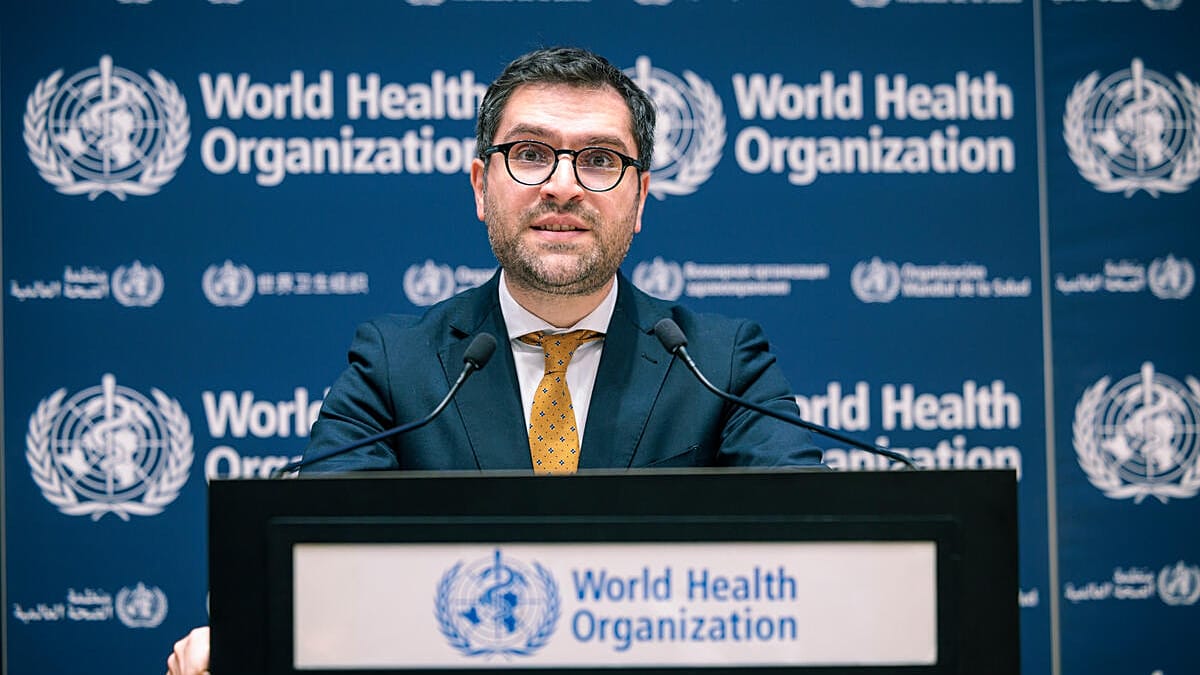
Whoever wins inherits an agency that lost its largest historical donor when the United States withdrew in 2026, followed by Argentina — both citing serious structural and operational shortcomings that undermined global trust and highlighted the urgent need for independent, science-based leadership in global health. Tamamyan has pledged to visit both countries in his first 100 days to bring them back to the table.
Armenian paediatric oncologist Gevorg Tamamyan, nominated by Botswana in September 2026 as a WHO Director-General candidate, anchors his outsider platform in two decades of global oncology leadership. As president of SIOP Asia (elected 2024) and president of the POEM Group, he directs an international network of paediatric cancer centres across the East and Mediterranean region, while co-chairing the St. Jude EURO Regional Advisory Committee to align regional care standards.
His structural-equity argument draws directly on academic and research roles that span high-income and resource-limited settings: a postdoctoral fellowship at the University of Texas MD Anderson Cancer Center (2014–2015), a visiting scientist appointment at Dana-Farber/Boston Children’s Cancer and Blood Disorders Center (2015), and global health delivery training at the Harvard T.H. Chan School of Public Health.
The candidates face their next public test when Hanan Balkhy, Indonesia’s Budi Gunadi Sadikin, and Spain’s María Neira appear before member states in Geneva. African ministers will be watching whether the promises made in Addis Ababa survive the scrutiny.

Burnham Secures EU Deals at 2026 Summit; Treasury Estimates 0.5% GDP Lift by 2040
Burnham, who took over from Keir Starmer in July, used the 2026 summit to secure deals on food...

UN Climate Talks Collapse Without Fossil Fuel Deal
United Nations climate talks in Antalya, Turkey, collapsed Sunday without a final agreement after two extra days of...

Iran Unveils New Missile City, Dual Launcher
Iran's Revolutionary Guard Corps unveiled a new underground missile facility and a dual liquid-fuel launcher on Saturday…

Russian Corvette Hit in Suspected Ukrainian Drone Strike at Benghazi, Officials Say
A Russian navy corvette erupted in flames at Benghazi naval base on Sunday after what Libyan officials and...