
Connecticut voters heading to the polls this Tuesday are weighing competing claims about the cost of living, specifically whether Governor Ned Lamont has increased taxes on the food residents put on their tables. A fact check by WFSB found that claims by Republican candidate Ryan Fazio regarding food tax hikes are misleading, as the vast majority of groceries remain untaxed, though a specific surcharge does apply to prepared meals and restaurant dining.
The dispute centers on a televised debate held October 22 in Rocky Hill, where Fazio accused Lamont of raising taxes on food, paychecks, and online purchases. While the claim carries a kernel of truth, the actual impact is narrow. Connecticut maintains a 6.35 percent sales tax, but a 1 percent surcharge is added specifically to prepared foods and drinks. This means restaurant meals, takeout, delivery, and supermarket deli items—like hot foods or salad bar selections—are taxed at a total of 7.35 percent. For the average shopper buying raw ingredients and standard groceries, there has been no tax increase, WFSB reported.
The $3 Billion Tax Dispute
The argument over food is part of a larger mathematical clash regarding the state’s fiscal trajectory. According to CT Insider, the Fazio campaign calculates that Lamont has raised state taxes by $3 billion over nearly eight years in office. Fazio’s tally suggests a cumulative net increase of $3.7 billion, which breaks down to more than $400 million in additional annual taxes.
Governor Lamont has flatly disputed these figures. During the debate, he countered by pointing to the legislative process, arguing that Senate Republicans failed to produce a viable alternative budget for the 2027 fiscal year. He characterized the GOP’s financial projections as a “political mentality” that lacks additive logic and would lead the state back into previous financial instability.
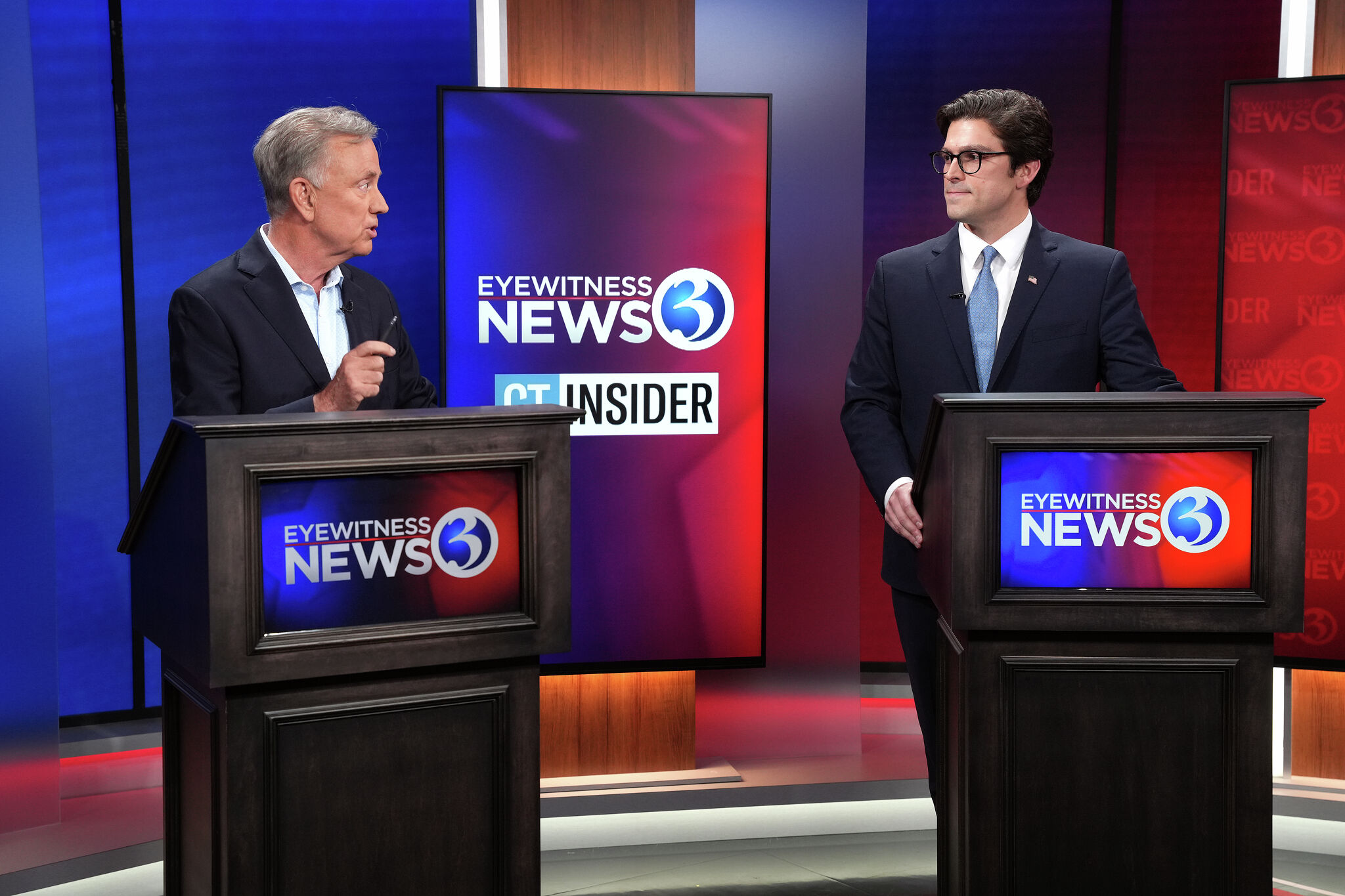
“The Republicans in the Senate couldn’t come up with a budget,” Lamont said. “They didn’t have a budget because their numbers don’t add up.”
This disagreement highlights a fundamental divide in how the candidates view “affordability.” For Fazio, the focus is on the cumulative tax burden. For Lamont, the focus is on the stability of the state budget and the failure of the opposition to provide a concrete fiscal roadmap.
Lamont Eliminated One of 60 Public Benefits Charges
Beyond the grocery aisle, the candidates sparred over the “public benefits charge” found on electric bills. These are state-mandated fees that fund renewable energy, energy efficiency, and assistance for low-income customers. Lamont claimed during the debate that he eliminated the charge, stating that the move avoided shifting costs onto taxpayers.
The reality is more nuanced. WFSB’s fact check revealed that Lamont eliminated only one of approximately 60 different charges that make up the public benefits framework. While this specific removal saved customers roughly $30 a month, the relief may be temporary. Because these costs are reconciled annually to ensure customers pay the actual cost of the programs, the charge could return depending on the next reconciliation cycle.
There is a deeper structural question here: who ultimately pays for these social and environmental programs? While the charge is currently off the electric bill, some legislators previously discussed moving the expense into the general state budget. If that happens, the cost doesn’t vanish; it simply shifts from a utility fee to a general tax burden.
The Gas Tax Holiday Tug-of-War
Fuel costs have become another flashpoint, particularly regarding the 25-cent-per-gallon excise tax. Fazio has criticized Lamont for refusing to support a gasoline tax holiday, echoing calls from House and Senate Republican leaders to suspend gas and diesel taxes through December 31. Republicans estimate that such a suspension would cost the state $92 million for gasoline and $36 million for diesel, proposing that the $128 million gap be covered by Special Transportation Fund reserves.
However, CT Insider notes that both candidates seemed to overlook Lamont’s own brief foray into this policy. In March, following U.S. and Israeli attacks on Iran on February 28, Lamont floated the idea of a tax holiday as gas prices neared $4 a gallon. He proposed diverting some of a $500 million energy rebate program to cover the estimated $40 million monthly cost of suspending both gas and diesel taxes.
The proposal never materialized. Lamont shelved the idea two weeks later, citing a lack of interest from legislators in both parties. With AAA Northeast reporting a state average of $4.33 per gallon as of Wednesday, the issue of immediate relief at the pump remains a central pillar of the GOP’s affordability argument.
As the election looms, the difference between a “misleading” claim and a “true” one often depends on whether the voter is looking at the total state budget or the specific line item on their weekly grocery receipt.
Worth a look

Maine Department of Labor reports 4,720 approved paid leave claims
Thousands of Maine workers are now accessing paid time off for childbirth, serious illness, and family care thanks...
Odenton MARC Station Breaks Ground on $56M Commuter Garage
Governor Wes Moore, County Executive Steuart Pittman, and regional transit leaders broke ground on October 28, 2026, for...

Frankfort vs. Independence: Win Streak Meets Stout Defense
The Class AA No. 1 Frankfort Falcons enter Friday night's matchup against the No. 6 Independence Patriots. With...

Masterson and Holscher battle over property tax relief in Kansas race
Kansas voters will decide between different approaches to addressing surging property taxes across the state. Republican gubernatorial nominee...