
Federal Judge Gregory Frizzell refused Wednesday to set aside his December 2025 judgment, blocking a $44 million settlement that Oklahoma and six poultry companies had asked him to approve.
The decision keeps a court-ordered cleanup plan in place for the Illinois River watershed and hands the next move to the Tenth Circuit Court of Appeals, where the companies and the state have pending appeals. Frizzell wrote that the settlement failed to protect the public interest, citing “nebulous oversight,” no cap on total poultry waste applied to land, and a seven-year term he deemed too short.
“Defendants have litigated this case in such a protracted manner as to monopolize the judicial resources of this court for years, often for the sole purpose of delay,” Frizzell wrote in his opinion.
“The parties’ failure to negotiate a settlement in the period between the Findings of Fact and Conclusions of Law and the Judgment suggests they ‘roll[ed] the dice’ and now seek to erase the result of that gamble through vacatur.”
“The state of Oklahoma negotiated in good faith with the poultry companies after family poultry farmers have faced decades of uncertainty with the state’s poultry case hanging over their heads,” said Stacy Simunek, president of the Oklahoma Farm Bureau.
“This negotiated settlement that the court denied would have provided a clear path forward to protect our shared natural resources, support family poultry producers and ensure the vibrance of local communities.”
A twenty-year fight over phosphorus
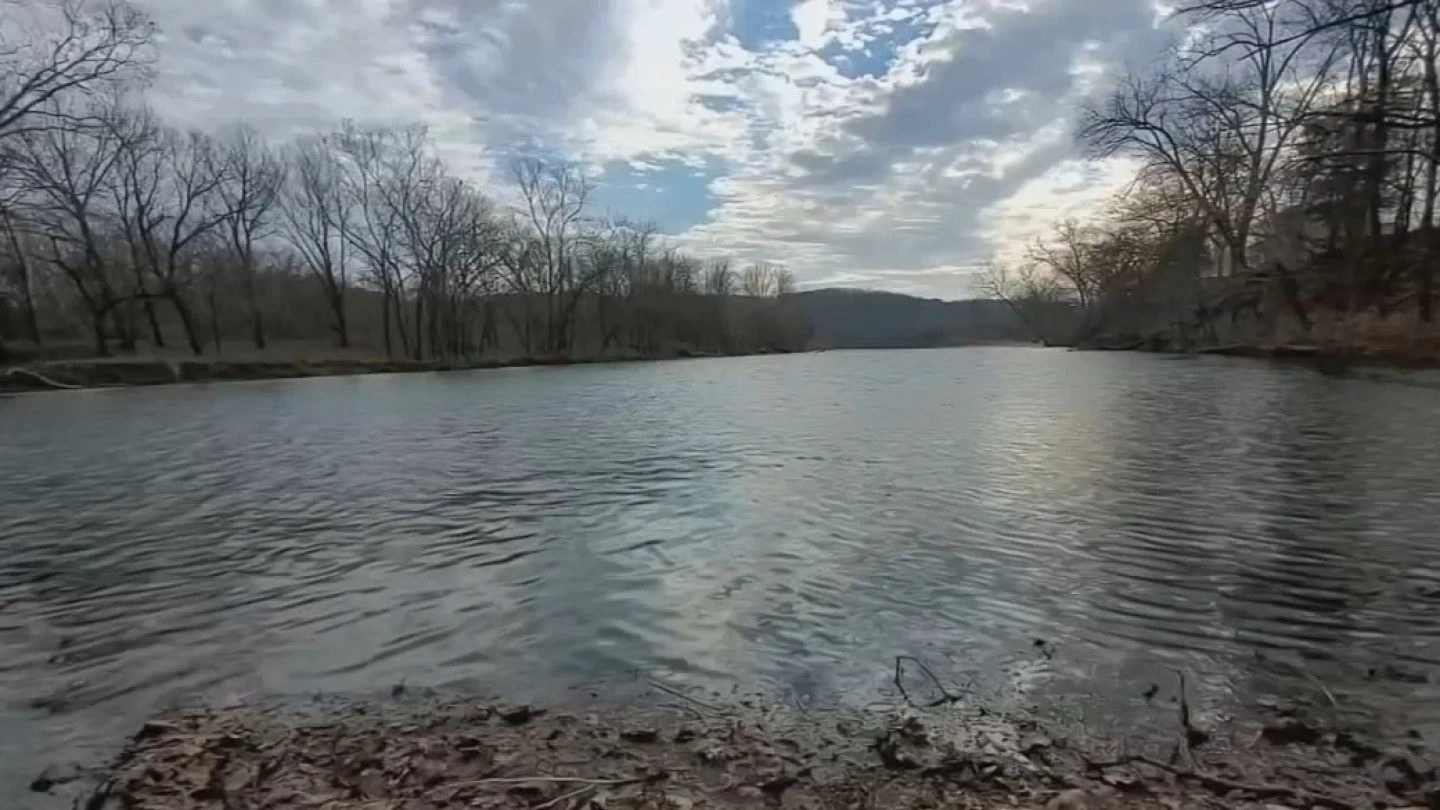
Oklahoma sued Tyson Foods, Cargill, George’s, Peterson Farms, Cal-Maine and Simmons Foods in 2005, alleging that poultry litter spread on fields in the Illinois River watershed had overloaded the river with phosphorus, fueling algae blooms that choke aquatic life and threaten drinking water for communities downstream. The case dragged through discovery, motions and a bench trial before Frizzell issued findings of fact and conclusions of law holding the companies liable.

Nearly three years passed between those findings and Frizzell’s December 2025 judgment, which ordered the companies to pay millions and change their waste-management practices. Only then did the defendants and the state reach a settlement agreement.
What the settlement offered — and what the judge rejected
The proposed deal would have created a $41.67 million Environmental Relief Fund administered by the Oklahoma Conservation Commission, plus $420,000 in penalties to the Oklahoma Department of Environmental Quality Revolving Fund and $1.9 million for an independent compliance monitor.
The companies also agreed to phase down the share of litter applied inside the watershed: 40 percent in years one and two, 30 percent in years three and four, and 20 percent in years five through seven. Exported litter could not be dumped in another nutrient-sensitive Oklahoma watershed.
Frizzell found three fatal flaws. The agreement lacked “guardrails” on how the relief fund would be spent. It set no absolute limit on the total volume of waste applied to land, only percentage reductions that could be outpaced by industry growth. And the seven-year sunset clause would dissolve the protections just as the river might begin to recover.
The Farm Bureau’s warning
Simunek framed the ruling as a blow to family farmers who have operated under legal uncertainty for two decades. The Farm Bureau argued the settlement would have given producers a predictable framework to stay in business while funding conservation practices many already adopt voluntarily.
The state’s attorney general, Gentner Drummond, had announced the settlement as a resolution of Oklahoma’s claims. His office and the poultry companies can now ask the Tenth Circuit to vacate Frizzell’s judgment and approve the deal, a path the appellate court has already signaled it wants the district court to consider first.
Frizzell was born in Wichita, Kansas, earned a B.A. from the University of Tulsa in 1981 and a J.D. from the University of Michigan Law School in 1984, then clerked for Judge Thomas Rutherford Brett on the same court he would later join.
After a decade in private practice and two years as general counsel to the Oklahoma Tax Commission, he served as a state district judge in Oklahoma’s 14th Judicial District from 1997 to 2007.
President George W. Bush nominated him to the federal bench in January 2007; he was confirmed the following month. Frizzell served as chief judge of the Northern District of Oklahoma from 2012 to 2019 and assumed senior status in March 2025, months before issuing the December 2025 judgment at issue in this case.
Tenth Circuit to decide cleanup order fate
Frizzell’s December 2025 cleanup order remains in effect. The Tenth Circuit will decide whether to uphold it, modify it, or vacate it in favor of the settlement. Oral arguments have not yet been scheduled.
Worth a look
Portland Drains Washington Park Reflecting Pool to Investigate Leak Losing 68,000 Gallons Daily
The reflecting pool at Washington Park is empty, drained this week so crews can hunt a leak losing...

9-1-1: Nashville Fall Finale Reveals Pharaoh as AJ Buckley
Viewers expected a cliffhanger; they got a face. The fall finale of "9-1-1: Nashville" finally pulled back the...

Undefeated Gophers debut in Charleston Classic vs. Oklahoma State
The undefeated Minnesota Golden Gophers will make their first appearance in the Shriners Children's Charleston Classic on Friday...

Former RI Priest James Silva, 86, Avoids Prison With Probation in Child Molestation Plea
Former Rhode Island priest James M. Silva, 86, pleaded no contest Thursday to molesting a boy in the...