
The logistical gap between Alaska’s imports and its subsistence reality
Forty miles northwest of Juneau, the highway simply ends. At the northernmost point of Glacier Highway, the pavement gives way to gravel, which eventually widens into a turnaround before the woods take over. This is what locals call “out the road,” a boundary that defines the isolation of Alaska’s capital. Because Juneau is not connected to the continental road network, nearly every piece of commercial produce arrives via water or air.
A persistent figure often dominates discussions regarding the state’s vulnerability to supply chain disruptions: the claim that Alaska imports 95% of the products it purchases. According to The Guardian, this statistic is frequently cited by the US Department of Agriculture (USDA), journalists, and policy researchers. However, the number is not without controversy. When the state established an office of food security in 2022, the governor’s announcement relied heavily on this figure, despite reports from KTOO suggesting that no one has ever traced that specific number to a verifiable source.
Meghan Stangeland, the southeast food systems manager at the Portland-based non-profit Ecotrust, argues that the 95% figure provides an incomplete picture of how Alaskans actually eat. While it may accurately reflect commercial transactions, it fails to account for the massive, non-economic food economy built on subsistence and community sharing.
“I always caveat that with: that is the product that we purchase. We share so much food, there’s so much subsistence. So it’s not 95% of the food that Alaskans are consuming,” Stangeland said.
The scale of this unofficial food economy is significant. The state’s most recent comprehensive estimate, dating back to 2014, shows that Alaskans consumed roughly 46 million pounds of wild food. In rural areas, this averages out to approximately 275 pounds per person annually.
Community sharing serves as a survival mechanism
In the 14 communities dotting the southeast region—all of which are reachable only by boat or plane—food is rarely an individual commodity. Ricardo Worl, a Tlingit man from Juneau and senior communications officer at the Sealaska Heritage Institute, explains that the regional economy is a mixed model where cash is often used to support the subsistence harvest rather than the other way around.

In these areas, subsistence is a matter of survival rather than just cultural tradition. If one person in a village is hungry, their relatives are likely hungry as well, because the culture is rooted in mutual provisioning. When a harvest occurs, the best portions, such as fish heads and bellies, are often set aside for elders and grandparents.
This reliance on sharing faces practical hurdles. Furthermore, not everyone in Juneau possesses the “privilege of a boat and a freezer”—the specialized equipment and storage space required to process and preserve large volumes of wild food.
The cultural imperative to share extends to formal ceremonies and community events. Worl notes that families do not simply process food for their own pantries; they set aside portions for ku.éex (ceremonies) or community parties, viewing the harvest as a collective responsibility.
The struggle to scale local agriculture
While subsistence provides a massive buffer, the commercial farming sector in Juneau faces steep environmental and economic obstacles. The geography is dominated by steep hillsides and acidic soil, making flat, non-marshy land a rarity. The growing season is also restricted to a narrow window between May and September, despite the long summer daylight hours.
Local producers are working to fill the gap, though the margins are thin. Joe Orsi, a retired research fishery biologist for the National Oceanic and Atmospheric Administration (NOAA), manages a third of an acre of terraced garden beds and a hoop house. Despite the intensive labor required to cultivate crops like garlic in such a specific environment, Orsi notes that his annual income from the land is approximately $20,000.
Other growers have turned to technology to bypass soil limitations. John Krapek, who started Juneau Greens in 2017 with 18 grow beds, has since expanded to 100 hydroponic beds. To survive the volatility of wholesale restaurant demand and competition from cheaper California produce, Krapek moved to a subscription model.

The limitations of current systems are also felt in federal nutrition programming. Stangeland points out that federal programs are typically designed for traditional farmers or retailers, leaving little room for consignment marketplaces like Ecotrust’s Salt and Soil program. To bypass these bureaucratic hurdles, the non-profit launched the Healthy Foods = Healthy Families initiative to more directly connect local food with those who cannot otherwise afford it.
Efforts to integrate food literacy into the next generation are also underway. Through Discovery Southeast, Joel Bos runs a school garden program that produces 1,300 pounds of food annually across two elementary schools. By following the process from seed to soup, students develop a sense of ownership over the harvest.
As the climate and supply chains continue to shift, the tension between the high cost of imported goods and the resilience of local, shared harvests remains the defining characteristic of Alaskan food security.

Touring the Early Christian Sites of Damascus: Following the Footsteps of Paul
Tracing the Apostle Paul Through a Resurgent Damascus In a recent column for the Biblical Archaeology Review, Mark...
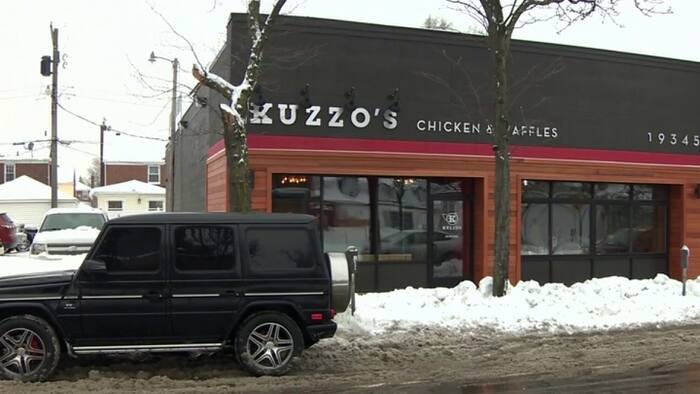
Kuzzo’s Chicken and Waffles owner Ronald Bartell arraigned for tax charges
The Tax Charges Facing a Detroit Culinary Staple For over a decade, Kuzzo’s Chicken and Waffles stood as...

PBC Runners of the Year Named: Nasrudin Mohamed and Gabrielle Jourdain
Augusta University Dominates Peach Belt Conference Cross Country Honors As the Peach Belt Conference (PBC) prepares for its...

Black Panther In Concert Live at Des Moines Civic Center
Marvel Studios’ Black Panther in Concert is coming to the Des Moines Civic Center, offering a live orchestral...