
One in 60 adults in Fiji are living with HIV, the government declared a national emergency earlier this year.
The crisis, fuelled initially by methamphetamine use, has now become a generalised epidemic.
Last year, 117 people in Fiji died from HIV-related illnesses, including 19 babies. Mother-to-child transmission remains a major concern.
Dr Priya Kaur, a paediatrician in Fiji, said the situation is devastating. “I’ve had women who are widowed, their husbands have died and they only found out on their husbands death certificates that their husbands were living with HIV. Then they got tested and they are positive, and their children are positive,” she told 1News.
The crisis is spreading beyond its initial group, with only one of the 59 babies infected last year having a mother who was a drug user. Less than a quarter of people with HIV in Fiji are accessing treatment, and only 39% know their status.
Pacific health groups in New Zealand are responding. At a Solomon Islands Language Week event in Ōpōtiki, the Pacific Island Community Trust Bay of Plenty (PICTBOP) offered free health checks and HIV education.
“It’s very important for community to come together, come with different cultures, different perspectives, different ideas, different languages but we have a common purpose,” said Beryl Razak, a migrant worker facilitator with the trust.
Trust chairperson Bevan Rokoia said the language weeks provide a safe space to discuss health issues. “Many of them are in rural areas and transportation is a barrier for them to come and access us so we do have the infrastructure and services to go and see them,” he said.
Of the more than 17,000 Recognised Seasonal Employer (RSE) workers in New Zealand for the 2025/26 season, 905 were from Fiji. Their mobility raises concerns about the potential spread of the virus.
“We are very concerned that there will be a significant impact here in New Zealand around HIV and other health settings too… across the Pacific you know people move around a lot,” said Liz Gibbs, chief executive of the Burnett Foundation Aotearoa.
“The majority of the new [HIV] cases are young. They’re 15 to 25-year-olds, so there is a real concern for us.”
Dr Kabwea Tiban, with PICTBOP, understands the concern. He said Fijian workers can be at risk when away from home. “They start to be involved with drinking and that sort of behaviour… they’re away from home, they get lonely, and when we talk to them we try to link them back to their families and their children.”
A pilot program is underway to address this. The Burnett Foundation is partnering with the Rodger Wright Harm Reduction Network, which sends mobile health clinics directly to RSE workers at their place of employment.
Specialist sexual health nurse Kay Eddy said the low-key approach helps overcome stigma. “We pitch it more as a general health check and help decrease a lot of the stigma,” she said.
The mobile clinics offer health education pamphlets in different Pacific languages.
“It went really smoothly the team met with some people one on one, they met with others in groups, they undertook the screening and there were just a lot of questions, a lot of interest, a lot of motivation to learn,” said Rodger Wright’s chief executive Philippa Jones.
However, more funding is needed to extend the service. “This sort of work requires dedicated specialist resources and the time to actually build trust within the community so if we are to make this sustainable then it requires dedicated funding and the ability to reach all the communities across Aotearoa that are hosting RSE workers,” Jones said.
On December 1, prevention of HIV, including screening, lab tests and medications, will become free for anyone living in New Zealand regardless of visa status. “Our communities are everywhere they have families, they have friends, they travel and so my concern is that they need to be educated and they need access to that education around HIV,” said Razak.
More on Fiji
Fiji has declared a national emergency as HIV cases surge, and is expanding access to testing, treatment and prevention services. Read more: https://t.co/Aqt8EviBcO pic.twitter.com/WnJd73qGU7
Worth a look

Union Cabinet Clears Delimitation Bill to Increase Lok Sabha Seats by 50 Percent
The Union Cabinet cleared a fresh delimitation bill on Saturday that proposes a 50 per cent increase in...

Indonesia Police Question Jokowi Ally Budi Arie in Treason Probe Linked to Prabowo
The National Police have questioned a close associate of former president Joko "Jokowi" Widodo in a treason probe...

Simulations Suggest Earth-Like Planet Beyond Neptune, Says Lykawka
New simulations suggest a hidden world, about twice Earth’s mass, could be lurking beyond Neptune, potentially explaining the...
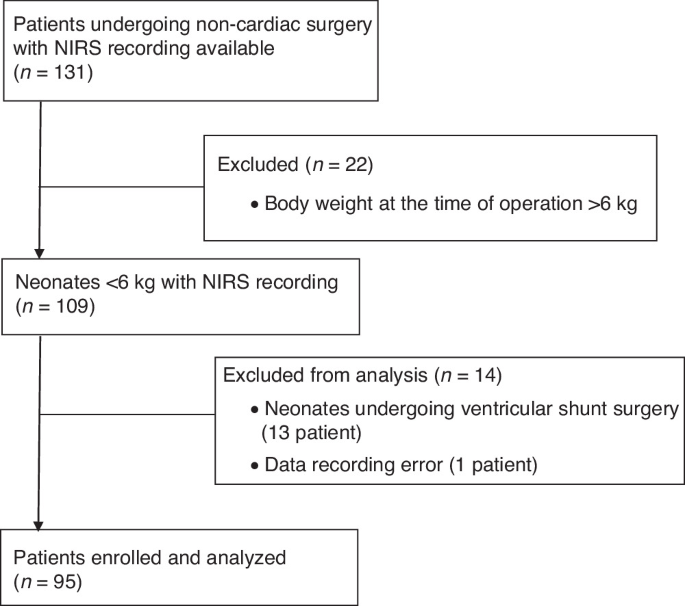
End-Tidal CO₂ Drops Track Severe Cerebral Desaturation in Neonates During Non-Cardiac Surgery
Cerebral desaturation occurred in nearly four of five infants undergoing non-cardiac surgery, and the deepest drops tracked closely...