
New simulations suggest a hidden world, about twice Earth’s mass, could be lurking beyond Neptune, potentially explaining the strange orbits of distant icy objects.
The hypothetical planet, nicknamed Planet X2, has not been observed, but computer models indicate its gravitational influence could account for populations of trans-Neptunian objects with unusual orbital paths, such as Sedna.
This finding, published in Monthly Notices of the Royal Astronomical Society, offers a fresh explanation for a long-standing solar system puzzle. For decades, astronomers have said that some icy bodies far beyond Neptune follow elongated or highly tilted orbits that cannot be easily explained by the known planets’ gravity alone.
The new research, led by Patryk Sofia Lykawka in Japan, pits two competing ideas against each other: temporary small planets from the solar system’s infancy and a single, persistent Earth-class planet.
A Planet X2 Emerges as the Best Explanation
The team ran extensive simulations of the solar system’s 4.5-billion-year history to test these hypotheses. The first scenario involved primordial planetary embryos, ranging from Mars to Earth in mass, which were thought to have been ejected early on. This model failed to consistently reproduce the observed distant populations, as the embryos were typically flung out of the solar system quickly, leaving little lasting impact.
In contrast, a stable planet with about 1.5 to two times Earth’s mass on an elongated orbit offered a much better fit. According to the preferred simulations, Planet X2 would circle the sun at a semimajor axis between 350 and 500 astronomical units, with its closest approach, or perihelion, around 200 AU.
Its orbit would be only modestly inclined relative to the planets’ orbital plane. Over billions of years, the planet’s gravity would have pushed some icy objects into distant, detached orbits while tilting the paths of others, matching the mix of strange orbits astronomers see today.
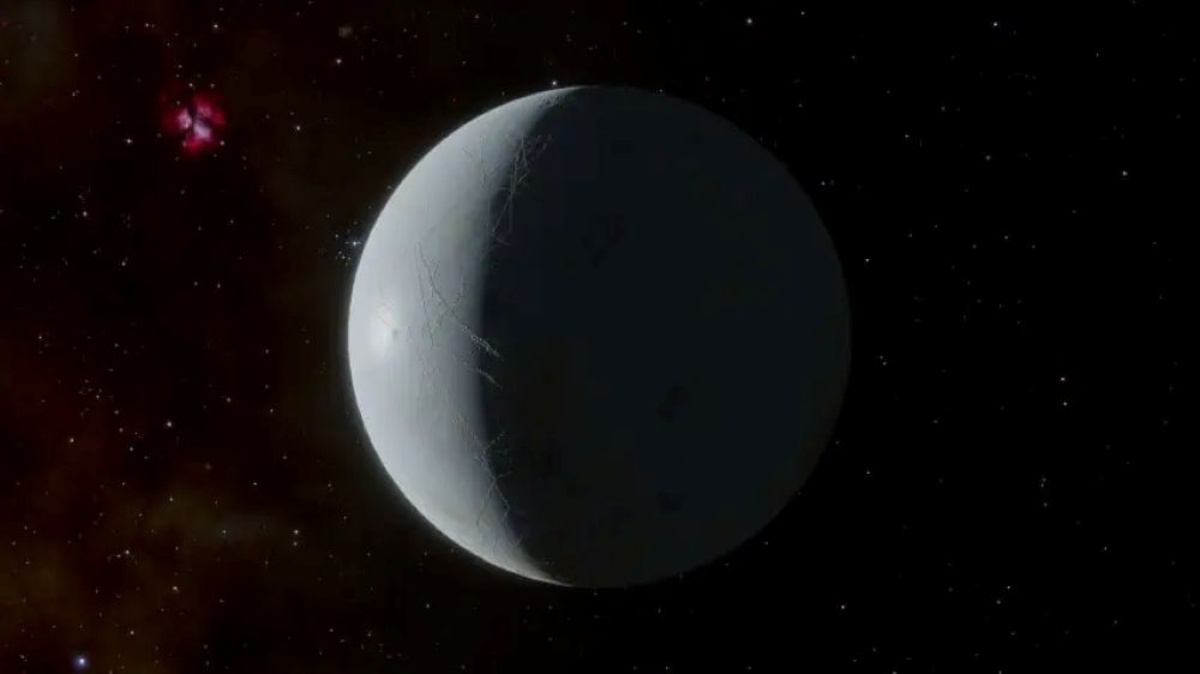
Imagine discovering, after decades of mapping our Solar System, that another planet has been hiding from us all this time.
Patryk Sofia Lykawka
A Shift in Planet Hunting
The study marks a significant departure from the more massive Planet Nine hypothesis, which has been a topic of intense debate for years. Planet Nine was first proposed in 2016 to explain the clustering of some distant objects and was estimated to be up to 10 times the mass of Earth.
Planet X2, on the other hand, is a smaller, less massive world, and it addresses a different set of orbital mysteries, such as the existence of detached objects like Sedna and highly inclined populations.
“Planet Nine, as proposed by Batygin & Brown, is bigger and more distant, and it was proposed as a solution to a different problem,” Bernardinelli said
Lykawka, who proposed an Earth-like planet in a 2023 study, suggested that a world so far from the Sun might require a new classification.
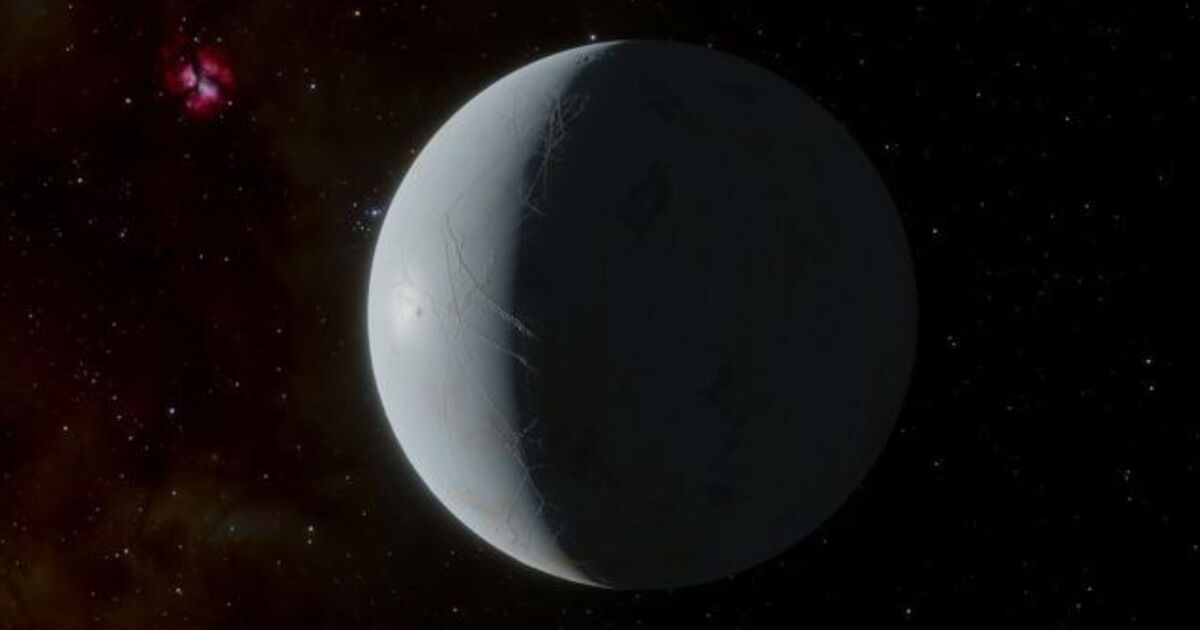
Scientists Weigh Competing Theories
All the models predicted too few detections of objects on larger orbits.
Team Modeled Orbits Beyond Neptune over Years
The planet nine hypothesis, which reviews the dynamics and predictions of a more massive proposed outer planet, remains distinct from PX2. The team modeled how the orbits of objects beyond Neptune changed over 4.5 billion years to arrive at their conclusion.
Earth’s Distant Echo Rewrote the Outer Ledger • Not Planet Nine. Planet X2. While everyone hunted a super-Earth, the real architect was closer, colder, and only twice Earth’s size. One 4.5-Gyr simulation with a low-inclination Earth-class body makes Sedna, 2012 VP113, and the… pic.twitter.com/8NJjSRAr1b
“But that doesn't mean that such a planet is guaranteed to exist!” Horner said.
The Next Step: Testing the Hypothesis
The real test will come from new observations, and astronomers have a powerful new tool at their disposal: the NSF-DOE Vera C. Rubin Observatory in Chile. Its decade-long Legacy Survey of Space and Time (LSST) is now mapping the sky with unmatched depth and area, making it ideal for detecting faint, distant objects.
The observatory’s data will allow scientists to see if the population of distant objects matches the specific patterns predicted by the Planet X2 model. If the hypothesis is correct, Rubin should find a larger number of detached TNOs at shallow inclinations.
The observatory has already proven its ability to find such objects, with the recent discovery of 2026 ED138, a large object beyond Pluto and a possible dwarf planet. While this object is not Planet X2, its discovery suggests the survey could probe the distant solar system.
The new model also faces scrutiny from the broader scientific community. Independent researcher Jaime Alvarado Montes, from Macquarie University’s Australian Astronomical Optics, described the X2 work as “a very robust theoretical study.”
As the Rubin Observatory continues its survey, the coming years will be critical for this hypothesis. The data will either strengthen the case for a hidden planet or push astronomers to consider other explanations for the solar system's distant mysteries. For now, Planet X2 remains a strong possibility, offering a testable prediction and a new chapter in the search for our solar system's hidden inhabitants.
“The comparisons between simulations and data show that we see some of the same features in both, but we need more data, primarily from LSST, to be able to determine for certain if this is the ideal solution,” Bernardinelli said
Related reading

Indonesia Police Question Jokowi Ally Budi Arie in Treason Probe Linked to Prabowo
The National Police have questioned a close associate of former president Joko "Jokowi" Widodo in a treason probe...
End-Tidal CO₂ Drops Track Severe Cerebral Desaturation in Neonates During Non-Cardiac Surgery
Cerebral desaturation occurred in nearly four of five infants undergoing non-cardiac surgery, and the deepest drops tracked closely...

DWP Confirms Cyber Incident Took Benefits Offline
The UK Department for Work and Pensions confirmed Saturday that a deliberate cyberattack forced it to take online...

Sotto Wants DICT to Crack Down on Abortion Drugs Sold Online
"These murderers should be charged immediately," Deputy Majority Floor Leader Joel Villanueva said Friday during Senate budget deliberations...