Florida’s new legislative leaders signaled Tuesday they will not rush a special session to implement Amendment 3, pushing the massive property tax overhaul to the regular session that begins March 2.
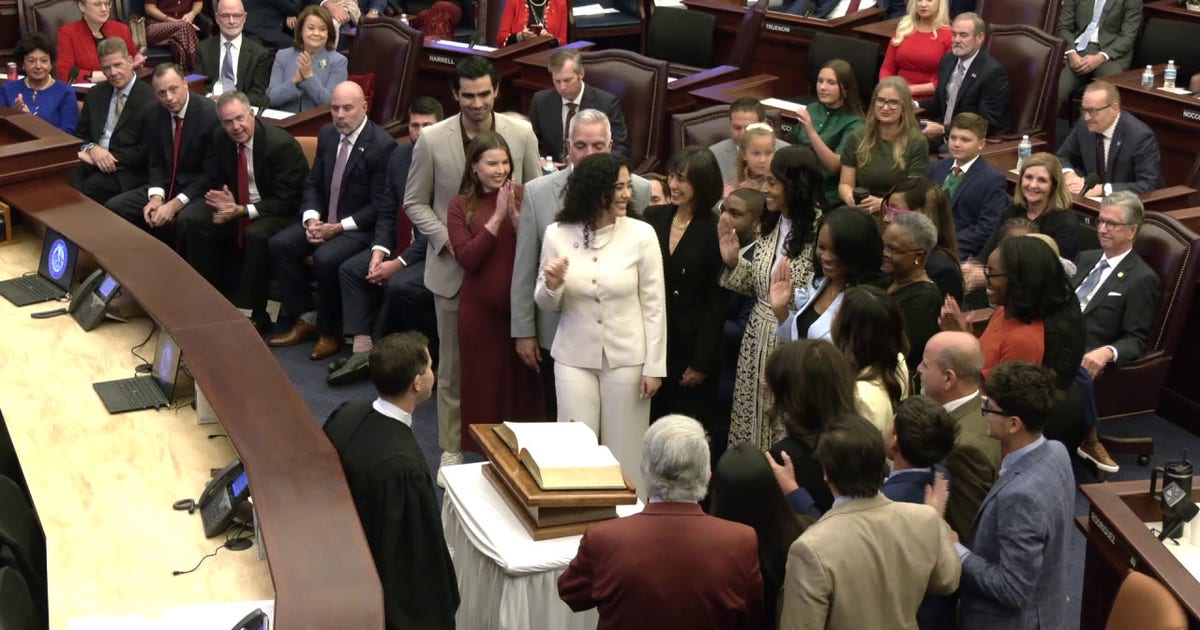
Hours after accepting the gavels, Senate President Jim Boyd and House Speaker Sam Garrison told reporters they anticipate handling the amendment during the 60-day regular session rather than convening before year’s end as outgoing Gov. Ron DeSantis has urged.
The measure, approved by nearly 62 percent of voters in the midterm elections, raises the homestead exemption from $50,000 to $150,000 in 2027 and $250,000 in 2028, though the increase does not apply to the school-tax portion of the bill.
“There’ll be a lot of concerns that we need to address and talk about,” Boyd said. “We believe there’s time later on, during the regular session, to talk about this and give it the time and the attention that it needs.”
The decision sets up a direct tension between the incoming legislative brass and a governor who leaves office Jan. 5. DeSantis said the day after the election he would work with lawmakers on a special session before his term ends, including discussion of state aid for rural counties with low tax bases that face acute revenue losses.
Governor-elect Byron Donalds said Monday nothing has been set regarding a special session or the implementation approach. “This is about making sure that the people of Florida are put first,” Donalds said. “Nobody else and no other consideration matters more than the people of this state.”
The fiscal cliff for local governments
State economists project the amendment will save property owners and cost local governments $4.93 billion in the next fiscal year, rising to nearly $12 billion within five years. The measure also caps annual assessment increases on non-homestead properties — commercial real estate, rental units, and second homes — at 5 percent, down from the current 10 percent.
Boyd acknowledged concern about shifting the tax burden, a warning critics raised during the campaign: that cities and counties will recoup lost revenue through higher user fees and sales taxes. Garrison emphasized that local governments have until their fiscal year starts Oct. 1 to plan, while the state fiscal year begins July 1.
“There’s always something you can do to clean up and make sure that the things align,” Garrison said. “But what we want to be able to do is give our counties and municipalities, our sheriffs, our police departments and our fire departments and public works departments all have some certainties as to what the future holds, and what they can and can’t do.”
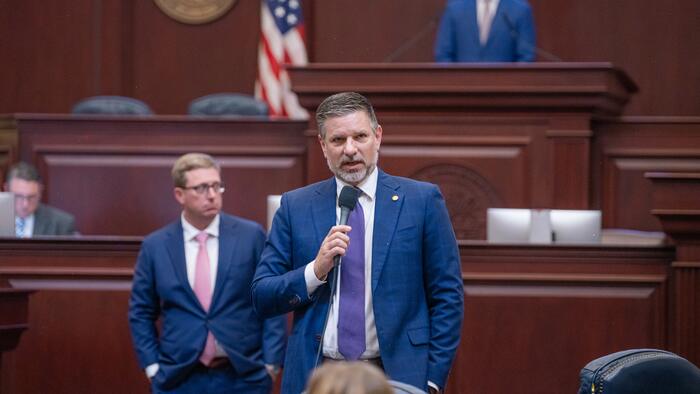
“It is our responsibility to ensure that we do not replace one broken system of local taxation with another,” Garrison said in his opening floor remarks. “This is the biggest fiscal challenge our State has faced in a generation, it will be difficult, very difficult, it will take time, but failure is not an option.”
Lawmakers will hold committee hearings in the months before the March 2 session. Boyd said they are looking to hear more from both DeSantis and Donalds. “We want to be judicious in our process,” Boyd said. “Because it is a big deal and it needs to be done right.”
Residency rules and rural pain
The amendment includes a five-year waiting period for anyone who has not established permanent Florida residency by Dec. 31, a provision designed to prevent a sudden influx of new claimants. DeSantis has specifically flagged rural areas with low tax bases as vulnerable, suggesting state backfill money may be necessary — a conversation that would require legislative action before he leaves office.
For now, the new leadership’s message is procedural patience over executive urgency. The gavels have barely settled, and the state’s largest tax rewrite in a generation is already a test of who drives the agenda in Tallahassee.
- Three Storms Target New England Over Next Week, Including Thanksgiving
- NHC: 60% Chance Tropical System Forms Off Southeast Coast This Weekend
- NM GOP Outgoing Committee to Elect Leaders on Jan. 9, 2027 (world-today-news.com)
- Florida pastor convicted over assassination of Haitian president (newsarchyuk.com)
Three Storms Target New England Over Next Week, Including Thanksgiving
Three storms are lining up to hit New England over the next week, with the first arriving late...

NHC: 60% Chance Tropical System Forms Off Southeast Coast This Weekend
Forecasters give a 60 percent chance that a subtropical or tropical system will form off the Southeast coast...

Walz Proclaims Rural Health Day as MDH Warns of Provider Gaps, Medicaid Cuts
Governor Tim Walz proclaimed Thursday as Rural Health Day in Minnesota, a designation that arrived alongside a stark...

BU Women’s Hockey Set for Home-and-Home Series vs. Providence
Boston University women's hockey heads to Providence on Friday for an 11 a.m. faceoff at Schneider Arena before...