
New Jersey currently stands at a crossroads regarding educational funding, as a new, state-wide federal scholarship program creates a growing divide between the Garden State and its neighbor across the Hudson.
In a column, a former educator and principal argues that Governor Mikie Sherrill should act to opt New Jersey into the Federal Scholarship Tax Credit (FSTC) before the window for participation closes on January 1, 2027.
The FSTC program, which begins in 2027, allows individual taxpayers to receive a federal tax credit of up to $1,700 for qualifying cash contributions made to scholarship-granting organizations. These organizations then use the funds to provide scholarships for eligible K–12 students. Under the federal framework, these resources can cover a wide range of expenses, including academic tutoring, special-needs services, books, computers, and after-school programs.
The author of the column notes that while New York Governor Kathy Hochul has already opted into the program, New Jersey families remain on the sidelines.
The argument highlights that nearly 1.6 million children attend school across New Jersey, and the program could provide essential supplemental resources that families may currently struggle to afford. For students in districts like Newark or Jersey City, the author suggests that such assistance could be the deciding factor in staying on track for graduation.
The column addresses the role of private and religious education, noting the author’s background in Catholic schooling. However, the piece emphasizes that the benefits of the FSTC extend beyond private institutions, citing data from the Pew Research Center that shows 86 percent of Catholic teenagers attend public schools.
Barbara Dolan, Superintendent of Catholic Schools for the Archdiocese of Newark, said: “This scholarship program will assist parents, regardless of where their children attend school.”
Governor Mikie Sherrill’s 2026 budget dedicated $12.4 billion to K–12 school aid and $1.4 billion to preschool education. The column contends that while these investments are substantial, opting into the FSTC would serve as a logical next step to provide families with additional tools without displacing existing state support.
The proposal faces a distinct timeline. To participate, states must take formal action before the January 1, 2027, deadline. The author urges parents, teachers, and community members to contact the governor’s office and state legislators to advocate for inclusion in the program.
By joining the FSTC, the author argues, New Jersey could ensure its students are not placed at a competitive disadvantage compared to children in neighboring states that have already opted in.
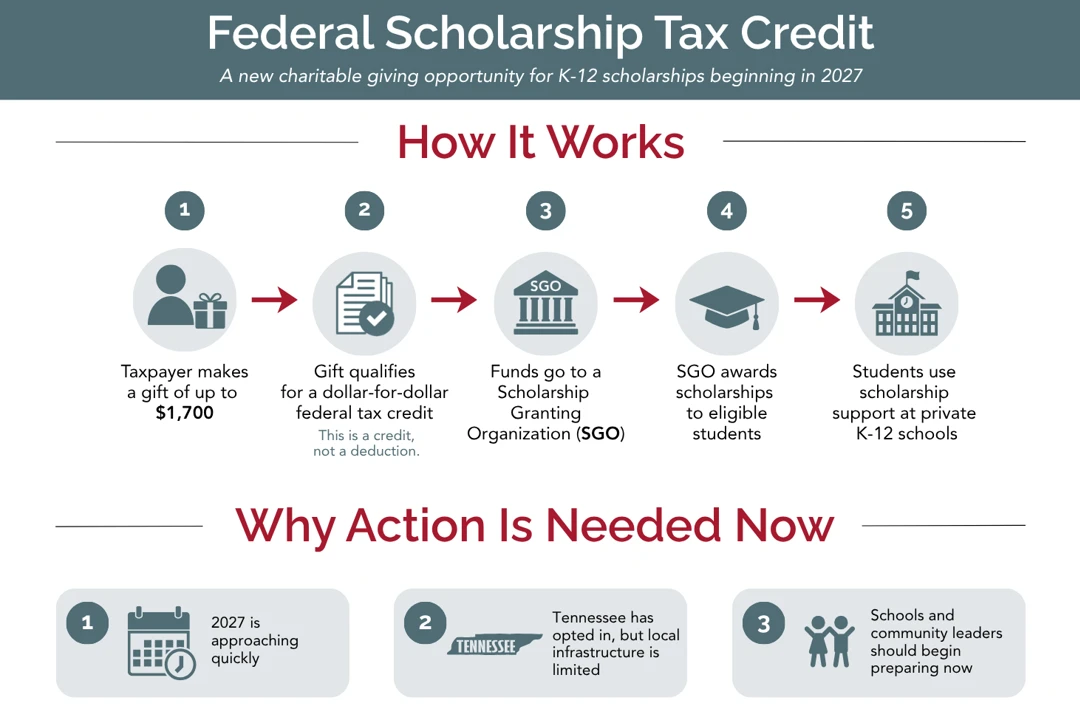
The column concludes with a personal appeal, framing the decision as an opportunity to broaden access to educational support. Whether the state administration will prioritize this specific federal tax credit mechanism remains to be seen, but the push for participation reflects an ongoing debate over how best to distribute resources to students in need of academic assistance outside the standard school day.
Keep reading

Minto Communities’ Latitude Margaritaville Hilton Head Inspired by Jimmy Buffett
Latitude Margaritaville Hilton Head by Minto Communities is inspired by the legendary music and lifestyle of singer, songwriter,...
Mayor Parker and PICA React to Philadelphia’s Record Moody’s Upgrade
Moody's Ratings upgraded the City of Philadelphia to Aa3, marking the first time the city has achieved a...

Union Strong Slate Wins Providence Teachers Union Executive Board Election
One thousand three members cast ballots on Monday returning the Union Strong slate to power in a rerun...

Oregon Ducks Beat Michigan 31-7 as Freshmen Take on Major Roles
Freshman safety Jett Washington broke up a fourth-down pass on Nov. 14, 2026, helping the No. 16 Oregon...