
Former Army Official Enters Guilty Plea in Hawaii Defense Contract Scheme
Carlos Duque, a former civilian U.S. Army official, pleaded guilty in federal court to participating in a bribery, conspiracy, and major fraud scheme that siphoned over $3 million from the military through rigged technology contracts in the Pacific. According to court filings in the U.S. District Court in Honolulu, Duque admitted to accepting approximately $55,000 in bribe payments as part of a broader five-year, $1.25 million arrangement spanning from January 2021 to October 2022. The U.S. Department of Justice detailed how Duque steered subcontracts for a U.S. Army technology innovation lab to two defense contractors, Brian Kent and Leonard Pick, while helping them artificially inflate costs to cover the kickbacks.

As Associate Attorney General Stanley E. Woodward, Jr., stated in the U.S. Department of Justice announcement, Fraud that deprives the U.S. military of free and fair competition for government contracts harms us all.
Woodward added, Because of prosecutions like this, Americans can trust that the Department of War and its warfighters maintain the highest standards of integrity. We expect their contractors to do the same.
Acting Deputy Assistant Attorney General Daniel W. Glad of the Justice Department’s Antitrust Division stated, Those who commit fraud on defense contracts don’t just steal from the military or taxpayers; they threaten the public’s confidence in government institutions and hurt our military readiness.
Glad also noted, The Justice Department’s Procurement Collusion Strike Force will detect and prosecute those who, like the defendant, attempt to illegally take advantage of government programs.
U.S. Attorney Ken Sorenson for the District of Hawaii stated, Americans work hard for their money and have every right to expect that their tax dollars will not be diverted through fraudulent schemes,
and added, Those who obtain military contracts through fraud undermine both the public trust and the mission of our armed forces, and they will be held accountable.
Acting Special Agent in Charge Ryan C. Noonan of the FBI Honolulu Field Office stated, Public corruption — especially when it compromises our nation’s military readiness — undermines trust in the institutions built to protect our country,
and noted, This guilty plea reflects the strength of our partnerships in safeguarding government resources and ensuring integrity in the procurement process. Together with our federal law enforcement and military investigative partners, the FBI remains committed to identifying and stopping schemes that undermine fair competition and betray the public’s trust.
James R. Ives, heading the Defense Criminal Investigative Service (DCIS) — which functions as the criminal investigative division within the Department of Defense Office of Inspector General — offered a statement, while further remarks were provided by DCIS, alongside Acting Special Agent in Charge Ryan Gregg of the U.S. General Services Administration (GSA) Office of Inspector General (OIG) Western Investigations Division, who noted Public officials are entrusted with a duty to the American people and government service is not an opportunity for personal enrichment at taxpayer expense.
Ives added, DCIS and our partners remain steadfast in aggressively investigating those who undermine fair and open competition in government contracting.
Acting Special Agent in Charge Ryan Gregg of U.S. General Services Administration (GSA) Office of Inspector General (OIG) Western Investigations Division stated, Bribery corrupts the federal contracting process that supports the critical missions of our military and civilian agencies,
and stated, GSA OIG special agents will continue to aggressively pursue fraud alongside our law enforcement partners and the Department of Justice.
How the Procurement Scheme Unraveled
Investigators traced the illegal payments through a web of inflated billing practices. Duque instructed prime contractors to award critical subcontracts directly to Kent and Pick’s company. In return for ensuring the firm secured the work tied to the Pacific innovation lab, Duque collected cash installments totaling $55,000, and as part of his plea agreement, he agreed to forfeit $55,166.70.

While Duque has admitted his role, his co-conspirators face a separate judicial timeline. A federal grand jury returned an indictment against Brian Kent and Leonard Pick in May 2026. Brian Kent, et al., No. 26-CR-00047-DKW, is scheduled to begin on May 17, 2027, before Chief United States District Judge Derrick K. Watson in the District of Hawaii. Federal prosecutors emphasize that indictments are only allegations and that Kent and Pick remain presumed innocent until proven guilty.
Legal Penalties and Enforcement Scrutiny
Duque now awaits sentencing on three distinct felony counts. Under the conspiracy charge, he faces up to five years in prison and a $250,000 fine. Punishments for the bribery offense encompass a maximum term of fifteen years of imprisonment, a monetary penalty reaching $250,000—or up to triple the financial value of the bribe itself—alongside a permanent bar against holding any federal office of trust, profit, or honor. The major fraud count carries a maximum prison sentence of 10 years and a fine of up to $5,000,000.
A federal district court judge will determine the final sentence after weighing the U.S. Sentencing Guidelines, statutory factors, and potential restitution owed to the Department of War. The prosecution is being handled by the Antitrust Division’s San Francisco Office and the U.S. Attorney’s Office for the District of Hawaii, with help from federal military and investigative agencies. Federal authorities point out that this investigation was propelled by the Procurement Collusion Strike Force, an interagency effort targeting antitrust crimes and bid-rigging across government spending programs. Whistleblowers with knowledge of similar procurement fraud can report tips through the Procurement Collusion Strike Force.

Ames Man Timothy Cooke Charged With Attempted Murder After Stabbing
An Ames man faces an attempted murder charge after a Tuesday evening stabbing at a west Ames grocery...

Tori Jo Granado Arrested for Alleged Offender Registration Violations
A Highway 75 Traffic Stop and a Missing Registration Just before 9:30 a.m. on October 26, 2026, a...
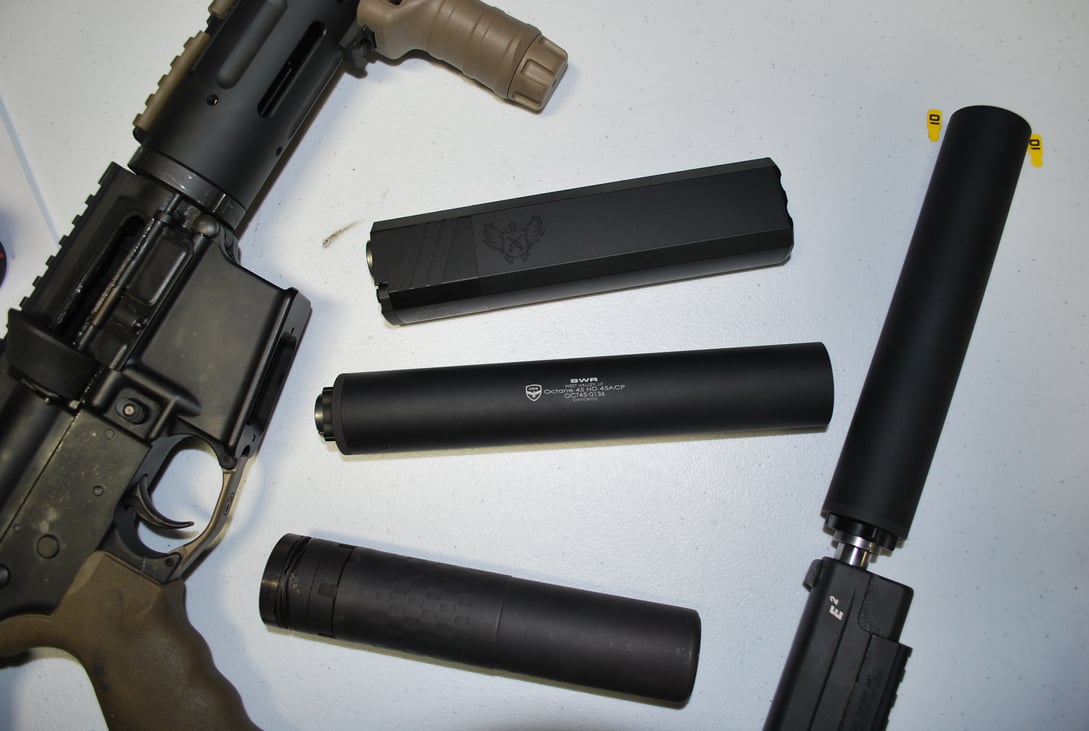
Seventh Circuit hears challenge to Illinois firearm suppressor ban
A six-decade-old ban on firearm silencers in Illinois faced a skeptical judicial panel on Wednesday as attorneys argued...
188-Acre University of Idaho Campus Named Historic District
A Century of Architecture Earns Idaho Its First Historic University District For generations, students walking the shaded pathways...