
The visual cost of the American roadside
For most drivers, the view from the highway is a blur of lawyer advertisements, dispensary promotions, and dealership sales pitches.
In a recent column for The Boston Globe, Billy Baker argues that this experience—what he describes as a form of visual pollution—has become so normalized that we rarely stop to ask why we tolerate it. While four U.S. states have successfully outlawed the practice, the rest of the country remains locked in a battle with a massive, multibillion-dollar outdoor advertising industry.
The argument for a cleaner horizon rests on the experience of travelers in Hawaii, Alaska, Vermont, and Maine. These four states have banned off-premises billboards, opting instead for scenery over sales. According to John Kessler, chair of the Travel Information Council in Vermont, the impact on public perception is immediate.
“When we do surveys of travelers and ask: ‘What did you like most about Vermont?’, the most common number one is the lack of billboards,” Kessler told The Globe. Vermont enacted its ban in 1968, with Maine following suit a decade later.
The industry behind the blight
Taking on the billboard industry is no small feat. Mark Falzone, president of the nonprofit Scenic America, explains that the market is dominated by three major players: Lamar, Clear Channel, and OUTFRONT Media. Together, these companies control approximately 250,000 billboards across the country.
Falzone, who previously served as a state representative for Saugus, Massachusetts, notes that his organization is frequently contacted by people who, having traveled through billboard-free states, return home to realize the extent of the clutter in their own communities.
The industry’s primary trade group, the Out of Home Advertising Association of America (OAAA), maintains that these signs do not negatively impact drivers. However, critics argue that the rise of digital displays has only increased the danger.
“Their very purpose is to take eyes off the road and onto their product, but they claim it’s not a distraction,” Falzone said. When reached for comment by The Globe, an OAAA spokesperson declined to provide an argument in favor of the industry’s practices.
Can a ban actually work?
For communities looking to follow the lead of states that have already cleared their skylines, the process often involves a legal mechanism known as amortization.
This allows municipalities to phase out existing billboards over a set number of years, with the revenue generated during that period serving as compensation for the owners. While the industry has historically fought to block this practice, proponents of billboard bans argue it is the most effective path toward removal.
Other regions have taken different approaches to curb the growth of outdoor advertising. In 2007, Oregon implemented a cap on the number of billboards allowed, requiring an existing structure to be removed before a new one can be erected.
Meanwhile, international cities have taken more aggressive stances; according to reports, approximately 700 communities worldwide have enacted bans, including São Paulo, Brazil, in 2006, and Grenoble, France, in 2014. Domestically, San Francisco has moved to restrict new signage and tighten regulations on existing outdoor advertisements.
The nuance of place
Despite the push for cleaner environments, not all advertising is viewed as a detriment. Falzone suggests that in specific, iconic locations, large-scale signage contributes to “placemaking”—the idea that a traveler should know exactly where they are upon arrival.
He points to Times Square and the Las Vegas Strip as examples of environments where such displays are part of the local identity. Even in Saugus, Massachusetts, the remnants of roadside Americana are considered a part of the town’s character.
The challenge, therefore, lies in distinguishing between regional identity and the homogenization of American geography. As Baker notes in his column, the ubiquity of billboards often makes every town look like “Anyplace USA.”
For those who have reached the same realization as the states that banned them, the question is no longer just about aesthetics—it is about reclaiming the commons from an industry that has, for too long, claimed the right to our attention.
Keep reading
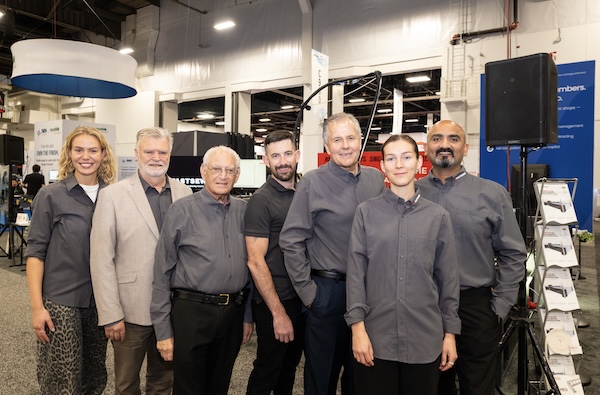
FASTSEWN Expands to Americas with New Milwaukee Subsidiary
Mikkelsen Innovation ApS has officially planted its flag in the United States, launching its new subsidiary, FASTSEWN, Inc.,...

Richmond Heights to Launch 911 Nurse Hotline to Reduce Non-Emergency Calls
Starting in early 2027, residents calling 911 in Richmond Heights will encounter a shift in how their emergencies...

Voters Gather at Elon Musk’s Austin Compound to Celebrate Historic Midterm Election Results
Dozens of voters gathered at the gates of Elon Musk’s Austin compound on November 8, 2026, to celebrate...

Texas Rattlers Win Last Chance Game to Secure Spot in 2026 PBR Teams Championship Finals
Texas Rattlers Secure Final Spot in 2026 PBR Teams Championship The No. 5 Texas Rattlers punched their ticket...