
Five original Freedom Riders arrived in New Orleans on Wednesday, completing a journey that was violently interrupted 65 years ago. The homecoming, marked by a brass band and dancing Zulu members at Xavier University of Louisiana, serves as a living bridge between the 1961 struggle against Jim Crow laws and the current fight for voting access ahead of the November 3 election.
In 1961, a multiracial group of student activists traveled from Washington D.C. through the Deep South to challenge segregation on interstate buses. As reported, that original trip never actually reached New Orleans by bus. After facing racial protests and violence in Alabama, the riders were forced to board a plane to reach the city. For 65 years, the final leg of that journey remained an unfinished chapter of American history.
A mirror of the past
The 2026 expedition mirrored the 1961 route, taking the riders through the same towns and past the same historical markers. The group grew from the five original icons to a total of 67 people, including faith leaders, community organizers, and relatives of the original activists. The effort was a coalition of several organizations, including Vote Common Good, Greater Things, Faith Out Loud, Americans United, and Red Letter Christians.
For the original riders, the experience was one of stark contrast. Kredelle Petway-Philips described the trip as “expansive” and “heartwarming,” noting the visible difference in the landscape compared to the 1960s. Stephen Thomas highlighted the depth of the original struggle, noting that a third of the population was “totally unrepresented and therefore abused largely… discriminated against.”
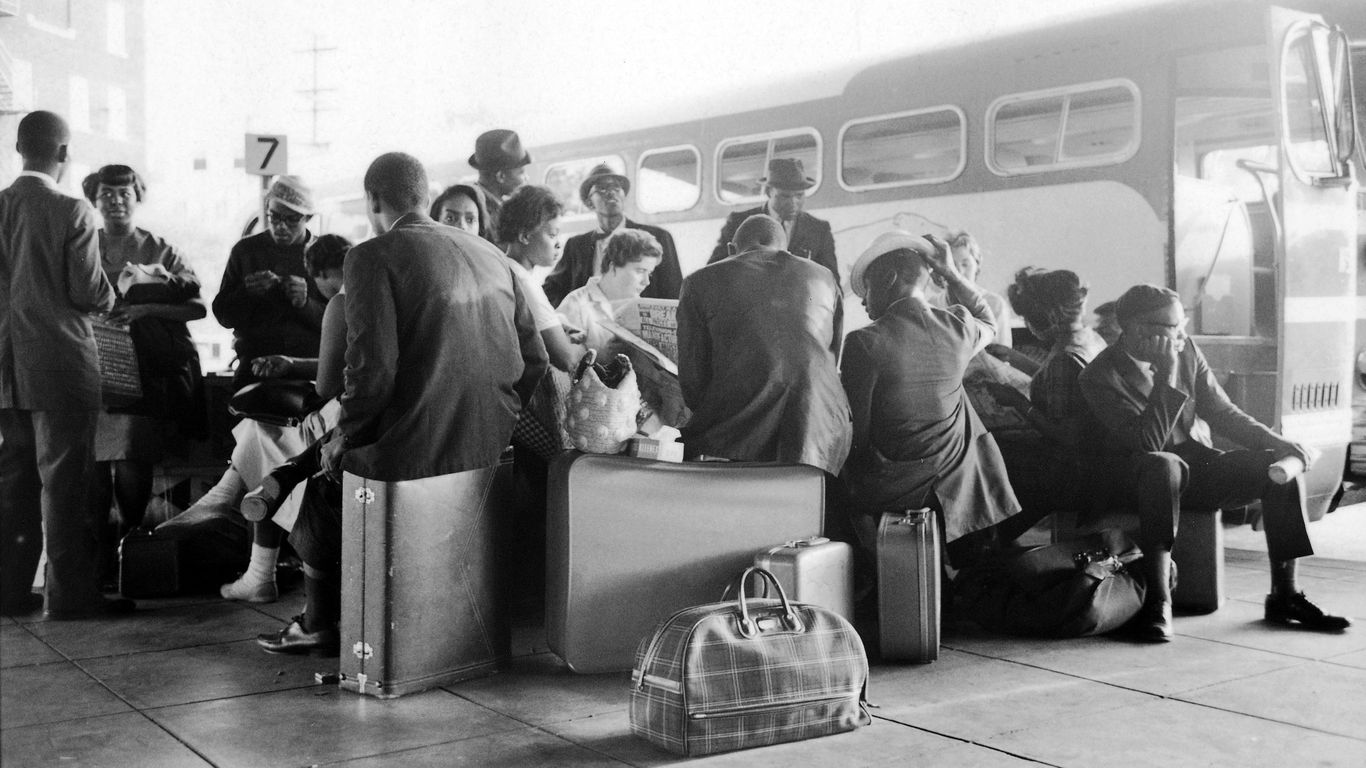
The riders didn’t just visit monuments; they sought out the next generation. A key stop included the TEP Center on St. Claude Avenue, a museum and community center located at the former McDonogh 19. That school was desegregated by elementary students, including Leona Tate, who founded the center in 2022. Tate emphasized that having “living, breathing stewards of history” is essential for students to grasp the reality of the Civil Rights Era.
Xavier University as a sanctuary
The choice of Xavier University as the finish line is deeply rooted in the original 1961 trauma. When the original Freedom Riders finally arrived in New Orleans by plane in 1961, they found themselves in a city where they could not find a safe place to stay. They eventually found refuge on Xavier’s campus, bedding down on the third floor of St. Michael’s Residence Hall.
Wednesday’s program at Xavier’s St. Katharine Drexel Chapel included a tribute to Jerome “Big Duck” Smith, a civil rights activist and Freedom Rider who passed away earlier this fall. For current students, the presence of the riders transformed a history lesson into a personal encounter. Sophomore Kailin Cunningham noted that students “wouldn’t be here” without the sacrifices of the riders, while senior Victoria Akins described the experience as a reminder that there is still “work to be done.”
The modern stakes of the voting booth
The timing of this ride—ending just days before the November 3 election—was intentional. The organizers are framing the 2026 trip not as a victory lap, but as a mobilization effort. Ride organizer Pastor Doug Pagitt told WJLA in Washington, D.C., that the 1961 challenges directly paved the way for the Voting Rights Act of 1965, and that the same urgency to protect the ballot exists today.
The “so what” of this journey lies in the current legal climate. This endeavor comes in the wake of the Supreme Court decision in Louisiana v. Callais, which narrowed the scope of the Voting Rights Act. For civil rights advocates, this ruling was a significant blow, as it cleared the path for sweeping redistricting efforts by Republicans in Louisiana.
“It definitely lets me know that there is work to be done, and I’m going to be apart of the history makers.”
— Victoria Akins, Xavier University Senior
The trip sought to bridge the gap between the physical violence of 1961 and the systemic hurdles of 2026.
As the riders finally stepped off the bus in New Orleans, they closed a loop that had remained open for six and a half decades.
Worth a look
Boston Ballet Highlights Hidden Details in Mikko Nissinen’s Nutcracker
Boston Ballet is presenting a 48-performance run of Mikko Nissinen's The Nutcracker featuring the full Company, Boston Ballet...
Baltimore City Worker Killed in Crossfire: Layla Bailey Remembered
Forty-six rounds of ammunition were fired into a crowd at a West Baltimore gas station on the night...

Maine Senate Race: Collins and Jackson Clash Over Energy Costs
Maine’s Senate race between incumbent Republican Susan Collins and Democrat Troy Jackson has centered on a clash over...

Louisiana Amendment 4: Lifetime Term Limits for Governors
Louisiana voters will decide on November 3, 2026, whether to establish a lifetime limit on the number of...