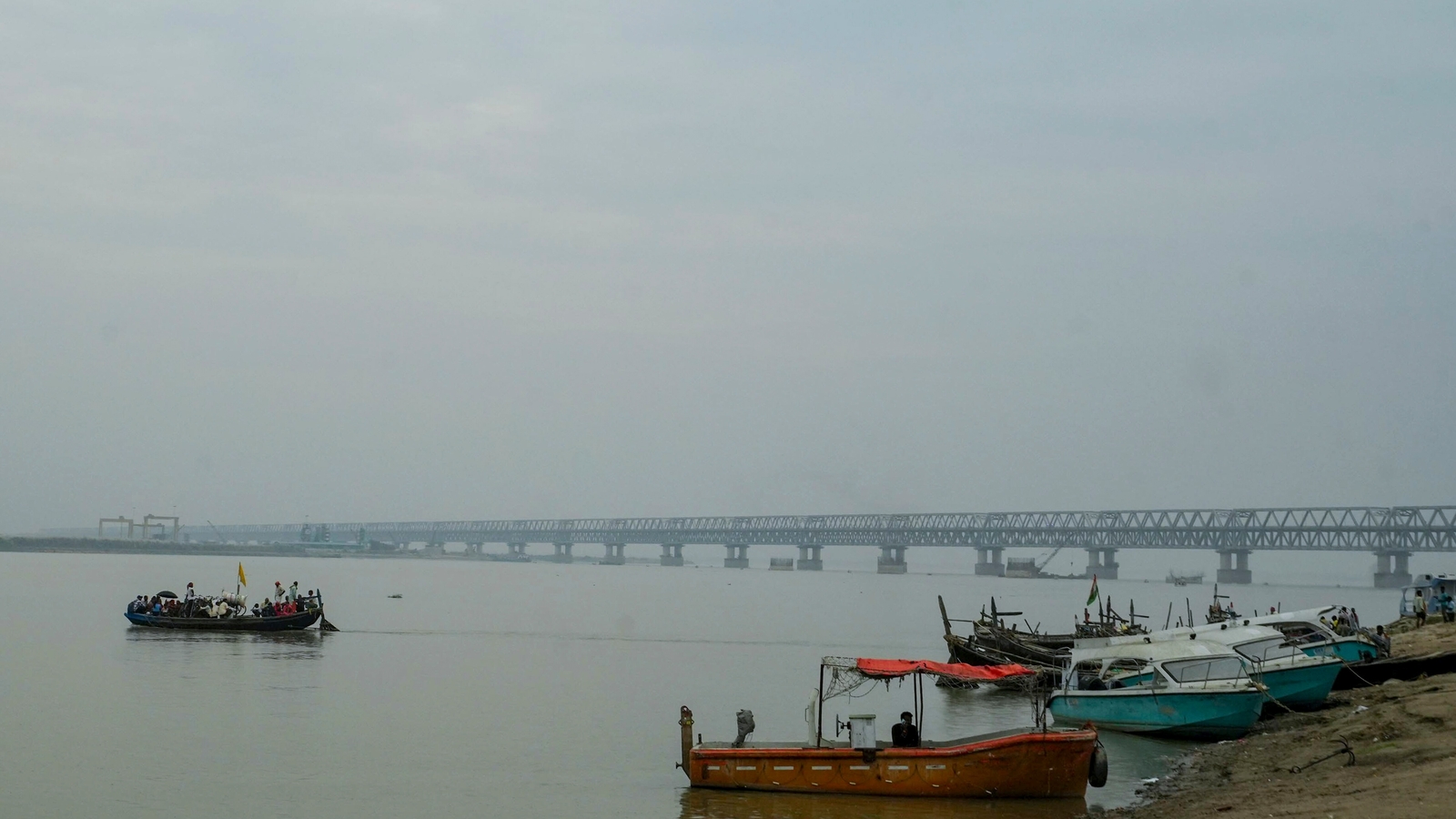
The 1996 Ganga Water Sharing Treaty expires on December 12, and with less than a month left, formal renewal talks have not started, Hindustan Times reported Thursday.
Bangladesh’s water resources minister Shahiduddin Chowdhury Anee wrote to his Indian counterpart C.R. Patil on November 17 asking for negotiations, but New Delhi has not agreed to a schedule.
A four-member delegation from India’s Ministry of Jal Shakti will travel to Dhaka November 21-23 for the 91st meeting of the Joint Committee, but treaty extension is not on the agenda, ThePrint reported. “This is a regular meeting of the Joint Committee (JC) to finalise their annual report,” a government source told ThePrint.
“Without a treaty, India will not have any commitment to release water at regular intervals and that might pose a major problem for Bangladesh’s agriculture sector, economy as well as ecology,” former National River Conservation Commission chairman Manjur Ahmed Chowdhury told The Hindu. He urged both governments to approve a three-to-five-year rollover while a revised pact is negotiated.
The Numbers Behind the Sharing Formula
The treaty governs lean-season flows at Farakka Barrage from January 1 through May 31. If availability is 70,000 cusecs or less, the water is split 50-50. Between 70,000 and 75,000 cusecs, Bangladesh receives 35,000 cusecs and India takes the rest. Above 75,000 cusecs, India receives 40,000 cusecs and Bangladesh gets the remainder, The New Indian Express noted. During the critical March 11–May 10 window, each country is guaranteed 35,000 cusecs in alternating ten-day blocks.

Data from the Joint Rivers Commission show Bangladesh’s guarantee periods raise the Farakka release by an average of 5,234 cusecs compared with India’s periods, The Daily Star reported.
Political Friction Stalls Technical Work
India and Bangladesh agreed to form a joint technical committee during Sheikh Hasina’s June 2024 visit, weeks before her ouster, Hindustan Times reported. “There was a clear commitment from the Indian side. But after that, the interim government in Bangladesh did nothing for almost two years to take forward the process,” a person familiar with the talks said.
New Delhi also points out that Prime Minister Tarique Rahman has not accepted two invitations to visit India this year, and that proposals on train services, land-border trade, customs and border management remain pending. “They cannot cherry pick one issue. Talks should go ahead on all the pending issues,” a second person said.
Bangladesh’s letter, sent through diplomatic channels, said Dhaka had constituted a high-level technical committee and requested details of India’s team. ThePrint added that the Joint Committee was set up in 1972 to oversee all shared river issues.
India’s Leverage Calculus
The Centre plans to let the treaty lapse while continuing current allocations as a goodwill gesture, The New Indian Express reported. Officials said India wants renegotiated terms to secure an extra 5,000 cusecs for Kolkata port dredging, NTPC thermal plants and salinity control in the Sundarbans.
“We were asked to give all technical details and presentations associated with the Treaty and how India can get more water during the lean season,” an official told The New Indian Express. West Bengal and Bihar officials have long argued the existing pact hurts their interests.
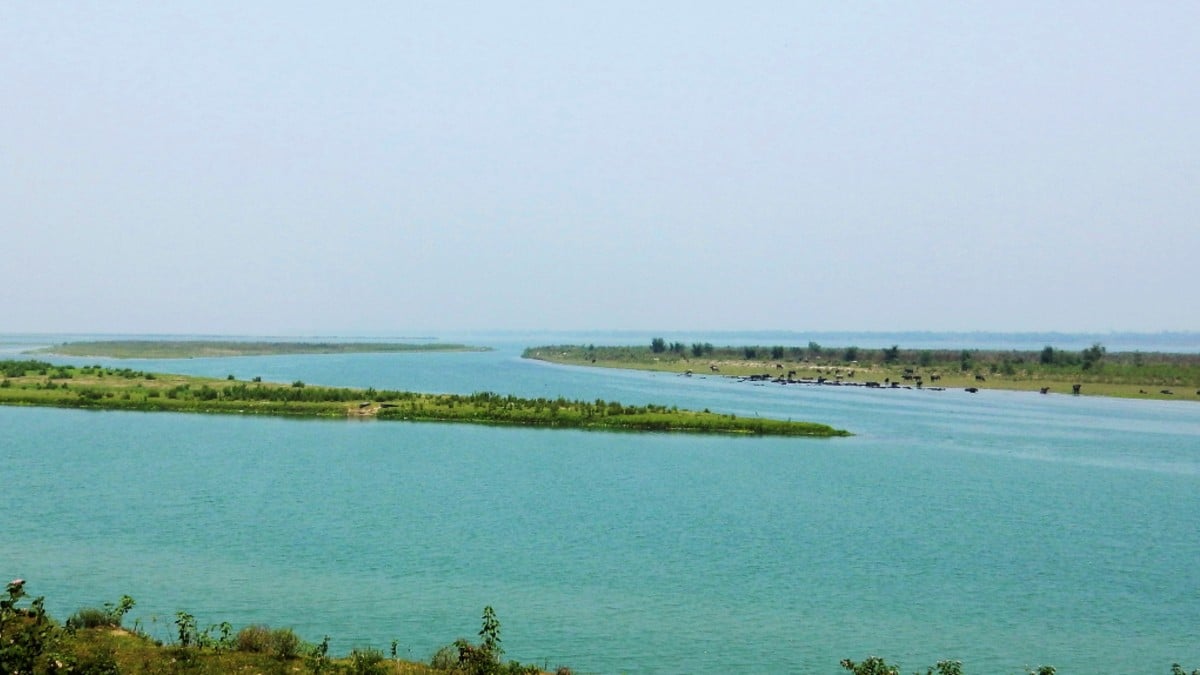
JD(U) leader Sanjay Kumar Jha posted in August: “Thirty years of data show the serious ecological and economic costs of the 1996 Indo-Bangladesh Ganga Water Treaty, particularly for Bihar… it must not be renewed in its present form.” The Economic Times noted the treaty lacks the neutral arbitration mechanism found in the Indus Waters Treaty; disputes escalate only through the Joint Rivers Commission to government-level consultations.
China’s growing involvement in Bangladesh’s Teesta river plans adds another strategic layer, The New Indian Express reported. The Economic Times said a Rahman visit to New Delhi could reset bilateral ties alongside the water issue.
The Farakka Barrage spans the Ganga in West Bengal’s Murshidabad district, roughly 18 kilometres from the Bangladesh border near Shibganj. Construction began in 1962 and finished in 1970 at a cost of 1 billion dollars; it became operational on 21 April 1975.
The structure is about 2,304 metres long and diverts water through a 42-kilometre feeder canal to the Bhagirathi-Hooghly River to flush sediment from Kolkata harbour. After commissioning, the diverted flow proved insufficient for satisfactory sediment removal, and high backwaters have caused regular bank collapses and displacement upstream.
The 91st Joint Committee meeting convenes in Dhaka on November 21.
Related reading

Study Links Nighttime Light Exposure to Heart Remodeling and Higher Cardiovascular Risk
A massive new study links the glow in your bedroom to measurable, potentially dangerous changes in the heart’s...

Jakarta Mural Festival Turns City Walls into Canvases of Hope
"We hope Jakarta will become an increasingly inclusive city, where technology supports people's needs, provides equal access and...

Chester Zoo Captures Rare Rhino Calf’s First Steps on CCTV
CCTV footage from Chester Zoo recorded a greater one-horned rhinoceros taking its first steps less than an hour...

New Blood Test Measures Late-Stage Tau Tangles in Alzheimer’s
The assay, developed by researchers at Banner Sun Health Research Institute with Alamar Biosciences, detects a fragment of...