Washington Voters Back Millionaires Tax, Blue Wave Fuels Governor’s Hopes for Federal Action
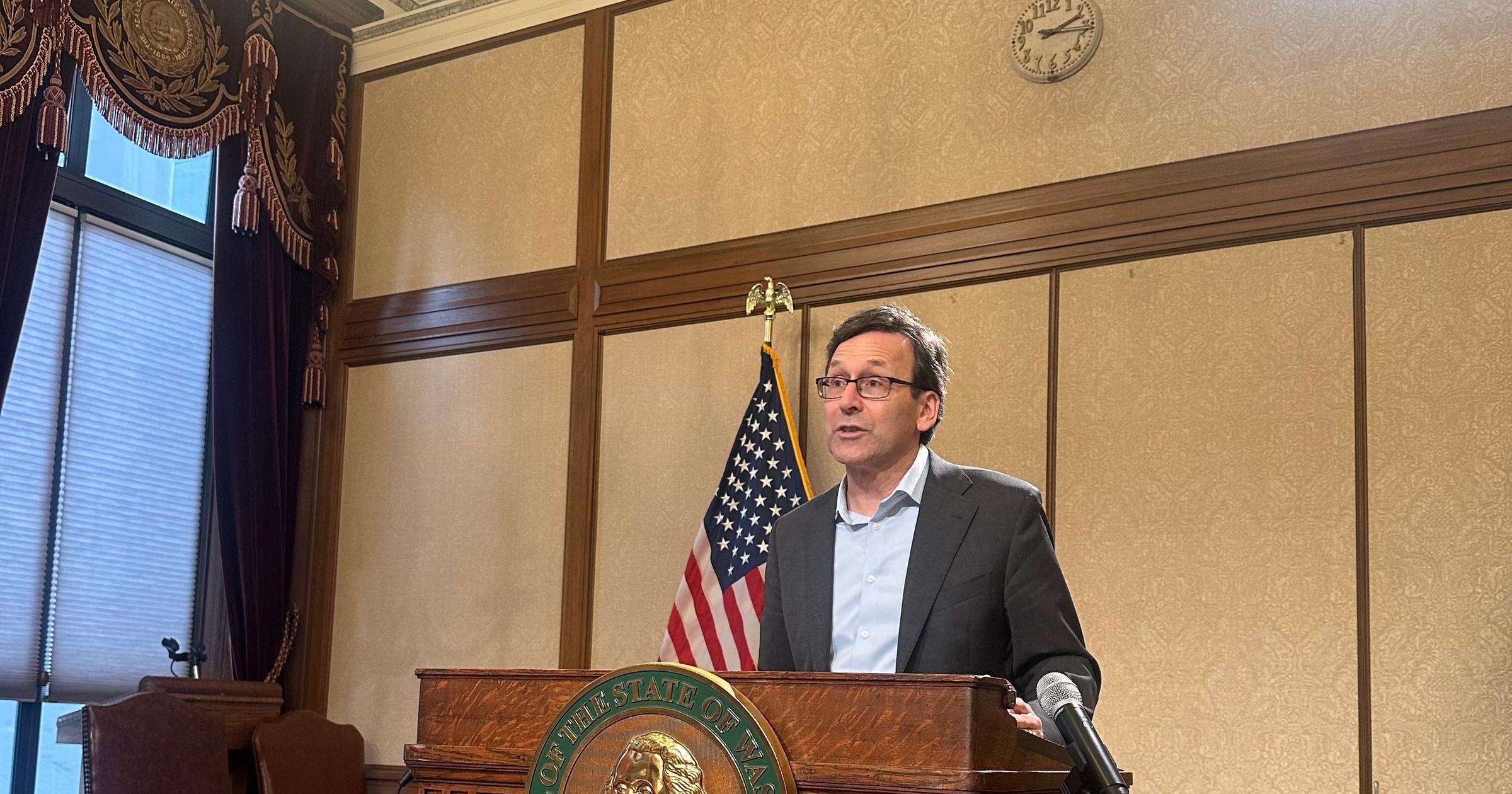
OLYMPIA – Governor Bob stood before reporters Wednesday, his voice a mix of relief and determination as he reviewed the political changes after the midterm elections. “I’m really, really encouraged, to put it mildly, very encouraged,” he said, reflecting on a national “blue wave” that not only flipped Congress but also cemented a key piece of his progressive agenda at home.
As Spokesman.com reported, voters decisively rejected an initiative to repeal Washington’s new income tax on millionaires, with 58.1% of the vote going against the repeal effort, known as Initiative 645. The governor highlighted the surprising breadth of that support, noting it stretched even into more conservative counties like Spokane and Okanogan. “I think it shows the breadth of where the people are on that issue,” Ferguson said, “and the strength of what we did, work with the Legislature, to put a proposal out there that we were confident that the voters would support the millionaires tax.”
Yet, in a crucial reality check, the governor was quick to tamp down any notion that the new tax will solve the state’s immediate fiscal woes. The revenue, which isn’t expected to materialize until 2029 at the earliest due to an ongoing legal challenge that could reach the state Supreme Court, comes too late for the upcoming legislative session, which faces a budget shortfall in the billions. “No, we’ve got to stay very focused on the next two years, and how we’re going to forward and balance that budget,” Ferguson stated plainly.
A “Draconian” Federal Budget and the Fight Ahead
The governor’s optimism was equally fueled by the Democratic takeover of the U.S. House and Senate, a shift he believes will allow Washington state to finally address what he called “draconian” cuts to federal grants and Medicaid. The state is facing a potential $3.2 billion hit to its Medicaid program over the next two years, a figure Ferguson emphasized repeatedly. "Medicaid is huge because it's literally $3.2 billion over two years," he said, emphasizing the immense stakes for state residents and the budget.
Ferguson also pointed to the state's senior senators, Maria Cantwell and Patty Murray, both of whom hold leadership positions in the Democratic caucus, as key allies in this new federal situation. “I know they care deeply about those issues, and many others that they are facing back there,” he said, expressing “tremendous relief” at the convincing nature of the national election results.
The Tax’s Purpose: Beyond the Budget Shortfall
While the new tax won’t fix the immediate budget, its purpose, as outlined by the governor, is rooted in addressing a long-standing inequity in Washington’s tax code. According to details from the governor’s office via content.govdelivery.com, Washington ranks next to last for fairness and equality in its tax system. The data is stark: families in the bottom 20% of earners pay 13.8% of their income in taxes, while those in the top 1% pay just 4.1%.
Ferguson has framed the tax as a direct rebalancing act against the “massive tax cuts for the wealthy” enacted under the Trump administration. “The inequities of our state’s tax structure have been exacerbated by President Trump’s massive tax cuts for the wealthy — an unprecedented upward transfer of wealth,” he said, arguing that the new revenue must be used to “return money and cut taxes for working families and small business owners.”

The specifics of the proposal, which targets income over $1 million and would be paid by less than one half of one percent of Washingtonians, are designed with protection against future expansion. The governor supports codifying the $1 million threshold, with inflation adjustments, into state law or even the constitution, ensuring it will never impact more than 99% of residents.
The intended use of the revenue is already being mapped out. The governor's office suggests using billions raised annually to expand the Working Families Tax Credit, eliminate B&O taxes for small businesses until they reach $1 million in revenue, increase K-12 funding, and remove sales taxes on essential personal hygiene products.
Political Fight Moves to Courts
As Ferguson anticipated, the political fight over the millionaires tax is almost certain to move from the ballot box to the courtroom. The governor confirmed he expects a legal challenge to the tax, much like the one that delayed its implementation. The same legal pattern is likely to play out with Initiative 638, a measure barring transgender girls from K-12 girls’ sports that was passing with 56.7% of the vote. “I think anytime you have, and I’ve said this many times just in general, on big issues, that invariably, they end up before the courts, and that’s appropriate,” Ferguson commented.

In the midst of this legal and political turbulence, Ferguson found a clear win for his judicial legacy. His two appointments to the Washington Supreme Court, Justices Colleen Melody and Theo Angelis, are comfortably retaining their seats, winning by “huge margins, double digits for each of them,” according to the governor. “I’m not surprised that the people of the state of Washington saw in those two individuals what I saw in them,” Ferguson said, clearly gratified by the public’s validation of his choices. “They’re doing excellent work.”
“The inequities of our state’s tax structure have been exacerbated by President Trump’s massive tax cuts for the wealthy — an unprecedented upward transfer of wealth that makes the rich even wealthier while hardworking people are overburdened.”
The election results have set the stage for a complex next few years in Olympia. A new federal government offers a path to defend against harmful cuts and advance a progressive agenda, while a new state tax promises long-term structural change, albeit after a period of significant fiscal pain. The lines are drawn, the legal battles are brewing, and for now, Governor Bob Ferguson sees a path forward.
Worth a look

Minnesota official challenges ICE claims using prison records
Paul Schnell challenged federal claims of immigration enforcement accuracy by releasing prison records and video footage during Operation...

Katseye Faces Backlash After Last-Minute Detroit Concert Cancellation
K-pop band Katseye canceled its sold-out Detroit concert just 30 minutes before it was set to begin at...

Augusta Athletics Announces Partnership with Wellstar on Youth, Family Outreach
Augusta Athletics and Wellstar Hospital Team Up to Score Big for the CSRA This collaboration is designed to...

Councilor Durkan Objects to Crime Lab Debate After Flynn Remarks
Boston Council Vote Halted After Sexual Assault Remark A routine debate over crime lab leadership on Wednesday erupted...