
The seven candidates to lead the World Health Organization laid bare a fundamental fracture on Thursday: they agree the agency must reclaim scientific authority and shift power to country offices, but they cannot agree on who pays the bill.
Health Policy Watch reported the divide as the two-day candidates’ forum wrapped up in Geneva on Thursday, sending the race toward the Executive Board’s January shortlist.
Three distinct models emerged. Indonesia’s Budi Gunadi Sadikin, a former banker, cast the WHO as a financial broker that should use development banks and pooled procurement to unlock capital.
Spain’s María Neira, a two-decade WHO veteran, argued the agency’s clout stems from evidence, not money, and bet on cross-sector persuasion to prevent disease. Saudi Arabia’s Hanan Balkhy pitched managerial discipline — 100-day delivery compacts, leadership accountability and a plan to wean countries off aid entirely.
Neira told delegates that WHO’s authority has never come from the size of its budget and that WHO’s authority comes from evidence, echoing her campaign’s central thesis. She cited data showing environmental risks drive 25 percent of global disease and death — roughly 13 million deaths annually, including more than seven million linked to air pollution and climate change.
Sadikin countered that health ministers struggle to translate national plans into returns finance ministries understand. He claimed over $8.7 billion mobilized for Indonesia and said a single call to the Asian Development Bank’s president helped the Philippines secure $1.2 billion. “WHO make[s] you healthy, [the] World Bank make[s] you wealthy,” he said, urging formal cooperation between the two institutions.
Balkhy, describing herself as a “hybrid candidate,” asked delegates to judge her on “six tests of delivery.” She pledged public reporting at 100 days, annually and at the end of her term.
Consensus on Science, Silence on Cuts
All seven contenders — Sadikin, Neira, Balkhy, Qatar’s Hanan Al Kuwari, Europe’s Hans Kluge, the Western Pacific’s Saia Ma’u Piukala (listed as Song in the source), and Botswana’s nominee Tebogo Tamamyan — diagnosed the same crisis of trust and shrinking aid.
Each promised to protect scientific independence, shift weight to country offices, anchor universal health coverage in primary health care and back a target of 50 percent assessed contributions with expanded flexible funding.
Yet when pressed on trade-offs, every candidate refused to name specific global programmes to cut. They pointed instead to future functional reviews, member-state priority-setting or partnerships with other agencies. The field split cleanly along career lines: three WHO insiders (Kluge, Balkhy, Neira) versus three national health leaders (Al Kuwari, Sadikin, Piukala), with Tamamyan the lone clinical outsider nominated cross-regionally to challenge bloc politics.
Pandemic Equity: Unity on Manufacturing, Division on IP
All seven backed expanding regional manufacturing and most urged finishing the Pathogen Access and Benefit-Sharing (PABS) annex. But they diverged on intellectual property. Al Kuwari pushed to complete PABS by May; Kluge vowed to summon pharmaceutical chiefs to Geneva.
Sadikin cited Indonesia’s vaccine technology transfer with Senegal and talks with Ghana and Nigeria. Piukala backed voluntary licensing through the Medicines Patent Pool. Neira argued the WHO’s role is accelerating access rather than transferring technology directly.
On accountability timelines, Balkhy offered 100-day reporting and leadership compacts. Tamamyan pledged annual public reporting assessed by the Executive Board. Al Kuwari promised a functional review. Neira asked to be judged after one year on efficiency and culture. Sadikin and Piukala offered no comparable 100-day mechanisms.
Member States Signal Priorities
Delegates used the forum to telegraph their own red lines. Uganda pressed Neira on a legally binding benefit-sharing system under the PABS annex. Malaysia, drawn late in the lottery system, thanked Executive Board Chair Tandin Wangchuk of Bhutan “for finally picking Malaysia” before raising substantive concerns.
Wangchuk’s humor punctuated the formal sessions. During Neira’s interview, a Colombian delegate prompted her to answer in Spanish, which she called “one of the most beautiful” languages.
China’s delegate praised Chinese in turn, sparking laughter and a joke from Neira about a contest for the world’s top tongue. “The important thing is that we can communicate,” she said. Wangchuk thanked her in Dzongkha before suspending the session.
Sadikin, born in 1964, is only the second Indonesian health minister without a medical degree and the first since Mananti Sitompul. He earned a Bachelor of Science in Engineering Physics from the Bandung Institute of Technology in 1988 and spent two decades in banking, culminating as President Director of PT Bank Mandiri Tbk from 2013 to 2016.
In 2017 he became President Director of PT Inalum, where he oversaw the purchase of a 51 percent stake in PT Freeport Indonesia, before moving to the Ministry of State-Owned Enterprises and taking the health portfolio in 2020.
The Executive Board meets in January to produce a shortlist of up to five candidates. The World Health Assembly elects the next Director-General in May 2026.
Related reading

13-Year Wait Ends as Glenn Beck Urges Dads to Play GTA VI
Glenn Beck is telling fathers to play Grand Theft Auto VI with their sons, breaking with lawmakers who...

Palestinian Artists Confront Exile, Environmental Destruction, and Memory at IMMA Dublin
A major exhibition at the Irish Museum of Modern Art in Dublin frames Palestinian history through the lens...

ASEAN Chief Visits Pakistan After Two Decades, Seeks Concrete Trade, Security Steps
"As we approach the 35th anniversary of our sectoral dialogue partnership in 2028, we have an opportunity to...
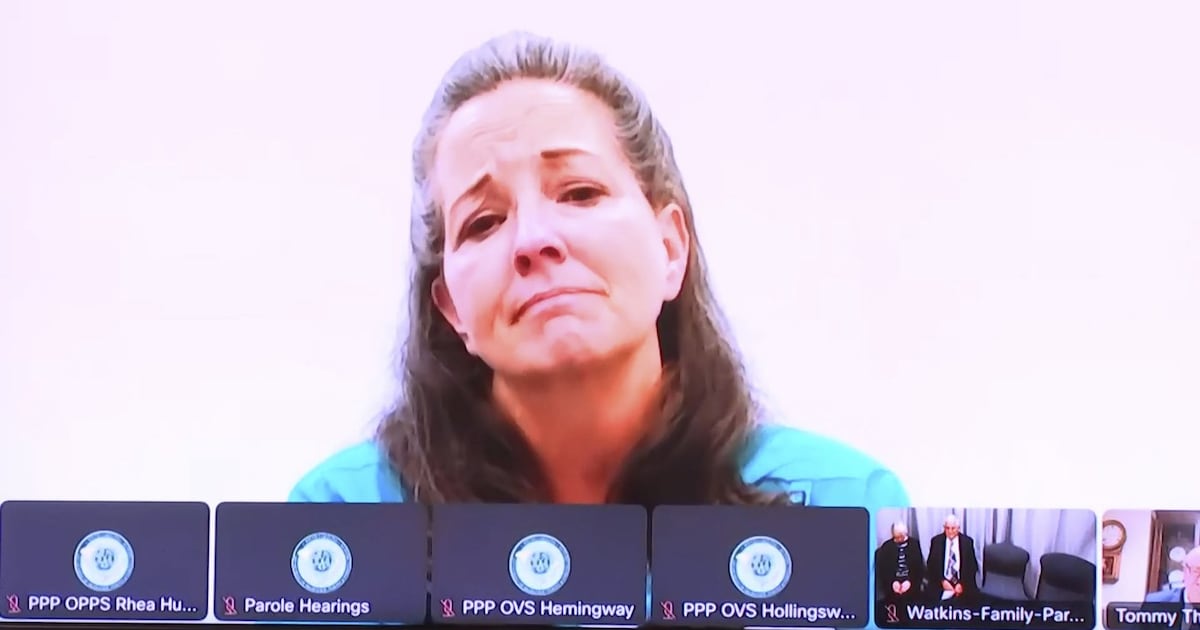
Susan Smith Denied Parole Again 32 Years After Killing Sons
Susan Smith, 55, was rejected by South Carolina's parole board on Thursday in a unanimous vote, marking her...