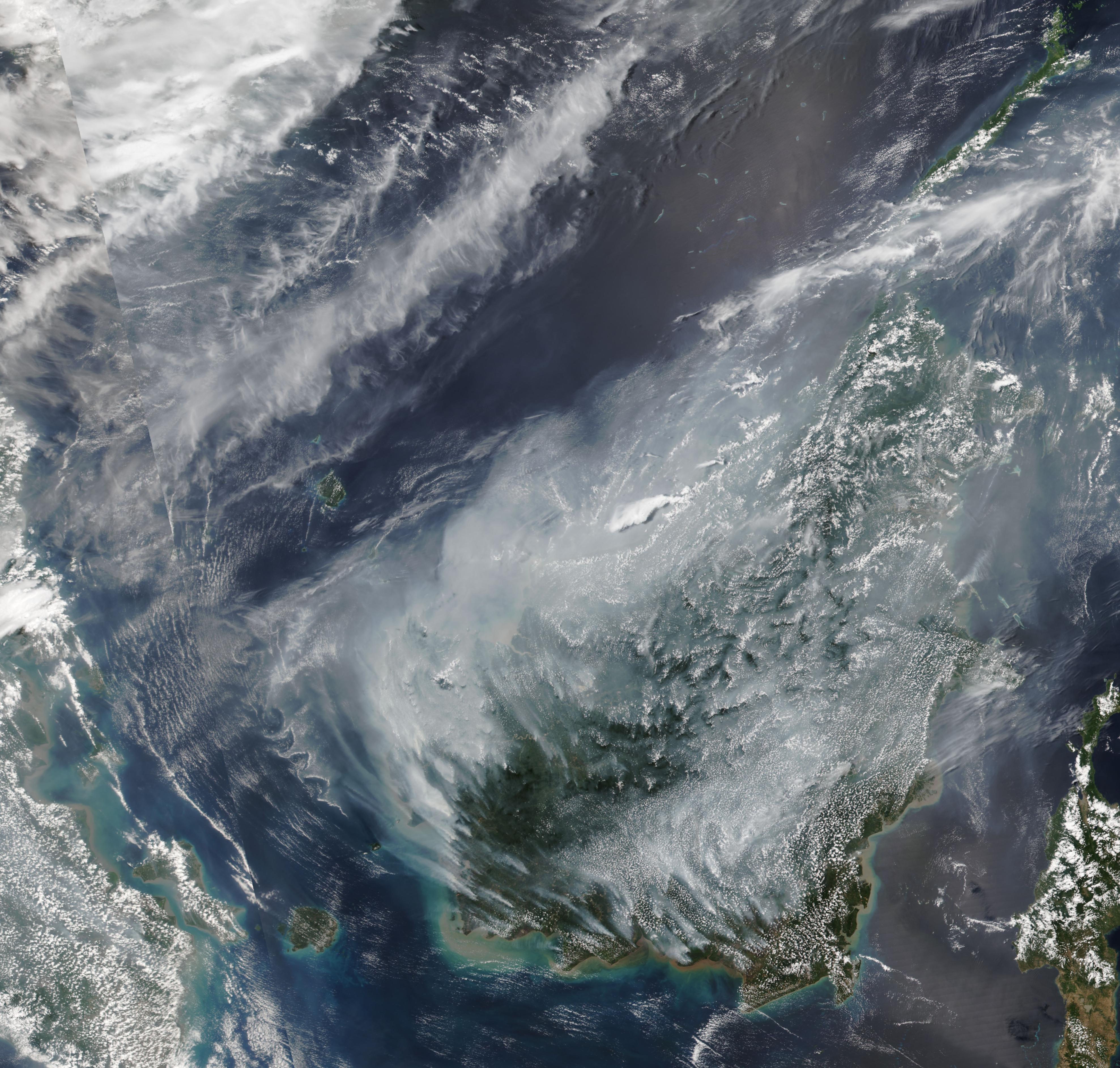
Southeast Asia’s record-breaking marathon season is being rewritten by haze, with at least nine half-marathons and marathons in Malaysia and Singapore cancelled between Sept. 6 and Nov. 1, according to a regional running calendar tracker. The cancellations, triggered by hazardous air quality from Indonesian wildfires, highlight a growing collision between the region’s booming road-race circuit and the recurring environmental crisis that defines its dry season.
Peak Marathon Season Collides with Haze
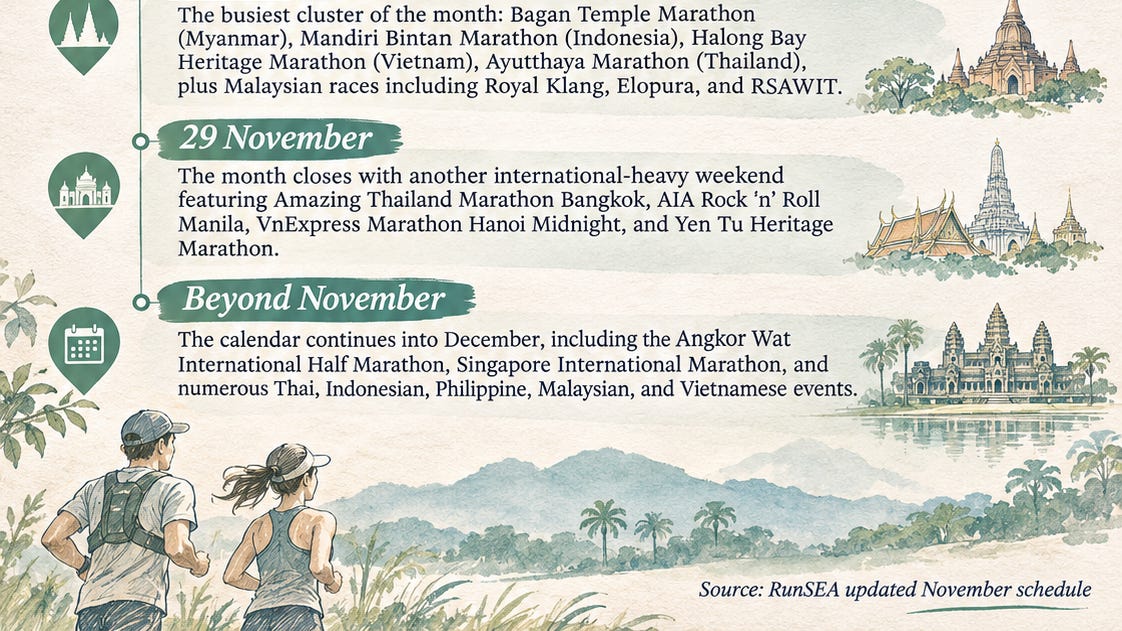
October and November 2026 mark the busiest period for half and full marathons in Southeast Asia since tracking began, with 149 events scheduled across the two months. RunSEA, the regional race calendar, recorded 79 races in October and 70 in November, making it the peak season for runners and organisers alike. Malaysia leads the charge with 17 races in November alone, followed by the Philippines with 15, and Thailand with 13.
This dense calendar, however, coincides with the region’s annual haze season, which this year has been particularly severe. The ASEAN Specialised Meteorological Centre warned that El Niño conditions and below-normal rainfall would sustain elevated haze risks. In Malaysia and Singapore, the impact has been immediate: nine races have been cancelled or postponed due to haze, with most disruptions occurring in the final weeks before race day.
Runners Face Last-Minute Cancellations
The cancellations have hit runners hard, with some forced to make travel arrangements only to have races called off at the last minute. The Kuching Marathon on Sept. 27 was cancelled with more than 13,000 runners already registered, some from outside Sarawak with flights and hotels booked. Abdul Karim Rahman Hamzah, Sarawak’s minister of youth, sports and entrepreneur development, said he had visited the race-pack collection venue earlier and had not been told of the cancellation.
Singapore’s Great Eastern Women’s Run, originally scheduled for Nov. 1 for over 12,000 participants, was cancelled outright due to worsening air quality,
according to its organisers. Other races, like the Garmin Run Singapore on Oct. 25, adapted by shortening the competitive 21-kilometre route to a non-competitive 10-kilometre event, a format change allowed under their contingency plan.
The late decisions have created significant challenges for runners. Singapore recorded unhealthy 24-hour PSI readings every day from Oct. 5 to Oct. 17, its longest stretch of poor air since the 2015 haze crisis, yet organisers often waited until the final hours to call off races. This uncertainty shifts the cost to participants, who may lose non-refundable entry fees and prepaid travel arrangements.

Health Concerns and Organiser Dilemmas
The World Health Organization reports that when inhaled, health-damaging pollutants including small particulates can penetrate deep into the respiratory system and enter the bloodstream, allowing them to reach almost all organs within the body
. This has led authorities to advise against prolonged outdoor activity when air quality deteriorates, as seen with the four Para Sukma events in Selangor postponed after the air pollutant index reached 169 in September.
You know your body best.
Organisers of the Kuala Lumpur Standard Chartered Marathon, via Athleticsillustrated
Organisers face a difficult balancing act. Waiting too long to cancel risks runner health, while calling off races early can lead to unnecessary losses if conditions improve. The Great Eastern Women’s Run exemplifies this dilemma, as organisers waited until air quality worsened before making the call. Some races, like the Kuala Lumpur Standard Chartered Marathon, opted to proceed with adult runners while cancelling the Kids Dash events, urging participants with health conditions to make personal decisions.
Dr. Ahmad Munawwar HelmiSalim, president of the Malaysian Association of Sports Medicine, provided guidance under National Sports Institute protocols, advising athletes to cut training duration when the API is between 101 and 200 and train indoors above 200.
A Season of Adaptation and Uncertainty
The haze disruptions are not uniform across Southeast Asia. Thailand, for instance, has seen fewer cancellations, with its running calendar peaking in December and extending into February, outside the worst of the southern haze. The Chaiyaphum Marathon was postponed due to flooding, not haze, and rescheduled for Feb. 21, 2027, showing how different climate challenges affect the region’s racing circuit.
For runners, the lesson is clear: environmental conditions are now an integral part of race planning. The Southeast Asia Desk and RunSEA advise runners to check official channels, watch weather and air quality readings, and understand cancellation policies before committing to travel. Some, like a group of Singapore runners on Oct. 17, have adapted by running laps indoors, covering up to 21 kilometres in a shopping mall to stay active during poor air days.
The cancellations also expose a deeper governance issue. While the 2002 ASEAN Agreement on Transboundary H Pollution established a framework for cooperation, its effectiveness is limited by national sovereignty and non-interference. Indonesia’s environment minister claimed the fires would clear in a month, while Malaysia’s Deputy Prime Minister, Dr. Ahmad Zahid Hamidi warned that action on the haze could strain bilateral ties, asking citizens to brave this issue a little longer.
Related reading

Timi Frank has accused President Bola Tinubu’s administration of allegedly using the judiciary and
Timi Frank has accused President Bola Tinubu’s administration of allegedly using the judiciary and intimidation tactics to undermine...
France Braces for Nationwide General Strike and Mass Protests
France is bracing for a nationwide general strike and mass protests on Thursday, November 5, 2026, with unions...

Democrats Win Historic Midterm Sweep, Flip House and Senate
Democrats won a sweeping victory in the 2026 midterm elections, flipping control of both the House and Senate...

Joshua Wong Serving 56-Month Sentence for Subversion and Charged with Collusion
Joshua Wong, one of the most recognisable faces of Hong Kong's pro-democracy movement, was charged with collusion under...