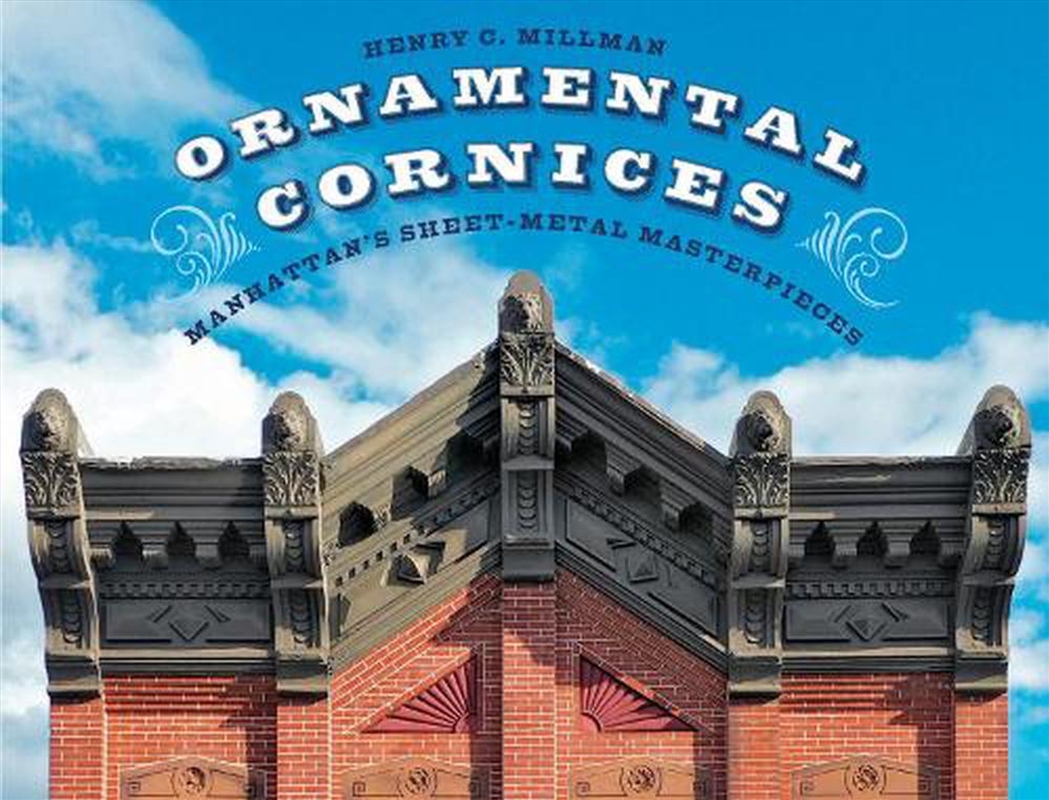
The intricate sheet-metal cornices that define Manhattan’s residential and commercial facades are disappearing.
As modern renovations favor flat, cost-effective surfaces over the hand-crafted patterns of the early 1900s, a vanishing era of urban craftsmanship is being replaced by unornamented architecture.
The Skyscraper Museum has centered its fall programming on these declining elements, focusing on the technical workmanship of metalworkers. The museum’s current focus examines how these materials were used to transform the urban environment, according to Calendar – AIA New York | Center for Architecture.
The museum’s initiative highlights Henry C. Millman’s new book, Ornamental Cornices: Manhattan’s Sheet-Metal Masterpieces. Millman’s research began during his tenure as a draftsman for a building preservation firm, where he first examined the technical workmanship of these structures. Decades later, he conducted a comprehensive survey of nearly every example in Manhattan to document their design and structural significance.
The volume serves as a historical record and a call to action, organizing a hundred selected examples by neighborhood. Each entry pairs Millman’s text on history and construction with detailed elevation drawings and photography designed to illustrate the specific scale, structure, and graphic patterns of the architectural style.
While these cornices appear on buildings throughout the city, they are most densely concentrated in specific neighborhoods. The highest variety and number of these sheet-metal masterpieces are found in Chinatown, the Lower East Side, the East Village, and Harlem.
The loss of these features impacts the visual identity of New York’s most culturally significant districts. Millman’s work provides the essential documentation required to understand the construction of these elements, which were often designed to provide a sense of grandeur to even modest residential buildings.
The study functions as a plea for the preservation of these metal masterpieces, providing the technical and historical context necessary for architects and builders to advocate for their survival.

Gunman Kills One Man at DC Gym and Wounds Four Before Suicide
A gunman killed one man at a gym and wounded four others on Thursday morning in Washington, D.C.,...

Vermont Housing Costs Strain Workforce and Business Growth
As Vermont prepares for the start of the winter tourism season, the state is grappling with a stark...

Nashville Family Files Wrongful Death Lawsuit Against Music City Detox Over Alleged Neglect
When Amanda Gibson checked into Music City Detox in February 2025, she was seeking a path to sobriety...

RIHA Buys Providence Property for Hospitality Training Center
A historic Providence manufacturing building is slated to become a hospitality training center after being purchased for $1.8...