
The New Zealand High Court has delivered a landmark finding, declaring that the coalition government’s 2025 overhaul of pay equity legislation unjustifiably discriminates against women.
In a decision released on Thursday, Justice Paul Radich determined that the Equal Pay Amendment Act, which effectively stalled progress for thousands of workers, stands in direct inconsistency with the Bill of Rights Act.
The ruling marks a significant moment for the unions and advocates who have spent the last 18 months challenging the law. While the court’s declaration does not automatically strike the legislation from the books, it serves as a formal legal rebuke that will force the next government to provide a considered response to Parliament within six months.
As 1News reported, the judge’s assessment of the official documents behind the law revealed a stark reality: the government’s primary motivation was not systemic reform, but fiscal consolidation.
The Financial Motivation Behind Legislative Change
When the government passed the legislation under urgency in May 2025, ministers argued that the previous framework was unworkable and required a reset to ensure sustainability. However, Justice Radich found no tangible evidence in official papers to support the claim that the prior system was failing. Instead, the court said that the drive for change appeared to be “strictly financial,” as detailed by The Post NZ.
The economic impact of the policy was substantial, with an estimated $12.8 billion saved over four years—funds that were subsequently redirected into the 2025 Budget. Prime Minister Christopher Luxon had previously dismissed criticism of these reforms as “disingenuous,” framing the opposition as “scaremongering,” according to reports from the NZ Herald.
Yet, the court’s review of the internal government documentation paints a different picture, suggesting that the “unworkable” narrative only gained traction after a target date for the legislation had already been set.

Impact on Female-Dominated Workforces
The 2025 amendments introduced several hurdles for those seeking pay equity, most notably the cancellation of 33 active claims and an increase in the threshold required to qualify as a “female-dominated” workforce, moving the benchmark from 60% to 70% for at least 10 consecutive years. These changes effectively locked out many workers in sectors like nursing, aged care, and education from pursuing claims based on historical gender-based undervaluation.
“They have, for the reasons I have given, been the subject of unjustified discrimination on the basis of their sex. A declaration vindicates their positions. They deserve to have the importance of the right, and the fact of its breach, recognised by the court,” said Justice Paul Radich.
For individuals like Lisa Marriner, a Nurses Organisation delegate and aged care health care assistant, the ruling is a validation of the hardship many have faced. “Today we’ve been heard,” Marriner told 1News.
“The court today said what we’ve known all along. What the Government did to us was wrong. They robbed low-paid women and their whānau so they could balance their books while caregivers are left struggling to pay their bills.”
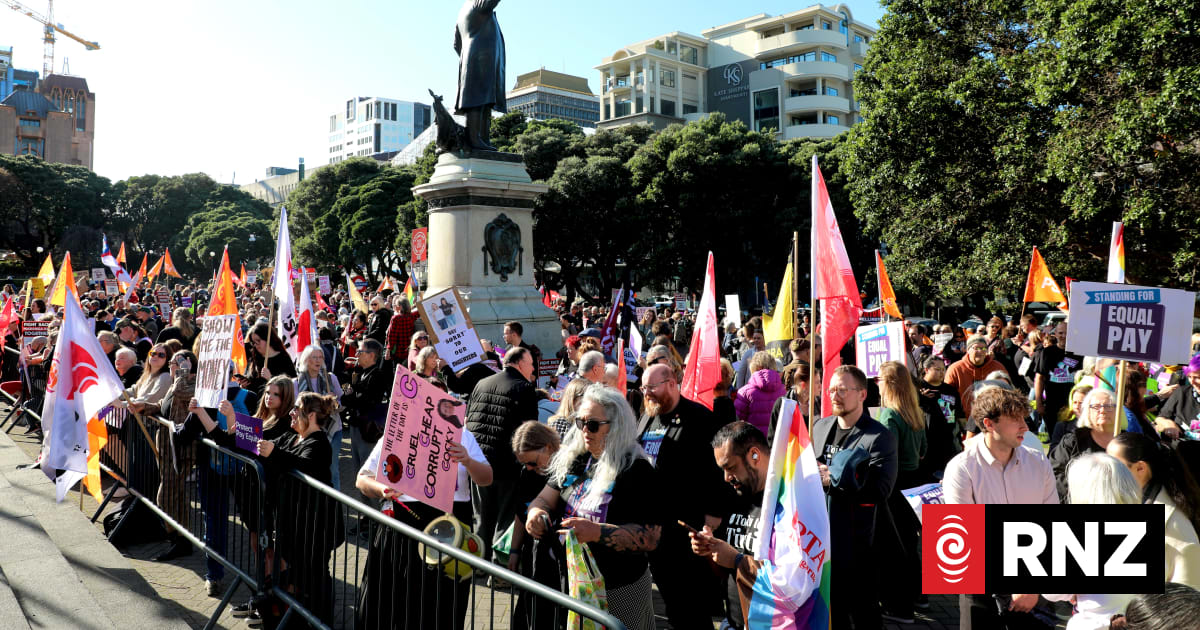
Political Pressure on the Next Government
The Public Service Association (PSA) has urged political parties to prioritize the restoration of the previous pay equity framework. National secretary Fleur Fitzsimons described the ruling as a “ground-breaking historic decision,” emphasizing that no coalition agreement should leave the current law in place, as reported by the NZ Herald.
Meanwhile, the government’s position remains in a state of transition. Outgoing Workplace Relations Minister Brooke van Velden said that officials are “carefully considering” the judgment. Because the government is currently operating in a caretaker capacity and the Crown retains the right to appeal the decision, van Velden said that she does not intend to comment further at this time, 1News reported.
The case's wider effects continue to ripple through the public sector. While the High Court found that the government did not act unlawfully in its use of urgency or in its handling of natural justice claims, the declaration of inconsistency remains a powerful tool for those seeking to reverse the 2025 changes.
Worth a look

NEJM Report Details Measles Risks for Pregnant Women in US
The United States has officially lost its measles elimination status after 26 years, a shift shown by a...

Colette Kress Accelerates Pay Reviews, Urges Moving Forward at Nvidia All-Hands
Nvidia interim chief executive Colette Kress told staff let's move forward at the company's first all-hands meeting since...

U.S., Bolivia, Mexico Lose Measles Elimination Status as Endemic Transmission Re-established
Endemic measles transmission has been re-established in the United States, Bolivia, and Mexico, stripping all three nations of...

Latvia Health Ministry Proposes Raising Alcohol Purchase Age to 20, Total Ad Ban, Petrol Station Sales Halt From 2028
Latvia's Ministry of Health has laid out a sweeping new agenda to curb drinking, proposing to lift the...