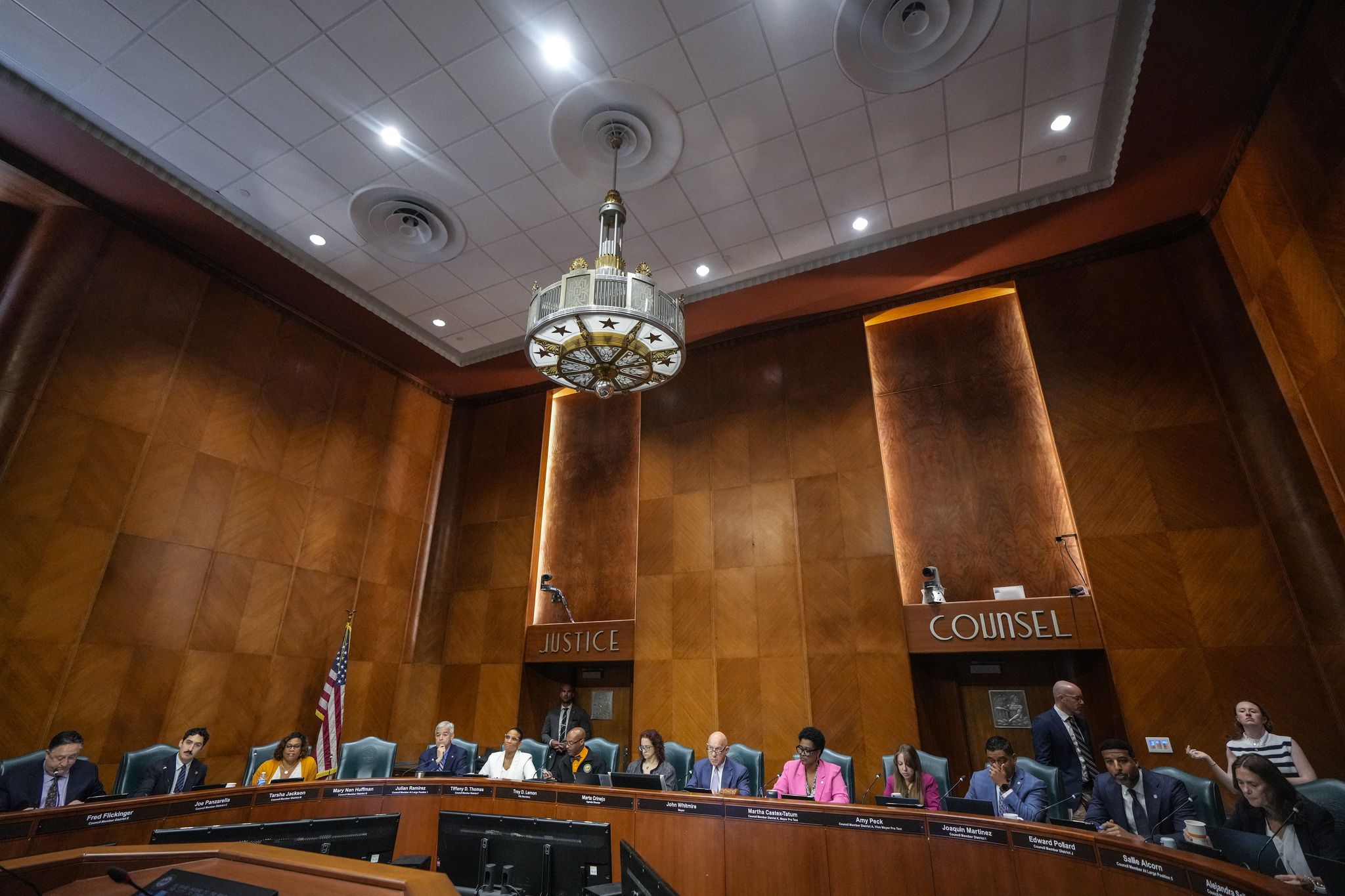
Houston City Council members have recorded varying attendance rates during the current term, according to an analysis of official meeting minutes.
The data, which spans from the start of the regular term in January 2024 through September 2026, reveals a spectrum of engagement among the city’s decision-makers. Because Houston does not offer a virtual meeting option for council members, presence in the chamber is the only metric for participation in the city’s legislative process.
The records, maintained by the office of City Secretary Troy Lemon, track attendance across a standard weekly schedule. A typical council meeting consists of a Tuesday public comment session followed by a Wednesday voting session, with a long recess occurring overnight. Under the current tracking method, missing both portions of a single meeting cycle results in two recorded absences.
While the records track the frequency of absences, they do not provide specific justifications for why members were not present. The analysis categorizes absences into three distinct areas: sick days, city business—such as representing the city at official events—and personal business, which includes campaign activities.
The stakes of council attendance extend beyond simple presence. When members are absent, the council may struggle to reach a quorum or debate municipal policy. This impacts everything from local zoning decisions to the allocation of city resources, directly touching the lives of Houston’s residents and business owners.
The scope of the review excludes two brief meetings held for post-election vote canvassing, as those sessions did not require a quorum to proceed. For all other sessions, the presence of a member is determined by their physical arrival. Members who arrive late or depart a meeting before its conclusion are still counted as present for that specific meeting in the official city records.
This distinction between “present” and “fully engaged” is a nuance of the current reporting system. Because the minutes only record whether a member was in the room, the data reflects attendance rather than the duration of their participation or the quality of their contributions during the sessions.
For those tracking municipal accountability, the patterns in these minutes offer a window into how much time elected officials are dedicating to the formal legislative sessions in the chamber versus outside duties. The distinction between “city business” and “personal business” remains a key area of interest for those monitoring the balance between official duties and political campaigning.
The City Secretary’s office remains the primary repository for these official transcripts and meeting minutes, providing the foundational data used to track these attendance trends over the two-year period.
Related reading

Family Seeks Help Searching for Missing Jory Low Dog
Family members and volunteers are maintaining an active search for Jory Low Dog, a Cheyenne River Sioux Tribe...

Bret Michaels Live and Amplified Tour Hits Milwaukee Panther Arena
Milwaukee fans will experience a rock doubleheader on Saturday, February 13, when Bret Michaels performs at Panther Arena...

Laura Leslie Argues Democrats Must Prioritize Civility to Regain Trust
Journalist Laura Leslie argues that Democrats must prioritize decency and civility to regain the trust of a disillusioned...

Vanderbilt Surgeons Perform Innovative Partial Heart Transplant
“This has been a monumental struggle in our field for a very long time,” said Ziv Beckerman, MD,...