Southeast Asia’s trade bloc is deepening ties with China while keeping U.S. market access, defying pressure to choose sides in a deepening superpower rivalry.
The Association of Southeast Asian Nations has built supply chains that add enough value inside the region to meet American rules-of-origin tests, allowing goods with Chinese technology to enter the United States as Southeast Asian products, economist Danny Quah said in an interview published by the South China Morning Post.
“America is scrambling because unless its administration sees a way to get around its own laws, it will no longer be allowed to charge Asean with transshipment,” Quah told the Post. “That is why it is appealing to Section 301 and other kinds of trade policies.”
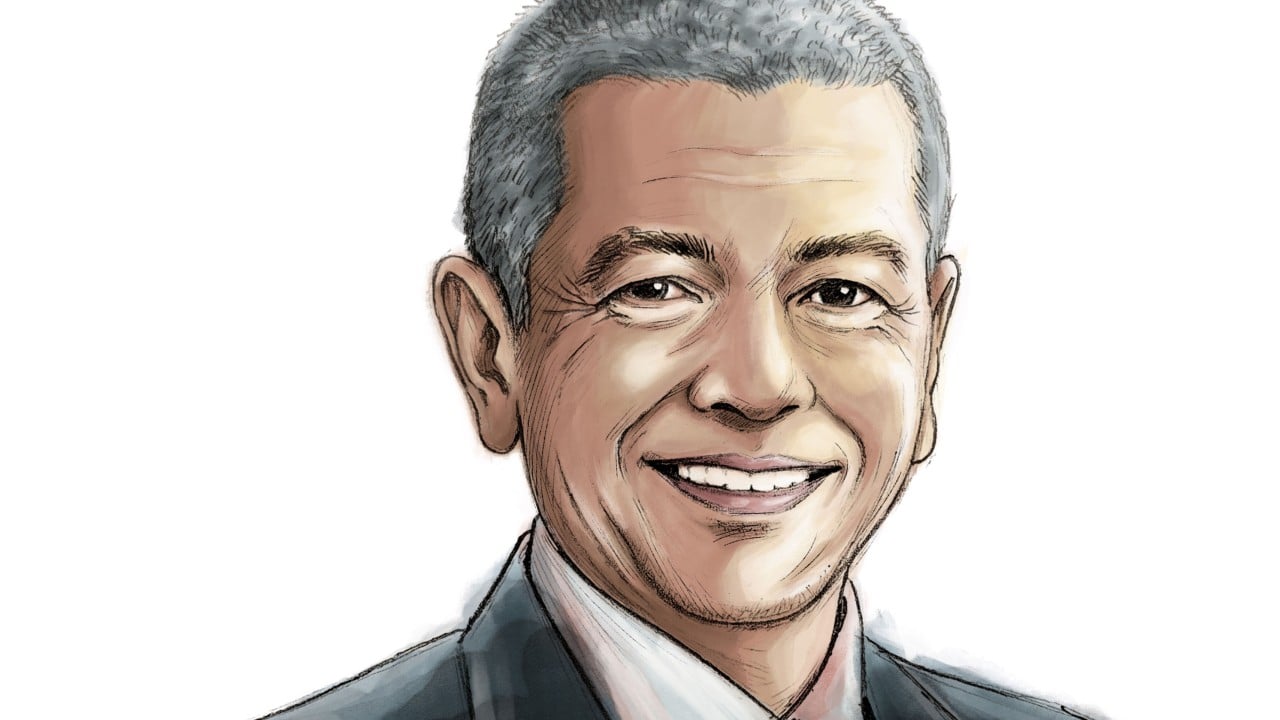
Quah, a professor at the National University of Singapore’s Lee Kuan Yew School of Public Policy and its dean from 2018 to 2025, argues the region operates a “G-minus” model — a system that functions without great-power permission. He has advised the World Bank, the Bank of England and the Monetary Authority of Singapore.
The Regional Comprehensive Economic Partnership illustrates the approach. “Many out there think of RCEP as a China-led grouping – it is not,” Quah said. “It is an Asean-initiated grouping that happens to include China; it also happens to include Japan and South Korea.”
If the pact were China-led, he added, other nations with tensions toward Beijing would find membership “much more awkward.”
Electronics exports show how the mechanism works. Chinese semiconductor technology enters assembly lines in Malaysia, Singapore and Thailand, where the chips are embedded in higher-value electronic goods before shipment worldwide.
The process emerged without central direction. “No one said that Asean should import these things from China, add value in Thailand, ship it to Malaysia, add further value in Singapore, before exporting from Indonesia,” Quah said. “It emerged from nations figuring out that they could inadvertently cooperate with one another through Asean rules.”
The United States accounted for 16 per cent of Asean exports in 2024, a share Quah said is “probably a little more now.” American foreign direct investment remains large, especially in Singapore.
Quah said the “China shock” narrative dominant in Washington and Brussels looks different from Southeast Asia. The region has not only consumers and competing producers, but also downstream industries that use affordable Chinese inputs — solar panels, batteries, wind turbines and mature semiconductors — to build their own products.
“China’s technology and export prowess make it possible for them to also produce things that are cheaper and higher quality,” he said. “This group adds a voice that is parallel to the consumer voice.”
He acknowledged Indonesian industry has raised concerns, but dismissed complaints from established tycoons. “If you have been undermined by a competitor, you need to figure out what to do next to win back the market,” Quah said. “In economics, we think of this as creative destruction.”
China itself absorbed a painful adjustment after its WTO accession, he noted, laying off hundreds of thousands of workers in the northeast — jobs that “never came back to China.”
“You taught Asia’s emerging economies that competition makes us all better if only we adjust,” Quah said. “Apply these lessons now to yourself.”
Worth a look

China, Russia, US Hold First Trilateral Summit, Issue Peace Declaration
Leaders of China, Russia and the United States held their first trilateral summit Thursday in Shenzhen, issuing a...

The Associated Press Called the Race for Hubbard on Sunday
Hubbard beat Foxx by 330 votes after a recount, cwibc.co.id reported. The 258-seat total matches Democrats' 1992 high...
Co Tyrone Teen Aoife McNamee Laid to Rest After Brave Cancer Battle
Aoife McNamee, a 16-year-old student from Sion Mills in County Tyrone, was laid to rest on Sunday following...

Domestic Crises Shadow ASEAN Summits in Manila and Kuala Lumpur, East Asia Forum Says
Domestic political crises shadowed the ASEAN-plus and APEC summits in Manila and Shenzhen last week, East Asia Forum...