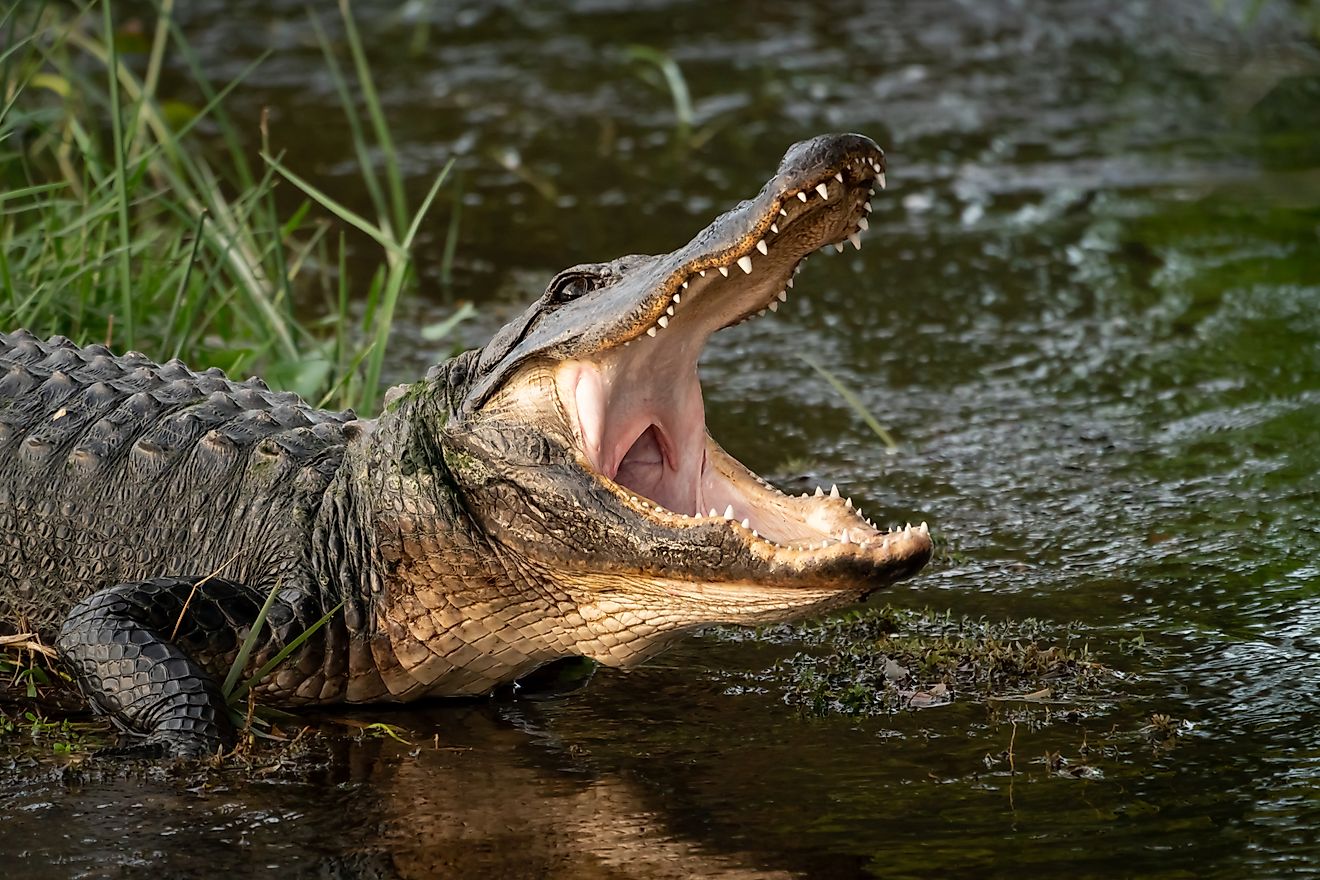
American alligators on the Atlantic coast live as far north as the North Carolina coast, with cold temperatures acting as the primary boundary controlling their northern range.
On the Atlantic coast, cold dictates where the American alligator can live, and a sudden drop in temperature can kill one.
From the Savannah River to the Nuclear Site

The heated discharge ended by the mid-1980s, and the population then nearly doubled, to about 200. Downstream, where the river separates Georgia from South Carolina near the coast, alligators keep winter’s schedule.

When the weather warms, the Santee and Cooper rivers have easy places to watch them.
Ice-Covered Swamps in North Carolina
The Waccamaw River runs across the line between the Carolinas, ending in Georgetown County, South Carolina, where the freshwater lake at Huntington Beach State Park is a sure-fire place to see alligators and sometimes even a mink or two. The animals on that side of the line run smaller, with males in North Carolina reaching 13 feet while alligators in southern states sometimes reach 15 feet.
Further north, dramatic winter scenes play out. Two days later, they were back to normal.

George Howard, the general manager, said the alligators are in full brumation right now.
The county around them, Brunswick, holds one of the largest wild alligator populations in North Carolina.
The Northernmost Frontier at Merchants Millpond
Encounters rise through early summer, because May and June are mating season and alligators move around more.
Moving north, the Pamlico and Neuse rivers empty into Pamlico Sound. In 2021, alligators turned up at Jack’s Creek and Moss Landing on the Pamlico River, where the local paper noted they are a rare sight.
Across Albemarle Sound, Gates County borders Virginia and was once thought to be too far north for a population of alligators to survive.
Virginia’s alligator records start in 1969, with one at Lake Smith in Virginia Beach.

Arizona AG Kris Mayes Outlines Second-Term Priorities
Arizona Attorney General Kris Mayes won reelection by nearly 300,000 votes, a dramatic margin change from her victory...

Alaska Hosts Various Community Events From Nov. 11-18
Communities from Anchorage to Juneau prepare for a busy stretch of community gatherings, arts markets, and historical presentations...
Alabama Defeats LSU 2-1 to Advance to SEC Tournament Semifinals
No. 11-seeded LSU dropped a 2-1 decision to 3-seeded Alabama, 2-1, in the quarterfinals of the SEC Tournament...

Nvidia Shares Rebound as Huang Faces Board Scrutiny
Nvidia shares rose in premarket trading on Wednesday following a sharp two-day selloff that erased billions in market...