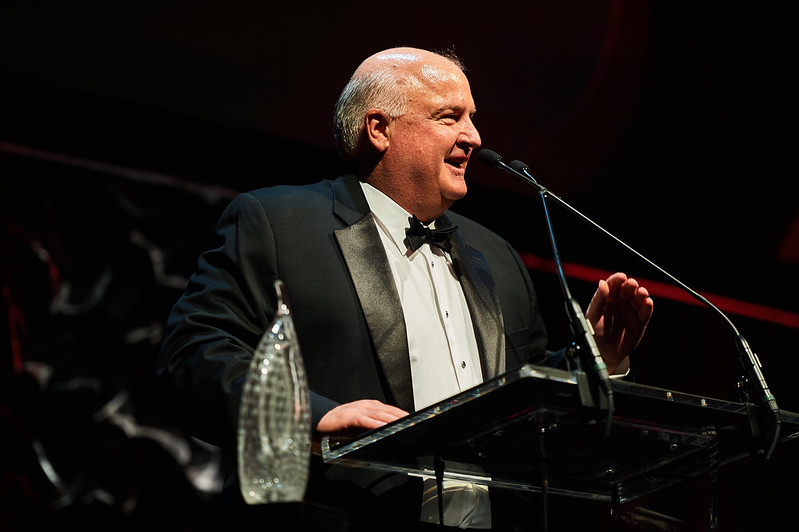
Glenn Osterhout pledges $6.5 million estate gift to Washington State University
Glenn Osterhout, a 1982 Washington State University graduate and longtime certified financial planner, has included a $6.5 million gift in his estate plans to support the university, according to a report from the WSU Foundation. This substantial commitment is paired with a pledge of at least $200,000 annually for three years dedicated specifically to WSU Athletics. The gift is designed to bolster several key areas of the institution, ranging from medical education to collegiate sports excellence.
A passion for supporting @WSUCougars, guiding estate planning, and leaving a legacy—inspired by the Coug community. Read about Glenn Osterhout '82: @CougsFirst co-founder and generous supporter of the @CougarAthFund, @WSUMedicine, and @CarsonCollege.https://t.co/mXsAjKY8kt
The impact of this planned giving will be distributed across four specific endowments. These funds are earmarked to support student-athlete scholarships, the Football Excellence Fund, scholarships for students within the Elson S. Floyd College of Medicine, and the Carson College of Business Dean’s Excellence Fund. By targeting these specific pillars, the gift addresses both the academic rigor of the university’s professional colleges and the evolving landscape of collegiate athletics.
A decision rooted in a 1978 road trip
The connection between Osterhout and Pullman began with a spontaneous decision by a group of high school seniors. In early spring of 1978, Osterhout and five friends from Inglemoor High School were weighing their options between WSU and the University of Washington. Following a suggestion from a friend’s sister, the group piled into a Ford LTD station wagon and drove from Kenmore, Washington, to Pullman to tour the campus.
The group’s decision to commit to WSU was driven by the immediate sense of inclusion they felt during their visit. While the group could not immediately articulate the specific differences between the Pullman campus and other institutions, they noted a distinct “small-town feel” combined with high-level athletics and a world-class education. That sense of community persisted through his college years, where Osterhout served as student body vice president, a role that required him to coordinate with university administration and lobby in Olympia.
“WSU changed my life as it has for so many of us fortunate enough to have that experience,” Osterhout said.
The financial logic of estate planning
Osterhout’s career path was shaped by his time in student leadership and his early work experience, which included summers spent trolling for salmon to fund his education. After a decade in sales management and marketing at Carnation’s Los Angeles headquarters—a company acquired by Nestlé in 1985—he returned to the Pacific Northwest to launch his own financial planning firm in 1993.
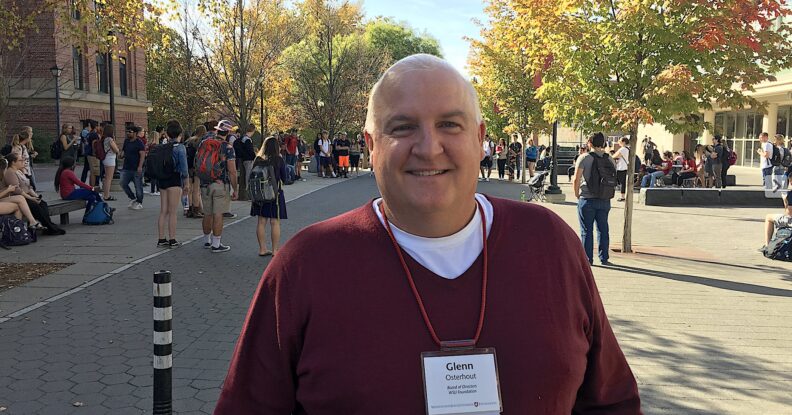
Three decades of managing client finances provided Osterhout with a specific perspective on the risks of neglecting estate planning. He observed that many individuals postpone creating a will, which can lead to assets being tied up in probate for years, potentially leaving intended beneficiaries with nothing. To avoid this, Osterhout maintains a disciplined habit of reviewing his own will every three years.
His approach to philanthropy also utilizes specific financial vehicles that maximize the impact of a gift. He notes that contributing to a university through retirement account beneficiary designations can be a highly efficient method of giving. This strategy allows the institution to receive the full value of the assets while avoiding certain taxes, a process he describes as a “win-win” for both the donor and the recipient.
Supporting the land grant mission
The timing of this gift aligns with a period of significant transition in higher education, particularly regarding how universities fund specialized programs and athletic departments. The $200,000 annual commitment to WSU Athletics will be split between the Cougar Athletic Fund, which supports student-athlete scholarships, and the Football Excellence Fund, which is designated for institutional revenue sharing.
Osterhout’s motivation extends beyond simple nostalgia; he views his contribution as a way to ensure the university continues to fulfill its specific institutional role. He expressed a desire to see the university continue delivering on its land grant mission, which focuses on providing practical solutions to real-world problems through its various colleges.
“I not only want to help young men and women get a world-class education and have the same great college experience I had,” Osterhout said, “but I want WSU, which is making a difference in so many areas of our lives, to continue delivering on its land grant mission of providing practical solutions to real world problems.”
Related reading

The Mystery of the Dome on the Range Near Cheyenne Wyoming Explained
If you have spent any time driving west of Cheyenne on Interstate 80, you have likely spotted a...

Vana Steffan Marks 30 years volunteering with Meals on Wheels in Madison
Vana Steffan Marks Three Decades Delivering Nutrition in Madison “I enjoy doing it very much. As long as...

Crash on I-26 Causes Major Traffic Delays Toward Charleston
I-26 Eastbound Traffic Snarls Near Summerville A significant traffic disruption is unfolding this morning on Interstate 26 heading...
Master of Landscape Architecture Program at Virginia Tech
Virginia Tech Updates Master of Landscape Architecture Requirements for 2026 The Virginia Tech College of Architecture, Arts, and...