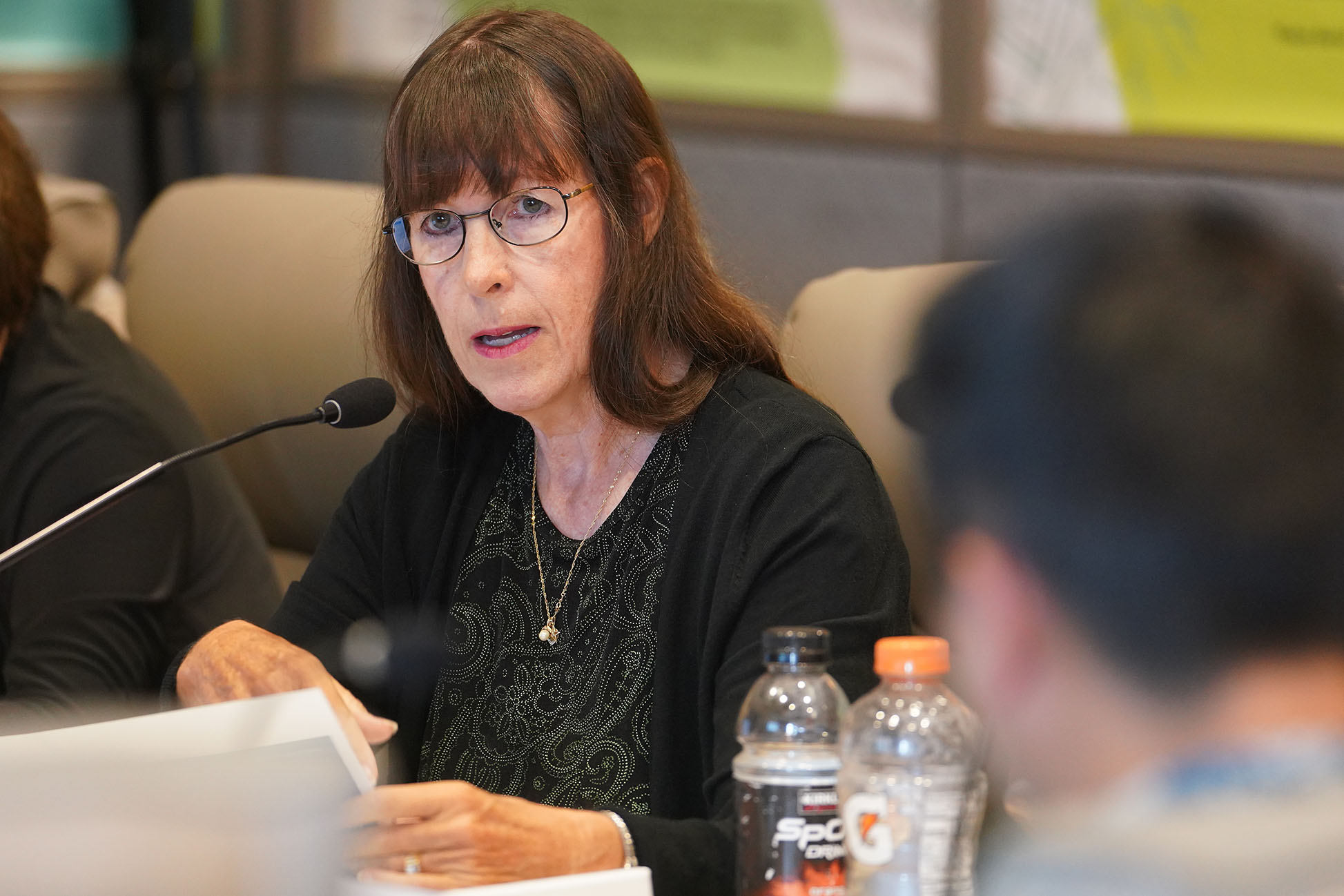
The Persistence of Natalie Iwasa: Two Decades of Holding Honolulu Accountable
If you have spent any time navigating the machinery of Honolulu’s local government over the last twenty years, you have likely encountered Natalie Iwasa. To the casual observer, she is the cyclist in the bright yellow jersey pedaling up Kalanianaʻole Highway, eyes fixed on the road ahead. To the City Council, she is the dogged CPA and fraud examiner who has spent two decades scrutinizing line items, challenging zoning decisions, and consistently showing up when most residents would rather stay home.
Oppose Honolulu Rail Plan – Sign the Petition! https://t.co/OyuPgvvDzK via @Change
As Civil Beat recently chronicled, Iwasa’s journey from a college student who once flunked accounting to a central figure in Hawaiʻi’s civic discourse is a masterclass in the power of showing up. Her influence is not derived from political office—she has run for City Council twice without success—but from a refusal to accept that a single citizen’s voice lacks weight in a democratic system. For those wondering how a resident can actually impact policy, Iwasa’s career serves as a blueprint: she translates complex financial data into plain-language warnings for the public, turning the often-impenetrable wall of government bureaucracy into a series of questions that officials are eventually forced to answer.
From Kamilonui Valley to the Rail Authority
Iwasa’s transition from a private resident to a public watchdog began in 2003, triggered by the push to develop agricultural land in the Kamilonui Valley. Like many, she initially assumed someone else would handle the advocacy. When she realized that inaction was leading to outcomes she opposed, she stepped into the fray. That decision to testify before the City Council evolved into years of service on neighborhood boards and, eventually, earned her the moniker “The Bike Mom,” a nickname born from her persistent advocacy for safer cycling infrastructure and better-maintained roads.
Her work is rarely about winning a popularity contest. It is about the math. A certified public accountant, Iwasa approaches civic life with an auditor’s mindset. Whether she is questioning sewer fees, property tax adjustments, or the ballooning costs of the Honolulu rail project, her strategy remains consistent: she requests the data, examines the financial projections, and highlights the gaps. As reported by Civil Beat, this scrutiny even led to her appointment in 2021 by House Speaker Scott Saiki to a non-voting seat on the board of the Honolulu Authority for Rapid Transportation (HART), an attempt to inject independent, critical thinking into the city’s most expensive infrastructure project.
The Cost of Transparency in Local Governance
The stakes of Iwasa’s work are best illustrated by her recent involvement in the legal challenge surrounding City Council Chair Tommy Waters. When the Hawaiʻi Supreme Court ruled that term limits prohibited Waters from seeking another term—a decision handed down after ballots had already been distributed to voters—it underscored the volatility of local election administration. Iwasa was a lead plaintiff in the case, arguing that the fairness of the democratic process was at risk when voters are presented with ineligible candidates on their ballots.
You don’t go in there expecting you’re going to change something just because you say something. There’s a lot of opinions on different issues. But to not do anything? I don’t think that’s a good solution because then our democratic society doesn’t work.
This perspective highlights the core tension in local advocacy: the gap between the effort expended and the tangible results achieved. Critics of such activism often argue that frequent challenges to government actions—especially those involving complex projects like rail or zoning—can lead to paralysis. Yet, proponents argue that without such persistent oversight, the “Sunshine Law” and other transparency requirements in the Hawaii Revised Statutes would lose their teeth. Iwasa’s career demonstrates that the barrier to entry for this kind of civic participation is lower than many imagine. She advocates for a tiered approach: if you cannot testify in person, submit written testimony; if you cannot attend a meeting, join via Zoom. The goal is not perfection, but participation.
The Reality of Civic Endurance
The reality of being a perennial gadfly is that you lose more often than you win. Iwasa has faced legal battles, political defeats, and bureaucratic stonewalling, including a famous standoff where she refused to sign a non-disclosure agreement required for HART executive sessions. Her persistence suggests that the value of civic engagement is not found in the immediate reversal of a policy, but in the long-term maintenance of institutional accountability. When officials know that a knowledgeable, detail-oriented resident is watching the ledger, the internal calculus of decision-making changes.

Looking at the current landscape of Honolulu politics, the impact of individuals like Iwasa is a reminder that democracy is not a spectator sport. It is built on the accumulation of small, often tedious actions: reading the reports, filing the testimony, and holding the seat at the table until the questions are answered. For those who feel discouraged by the pace of change, her twenty-year trajectory offers a sobering but hopeful conclusion: progress is not a sprint, but a long, steady ride along the highway, eyes straight ahead, focused on the road yet to be paved.
Worth a look

Boston Forecasts Unseasonably Warm Weather With Record Highs Possible
Boston is tracking toward an unseasonably warm start to November, with daytime temperatures forecasted to approach record highs...

Orioles Decline 2027 Option for Outfielder Luis Robert Jr.
Baltimore Orioles Decline Luis Robert Jr.'s $20 Million Club Option The Luis Robert Jr. era in Baltimore lasted...

Hawks Rookie Kingston Flemings Suspended One Game for Elbowing
Atlanta Hawks guard Kingston Flemings has been handed a one-game suspension without pay for intentionally elbowing New Orleans...
Richmond and Columbia County Restaurant Inspection Scores: Oct. 23-29
Augusta Health Inspections Reveal Stark Contrast in Local Kitchens When health inspectors walked into a downtown Augusta cafe...