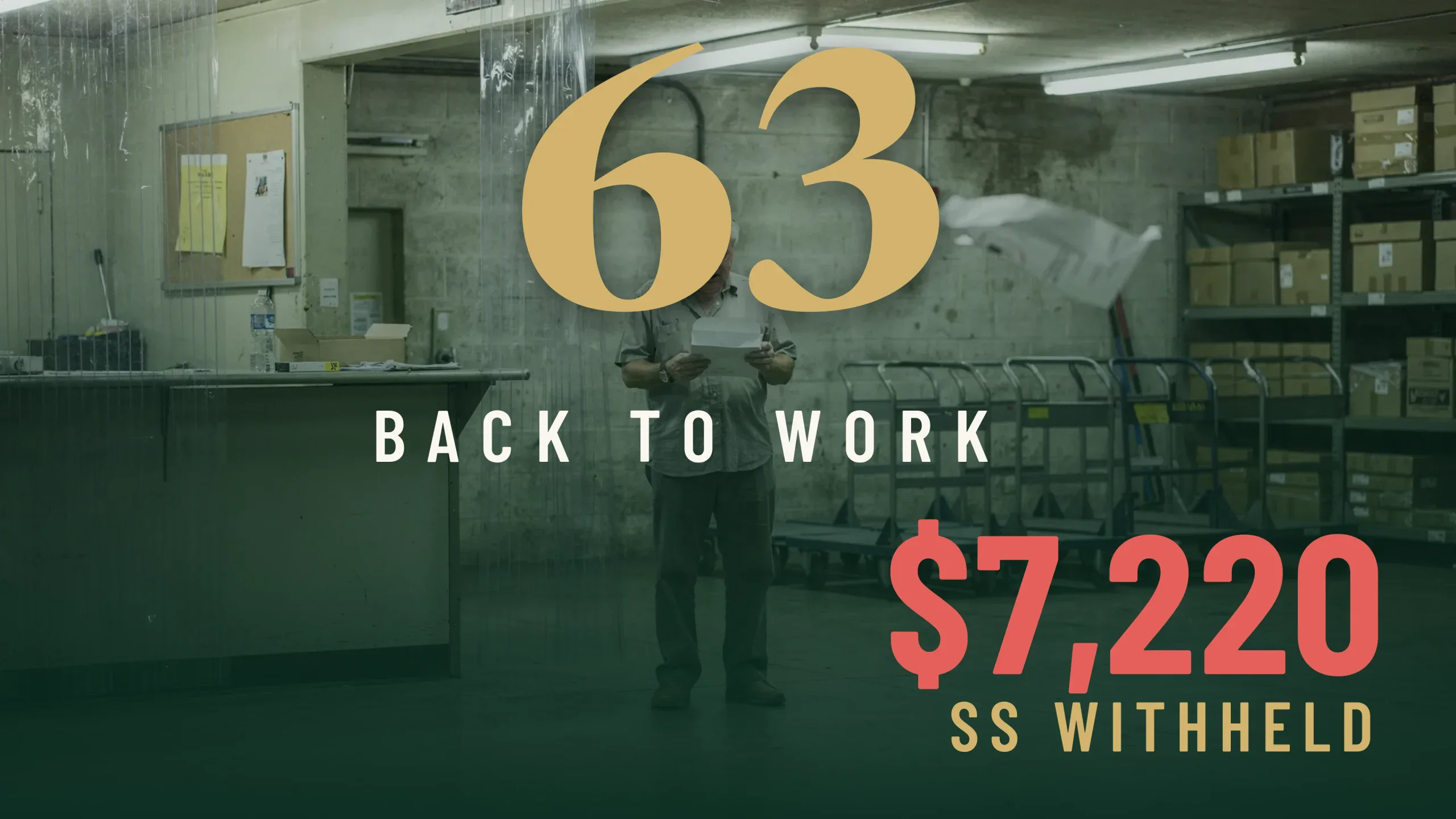
For millions of Americans navigating the late stages of their careers, the decision to supplement retirement income with a paycheck is a standard fiscal maneuver. However, for those who have already initiated their Social Security claims before reaching their Full Retirement Age (FRA), that extra income can trigger an immediate and often jarring reduction in benefits. As AOL.com reported, a 63-year-old worker earning $40,000 in 2027 could see $7,220 withheld from their Social Security checks due to the agency’s earnings test.
The Bottom Line:
- In 2027, the Social Security earnings limit for those under FRA for the entire year is set at $25,560.
- The Social Security Administration (SSA) enforces a penalty of $1 in benefits for every $2 earned above that threshold, effectively creating a high marginal tax rate on active income.
- Withheld benefits are not permanently lost; the SSA recalculates the monthly benefit at age 67, though the “breakeven” point for recovering the withheld cash often stretches into the retiree’s 80s.
The Mechanics of the 2027 Earnings Test
The complexity of the Social Security earnings test often leads to significant cash-flow volatility for older workers. According to data provided by Yahoo Finance, the rule applies exclusively to earned income from wages or self-employment. Passive income—such as dividends, interest, or withdrawals from a 401(k) or IRA—does not count toward the $25,560 limit. This distinction is critical for retirees attempting to diversify their income streams without triggering a federal clawback of their retirement checks.

The penalty structure shifts slightly in the year a worker reaches their FRA, which is 67 for those born in 1960 or later. As noted by El Cronista, the withholding ratio improves to $1 for every $3 earned above a higher limit of $67,920 during the months leading up to the birthday month. Once the worker hits their 67th birthday, the earnings test vanishes entirely, allowing for unlimited income without benefit reduction.
The Long-Term Capital Recovery Gap
While the SSA does not confiscate withheld funds, the timeline for “repayment” is lengthy. When a beneficiary reaches 67, the SSA adjusts their monthly benefit upward to account for the months where payments were paused. However, this adjustment is incremental. For a typical retiree, the monthly increase may only be a modest amount, such as $48, meaning it could take over a decade of consistent payments to recover the total value withheld during their working years. As MoneyLion explains, this effectively forces retirees to weigh immediate liquidity needs against the long-term actuarial value of their benefits.
“The earnings test remains one of the most misunderstood aspects of the Social Security system. Many retirees view the benefit as a static entitlement, failing to account for the fact that active employment creates a direct collision with federal income policy before the statutory age of 67,” notes a senior policy analyst at a leading retirement research institute.
The Main Street Bridge: Impact on Household Budgets
This policy creates a tangible tension for the American workforce. With 19.1% of Americans aged 65 and older active in the labor market as of 2025—up from 12.9% in 2000, per 24/7 Wall St.—the earnings test acts as a significant drag on older workers’ ability to offset rising living costs. For a household relying on a $2,000 monthly check to cover essentials, losing four months of payments at the start of the year creates a severe liquidity crunch. Retirees must often utilize credit or dip into savings to bridge this gap, which can have downstream effects on their total retirement portfolio sustainability.

Strategic Options for Workers
Retirees who realize they have made a tactical error in their filing timing have a limited window for remediation. The SSA allows for a one-time withdrawal of a Social Security application using Form SSA-521, provided the request is made within 12 months of the initial claim. This requires the beneficiary to repay all benefits received to date, essentially “resetting” their clock to allow for a higher monthly check in the future.
For those who cannot or choose not to withdraw, the focus shifts to tax management. Because the IRS includes half of your Social Security benefits in your total income calculation, the additional $40,000 salary can push a retiree into a higher tax bracket, potentially making up to 85% of their benefits taxable. Proactive retirees often use Form W-4V to request voluntary tax withholding from their remaining Social Security payments to avoid a surprise tax liability at the end of the fiscal year.
The trajectory of these earnings limits remains tied to the annual Cost-of-Living Adjustment (COLA), which attempts to keep pace with inflation. However, as the Social Security Board of Trustees continues to monitor the long-term solvency of the trust funds, retirees should expect the intersection of work and benefits to remain a high-scrutiny area for federal regulators.
Disclaimer: The information provided in this article is for educational and market analysis purposes only and does not constitute financial, investment, or legal advice. Always consult with a certified financial professional before making investment decisions.
Keep reading

Manslaughter Suspect Arrested in Fatal Pearl Kai Robbery Case
Aiea robbery suspect in custody following fatal shopping center attack A 29-year-old man is in custody after a...

Wilmington Rental Market Becomes One of Nation’s Hottest Small Markets
Wilmington apartment demand defies North Carolina cooling trends While many small cities across North Carolina are seeing their...

UMass Boston Women’s Soccer Scores Goal in Match Against ECSU
UMass Boston and Eastern Connecticut State University faced off on November 7, 2026, in a competitive women’s soccer...

Vehicle Crashes Into Lakewood Massage studio causing structural damage
A vehicle crashed into the Renew Massage Studio in the Denver metro area early Saturday morning, causing significant...