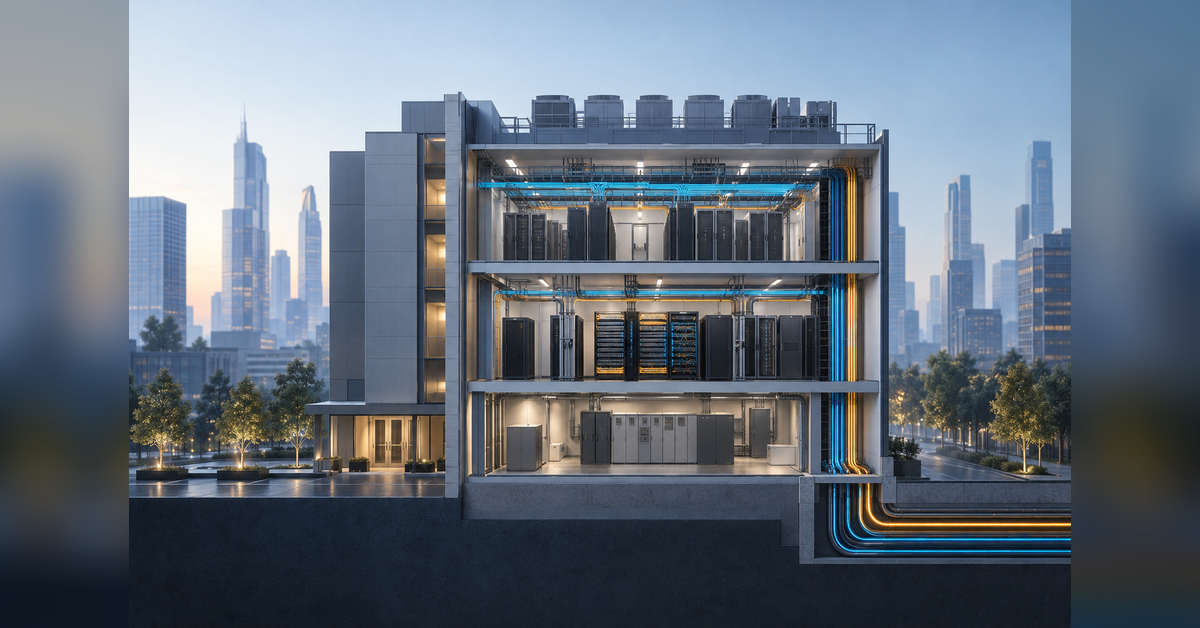
The Newark Procurement Trap: Distinguishing Buildings from Service Providers
In the high-stakes world of data center procurement, the address 165 Halsey Street in Newark, New Jersey, often appears twice on shortlists, leading many decision-makers into a common trap. As of November 3, 2026, Percepture reports that buyers frequently mistake the building-level contact for the 165 Halsey facility with the Equinix NY1 provider as two independent geographic options. In reality, they are two distinct procurement paths operating within the same physical structure. Choosing between them is not a matter of selecting a different site, but of defining which service arrangement—and which party—best supports your specific operational load.
The distinction is vital because a street address identifies a location, not the internal responsibilities of the parties controlling the space. For companies requiring true geographic resilience, treating two contracts at the same address as a primary and secondary site is a dangerous oversight. They share the same utility infrastructure, building access points, and network routes. When a problem crosses the boundary between these systems, you need to know exactly who is responsible for the fix. Relying on different provider names to establish independent failure domains is a strategy that often fails when shared dependencies fail.
Defining Your Service Boundary
Before soliciting quotes, you must move beyond directory listings and define what you are actually buying. Are you securing building access, or are you purchasing a managed service? Percepture suggests a rigorous five-part “Interconnection Fit” sequence to clarify these boundaries. You should explicitly record the street address, building, and suite or floor for every proposal. This prevents duplicate facility counts and forces a clear comparison between the physical location and the party supplying the service. If you are deploying a small deployment, your requirements for access, support, and installation will differ sharply from other deployment types.
When evaluating providers, require every proposal to name the legal contracting party and the specific services they control. Ask who installs cross-connects and who handles escalation when things go wrong. If your deployment involves multiple parties, ask where responsibility changes hands between the parties.
Specify Equipment Requirements Before Selecting a Facility Site
A common pitfall in site selection is the assumption that a general label applies to every cabinet in a facility. In reality, you must provide the seller with an equipment schedule that details your actual rack layouts, anticipated power draw, and cooling needs. You need a written commitment for the deliverable IT load in your specific space, not a generic figure representing the building’s total power capacity. If your equipment requires specific airflow management, those requirements must be documented in the proposal to ensure the facility can actually support them under normal operating conditions.
Network connectivity requires a similar level of scrutiny. A list of carriers available in a building is not a connection design. You must identify your required endpoints—whether they are regional offices, cloud providers, or other data centers—and ask the seller to map the physical path to those destinations. Request the order path, installation responsibility, and expected delivery milestones for every connection. If your workload includes compute with internal network requirements, assess those separately from the transport between Newark and your secondary sites.
The Practical Path to Procurement
When you tour a facility, do not settle for a generic walkthrough. Ask to see the actual space where your equipment will reside, provided it is permitted. Discuss how your hardware will arrive and the specific procedures for authorized personnel to access the site.
Ultimately, the decision to expand beyond Newark should be driven by your specific resilience and capacity requirements rather than a lack of options within the city. If your recovery model demands a separate geographic location, look toward alternatives like Secaucus, but treat them as distinct market entries. Apply the same rigorous address, service, and capacity checks to every additional location you evaluate. By assigning internal owners—IT for technical design, procurement for supplier obligations, and finance for commercial commitments—you turn a complex procurement cycle into a manageable, transparent process. The goal is not just to find space; it is to ensure that the service you buy matches the technical demands of your business on the day you turn it on.
Keep reading

Parkville man dies in four-vehicle crash in Overland Park
Fatal Chain-Reaction Crash at Nall Avenue and 107th Street A 73-year-old Parkville man has died following a four-vehicle...

Minnesota midterm voter turnout Shatters previous records
Minnesota has officially shattered its midterm election turnout records. According to unofficial figures released by the office of...
William Lawrence Defeats Tom Barrett in Michigan’s 7th District
Barrett Concedes Michigan’s 7th District to Lawrence U.S. Rep. Tom Barrett, a Republican from Charlotte, conceded Michigan’s 7th...

Def Leppard, Goo Goo Dolls Play TD Garden March 17, 2027
A 2027 Rock Calendar Takes Shape at TD Garden The concert calendar for Boston’s TD Garden is beginning...