
New Hampshire’s politics shifted as Democrats secured veto-proof control in both the House and Senate. The outcome, reported by InDepthNH.org, signals a significant transition in state governance that will effectively bypass the agenda of Republican Governor Kelly Ayotte for the next two years.
Rep. Alexis Simpson (D-Exeter) cited concerns over the rising cost of living, pointing to property taxes, healthcare and prescription drug costs, and struggling public schools.
“Property taxes have skyrocketed, healthcare and prescription drugs are more expensive than ever, and public schools are struggling under decreased state funding for our communities,” Simpson stated in a press release. She added that House Democrats are preparing to address these pressures once the new session convenes in 2027.
Democrats Plan to End School Vouchers and Legalize Marijuana
With their newly established veto-proof control, Democrats are now positioned to advance a legislative agenda that was previously blocked. Among the specific goals mentioned by Democrats during the campaign are:

- Ending the state’s Education Freedom Accounts program.
- Increasing per-pupil funding to meet the requirements of the $500 million ConVal school funding lawsuit ruling.
- Expanding Medicaid and Medicare support.
- Reducing regulatory barriers to accelerate housing construction.
- Reintroducing the state’s annual car inspection system.
- Legalizing marijuana.
While the party has outlined these objectives, internal discussions regarding the immediate order of business remain fluid. House Democrat staffers have referred inquiries back to the initial post-election press release, leaving the specific order of legislative action yet to be determined.
The Transition of Power
The transition marks the end of a long-standing tenure for House Speaker Sherman Packard (R-Londonderry). After 36 years of service in the House and six years as Speaker, Packard addressed the transition in a farewell message, emphasizing the importance of institutional stability.
“The voters have spoken, and I respect their decision. It has been the honor of my life to represent the people of Londonderry in the New Hampshire House for 36 years, and to serve my colleagues as Speaker for the last six,” Packard said.
As Republicans prepare to vacate leadership roles, questions have surfaced regarding who will guide the Democratic caucus. Rep. Alexis Simpson, who served as House Minority Leader, is viewed as a leading candidate for the speakership. However, the internal competition is growing. Less than 24 hours after the polls closed, Rep. Jim Maggiore (D-North Hampton) announced his own candidacy for the position.
Maggiore’s bid is framed as a call for a change in tactical direction. “This is a turning point for our caucus and for New Hampshire,” Maggiore said. “We can’t meet this moment with the leadership of the past.” He has secured support from colleagues like Rep. Rosemarie Rung (D-Merrimack), who argue that the party must move from a defensive stance to a more proactive, collaborative approach.
The Opposition’s Outlook
Republican leaders, including Rep. Jason Osborne (R-Auburn), have warned that the shift will lead to tax increases. Osborne, who had been positioning himself for the speakership prior to the election, suggested that the public will ultimately seek a return to Republican leadership after witnessing the results of the next two years.
“Not one Republican will vote for an income tax. Not one Republican will vote for a sales tax. Not one Republican will vote to gut the property tax cap,” Osborne said. “If Democrats want to tax New Hampshire, they will own it alone.”
As the state prepares for the January session, the divide between the two parties remains stark. While Democrats are set to advance their policy agenda with veto-proof control, Republicans are positioning themselves as the primary check on tax increases.
Worth a look

Parkville man dies in four-vehicle crash in Overland Park
Fatal Chain-Reaction Crash at Nall Avenue and 107th Street A 73-year-old Parkville man has died following a four-vehicle...

Minnesota midterm voter turnout Shatters previous records
Minnesota has officially shattered its midterm election turnout records. According to unofficial figures released by the office of...
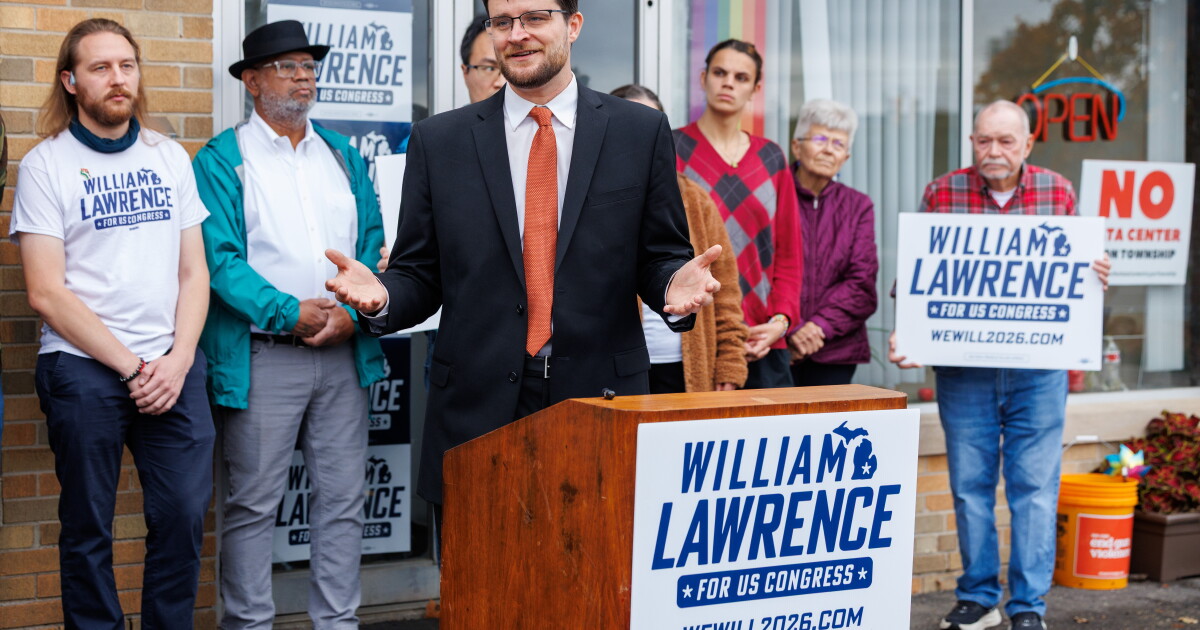
William Lawrence Defeats Tom Barrett in Michigan’s 7th District
Barrett Concedes Michigan’s 7th District to Lawrence U.S. Rep. Tom Barrett, a Republican from Charlotte, conceded Michigan’s 7th...

Def Leppard, Goo Goo Dolls Play TD Garden March 17, 2027
A 2027 Rock Calendar Takes Shape at TD Garden The concert calendar for Boston’s TD Garden is beginning...