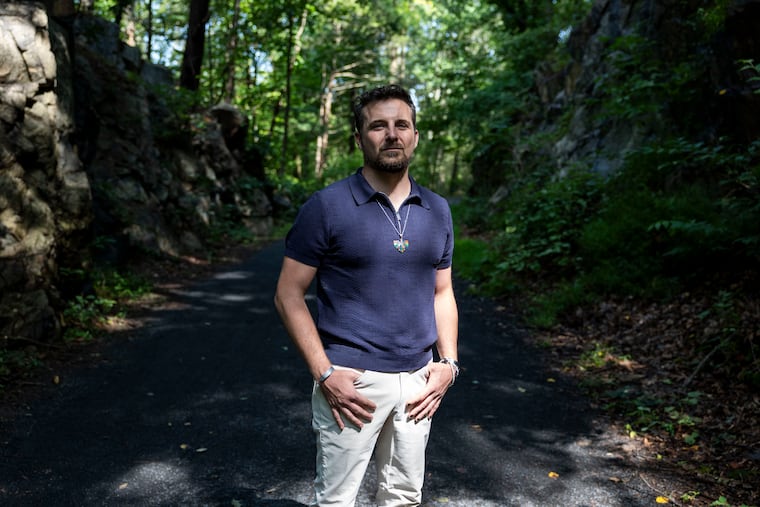
Ian Austin watched the video of an Immigration and Customs Enforcement agent fatally shooting Renee Nicole Good in January, and the footage struck a nerve that six deployments to Afghanistan had left raw. As The Philadelphia Inquirer reported, the 36-year-old U.S. Army veteran packed a bag and drove from his home in Bryn Athyn to Minnesota, joining a demonstration inside a St. Paul church that has since landed him at the center of a high-profile federal case.
Facing Federal Charges Over a St. Paul Church Protest
Austin must return to Minneapolis this week for a string of hearings as he fights to have his case dismissed. Federal prosecutors have indicted 38 people on felony charges over the demonstration inside Cities Church, where one of the pastors serves as a local ICE official. If convicted under the statutes brought against him, Austin could face up to 10-year prison terms, though his defense attorney, Sarah Gad, notes she does not expect that outcome.
The indictment alleges that Austin was part of a group of roughly 20 to 40 agitators who executed a coordinated takeover of the building, engaging in acts of physical obstruction and intimidation. According to the court documents, protesters chanted “ICE Out!” and “Hands Up, Don’t Shoot!” while congregants and the pastor perceived the hostile environment as a threat of violence. Defense attorneys counter that the charges represent an unprecedented stretch of federal law, twisting statutes designed to protect civil rights into weapons against political speech.
From the 1st Ranger Battalion to a Mental Health Reckoning
Before his arrest in Minnesota, Austin’s life followed a distinctly different trajectory. Growing up in Huntingdon Valley and Bryn Athyn, he was an athlete whose plans for a college sports scholarship dissolved after an arm injury. He enlisted in the U.S. Army, serving from 2008 to 2014 with the elite 1st Ranger Battalion. Military records show he deployed to Afghanistan six times and earned a Joint Service Commendation Medal with a “V” device for combat heroism.
Those tours left deep psychological scars. Austin deals with treatment-resistant post-traumatic stress disorder, crippling depression, and moral injury stemming from nighttime helicopter raids on high-value Taliban and al-Qaeda targets. “That, to me, is murder, whether they’re combatants or not,” Austin told The Philadelphia Inquirer, describing how soldiers called out “gun” to meet rules of engagement before opening fire.
When protests erupted following the 2020 murder of George Floyd, Austin joined La Salle University classmates as an ad-hoc street medic, marking what he calls a pivotal course correction toward activism.
Legal Battles and Political Fallout
The federal case relies heavily on two statutes: the Civil Rights Act of 1871, originally passed to combat Ku Klux Klan violence, and the Freedom of Access to Clinic Entrances (FACE) Act. Gad pointed out a stark double standard in enforcement, noting that the Trump administration previously pardoned anti-abortion protesters convicted under the FACE Act for blockading a Washington clinic. The defense has filed motions alleging selective and vindictive prosecution.
Kushner argues that the case forms part of a broader political offensive by the Trump administration to silence critics of immigration enforcement. While federal prosecutors have offered defendants the chance to plead down to misdemeanors, none have accepted the terms. Meanwhile, Austin remains grounded in Pennsylvania under a judge’s orders after a separate disorderly conduct charge stemming from an anti-ICE demonstration near New Jersey’s Delaney Hall detention center in June.
For Austin, the looming threat of prison time is secondary to his belief that opposing government policies is essential to his mental and civic survival. “Maybe this is a bit grandiose,” he said, “but I would like to live in a world where our laws and systems reflect our actual values.”
Keep reading

Shadaya Bennett Joins CZ Strategies as Vice President
From Assembly Chief of Staff to Trenton Lobbying Vice President Shadaya Bennett has joined Christina Zuk’s Trenton lobbying...

Southern Connecticut Field Hockey Loses 1-0 to SNHU
Southern Connecticut Field Hockey Drops Narrow 1-0 Decision to SNHU at Jess Dow Field Southern Connecticut State held...

Rasheem Biles Delivers Dominant Performance Against Mississippi State
Rasheem Biles Unleashes Career Performance Against Mississippi State Amid Family Loss “I know that they are back home...

Carson City Petition Seeks Voter Approval for Purchases Over $10 Million
Carson City residents could soon have direct veto power over major municipal expenditures following the collapse of a...