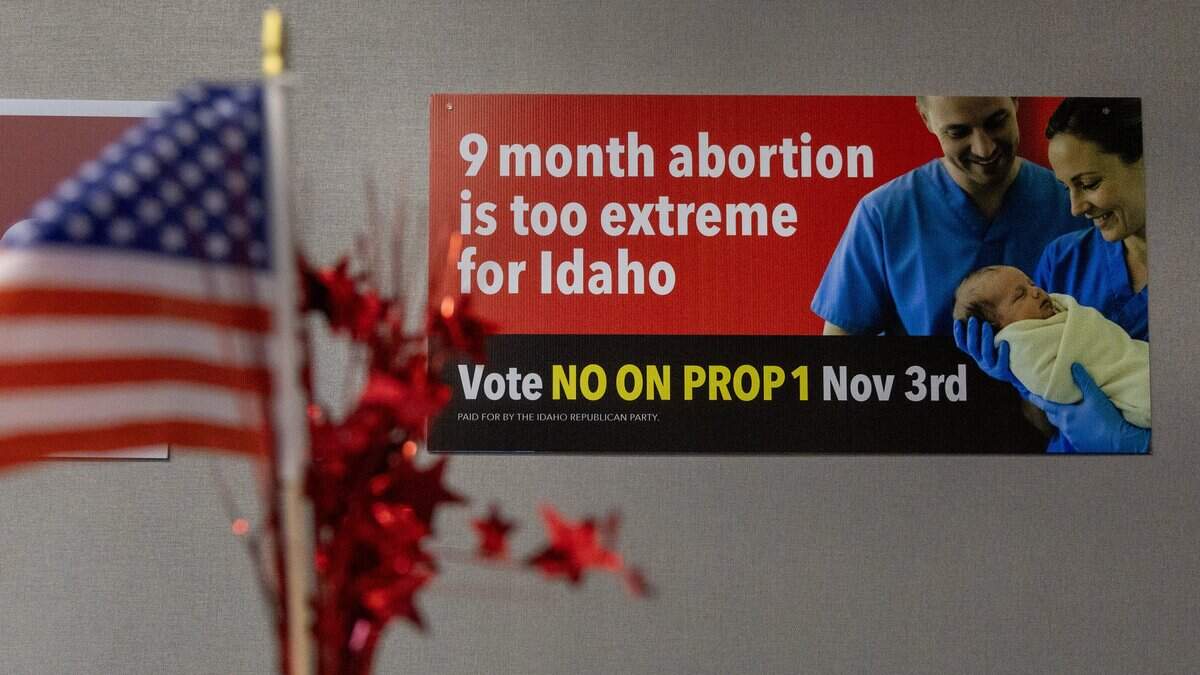
Idaho Proposition 1 Defeated as “No” Votes Secure 55.4% Majority
Proposition 1, a ballot measure designed to expand abortion rights and protect reproductive healthcare in Idaho, has failed at the polls. Sponsors conceded the defeat in the early hours of Wednesday morning after late returns shifted momentum decisively away from the initiative, the Idaho Statesman reported.
By 12:48 a.m. Wednesday, with nearly 600,000 votes counted, “No” votes pulled ahead to capture 55.4% of the electorate. The final margin stretched to a gap of more than 60,000 votes, closing the book on a fiercely contested political showdown over the state’s strict abortion laws.
“This is a tremendous, frankly gutting, loss, especially for the women, families and physicians of Idaho,” Melanie Folwell, executive director of Idahoans United for Women and Families, said in a news release. “For a state that claims to distrust big government, there is no greater hypocrisy than keeping politicians in the exam room.”
The proposed legislation sought to prevent the state from prohibiting or interfering with a broad spectrum of reproductive healthcare, encompassing contraception, fertility treatments, miscarriage management, and childbirth care. Under the measure, abortion would have remained legal up to the point of fetal viability or during medical emergencies. Instead, Idaho’s near-total abortion ban remains firmly in place, leaving the state’s medical community grappling with restrictions that critics argue lack adequate health exceptions for mothers.
A Tale of Two Electorates: Early Leads vs. Late Returns
The trajectory of Tuesday night’s election kept campaigns on edge as different voting blocs reported their numbers. Prop 1 held an early lead on Tuesday evening while returns were heavily concentrated in Ada County and the Boise area, where “Yes” votes reached 56.9% as of 12:50 a.m. Wednesday.

However, opponents anticipated the shift. Early and absentee ballots favored the initiative, but organizers with the opposition campaign knew from historical voting patterns that in-person and later-arriving precinct counts would heavily favor their side.
“This is how it plays out every election cycle, and it brings a bit of panic,” Tom Luna, a board member of the campaign against Prop 1, told the Idaho Statesman. “You see this huge deficit, and you know from experience that it will turn around.”
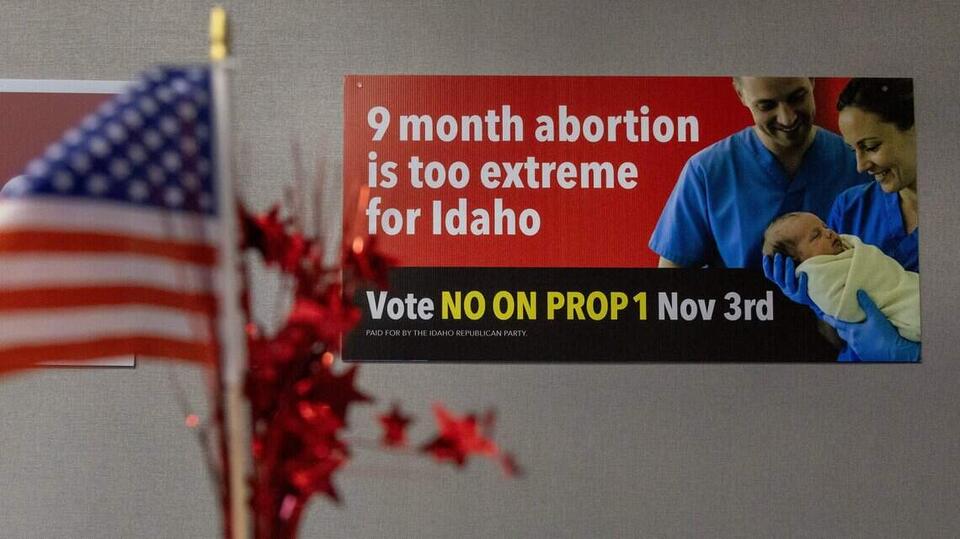
Mary Strow, a spokesperson for the opposing Too Extreme for Idaho campaign, celebrated the final tally. “The people of Idaho have spoken,” Strow said in a news release. “Idaho is and will always be a state that values life and protects the unborn.”
Idaho Republican Party Chairwoman Dorothy Moon pointed to the initiative as a major catalyst for the party’s base. Moon told the Idaho Statesman that fierce opposition to Prop 1 served as a primary driver of Republican voter turnout during the election cycle.
Campaign Finance Laws Tested by Record Fundraising
The fight over the Reproductive Freedom and Privacy Act Initiative tested the boundaries of Idaho campaign finance laws, drawing record-breaking financial contributions from both sides, according to Idaho Secretary of State Phil McGrane. By Tuesday afternoon, proponents at Idahoans United for Women and Families raised $4.9 million across roughly 7,500 individual contributions. Meanwhile, the primary opposition organization, Too Extreme for Idaho, gathered $4.6 million from approximately 300 contributions, a total that included a combined $1.3 million from The Church of Jesus Christ of Latter-day Saints and the Catholic Diocese.
The debate also fractured the state’s medical community. Nearly 400 doctors signed an endorsement letter warning that the existing abortion ban endangers pregnant women, while a competing letter signed by nearly 100 physicians argued that the language of Prop 1 pushed too far in expanding access.
Even if the ballot measure had succeeded, its path forward remained uncertain. To qualify for the ballot, supporters collected more than 110,000 signatures spanning all 44 of Idaho’s counties. In response, the Idaho Republican Party adopted a resolution at its June annual meeting urging state lawmakers to repeal the initiative if voters approved it, a legislative threat that several Republican candidates openly supported during their campaigns.
Following the defeat, Folwell indicated that supporters will shift their focus to the upcoming legislative session, urging residents to press lawmakers for necessary medical exceptions to the state’s current statutes.

Democrat Ben Brist Defeats Bob Donovan to Help Flip Wisconsin Assembly
Ben Brist, a Democrat and seven-year Army veteran, defeated longtime Republican politician Bob Donovan on Tuesday night in...

Charleston parking and rental taxes can increase visit costs
Charleston can be expensive, but the total depends on your dates, group size, cars, and dining. City-operated garages...

Washington Manor opens its doors at $3,540 per month
Washington Manor Opens at $3,540, $2,795 Below Area Care Costs Washington Manor opens its doors at $3,540 per...

Burlington Central beats St. Charles East 27-25, 25-16 in Burlington
Burlington Central defeated St. Charles East 27-25, 25-16 on Tuesday night in Burlington, sending the Rockets to the...