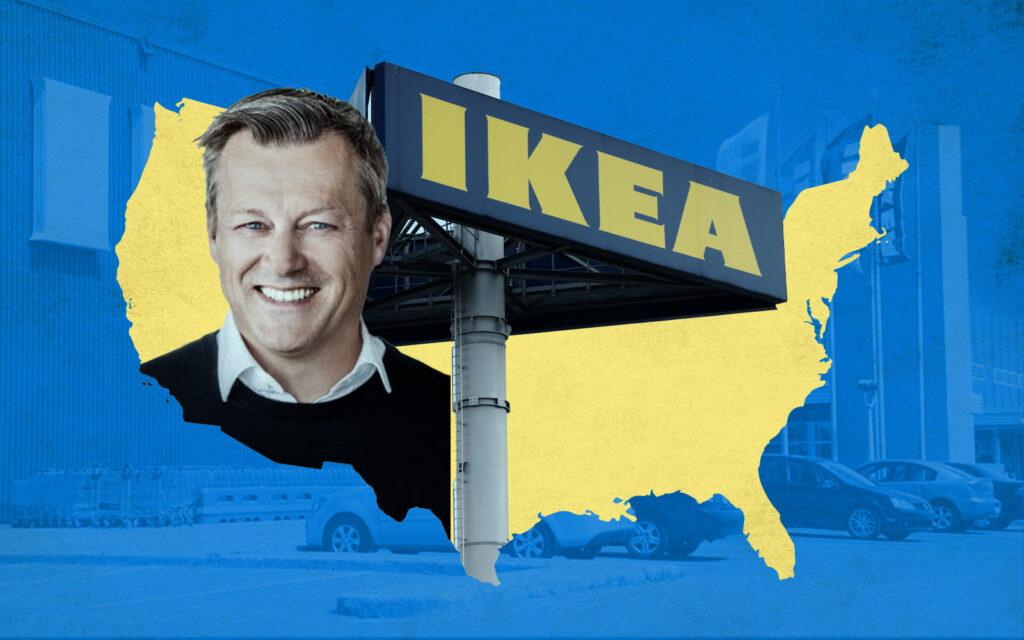
IKEA is not closing its U.S. stores; rather, the Swedish retailer continues to operate and expand its accessibility through a network of 504 stores globally. In the United States, the company is actively utilizing a variety of third-party pick-up points across multiple states to supplement its traditional retail presence.
The Retail Strategy Beyond Big-Box Stores
While the traditional big-box store remains the centerpiece of IKEA’s identity, the company is actively pushing into new logistical territory. According to Ikea, the retailer is currently maintaining a diverse array of pick-up points across the United States, partnering with third-party logistics providers to reach customers outside of major metropolitan hubs.
These locations, which include sites serviced by RXO, CRST/NAL, and Prime Logistics, span from New York to Texas. In New York, for instance, customers can utilize pick-up points in Albany-Altamont, Buffalo-Cheektowaga, and Syracuse-Liverpool. Similar operations are active in Ohio, Oklahoma, Pennsylvania, Tennessee, and Virginia. By leveraging third-party infrastructure, IKEA is effectively decentralizing its distribution model, moving away from a reliance on massive, standalone real estate footprints in every market.
Operational Hubs and Ownership Structure

The backbone of this global operation remains rooted in Sweden. According to the source, the company’s operational hub is located in Älmhult, Småland, where it manages product development, design, and global supply chain sourcing. This location also hosts the first IKEA store and the IKEA Museum.
The corporate structure behind these stores is complex. IKEA is owned and operated by a series of for-profit and not-for-profit corporations, collectively managed as the Inter IKEA Group and Ingka Group. The brand itself is owned by Inter IKEA Systems B.V., based in the Netherlands. Most stores, including the majority of those operating under the IKEA banner, are managed by the Ingka Group as a franchisee. This structure allows for a consistent global brand identity while utilizing local franchisees to handle the nuances of regional operations.
Tempe, Arizona: A Case Study in Store Location
The company’s commitment to physical retail is evident in locations like Tempe, Arizona. According to the source, IKEA operates one dedicated furniture store in Tempe, situated near the intersection of South Papago Circle and South Eagleman Drive.
The site is positioned for high accessibility, located just a one-minute drive from Exit 158 of the Maricopa Freeway (I-10). This specific location highlights the company’s focus on convenience, placing its showrooms near major transport arteries and local landmarks such as the Tempe Sports Complex Park. The company continues to maintain this physical presence as part of a broader strategy that includes over 504 stores in 60 countries and three territories.
Growth and Digital Reach

Despite the shift toward third-party pick-up points for logistics, the company’s scale remains massive. The source reports that in fiscal year 2024, IKEA moved €45.1 billion worth of goods. This volume is supported by a significant digital transformation; in that same fiscal year, the company recorded over 4.6 billion visitors to its websites, which feature a catalog of approximately 12,000 products.
The shift toward these digital and logistical touchpoints marks a departure from the company’s 1943 origins as a mail-order business founded by Ingvar Kamprad. While the core ready-to-assemble furniture model remains the same, the method of getting that furniture to the consumer has evolved from simple mail-order to a hybrid of physical showrooms, global distribution centers, and localized pick-up points.
Market Dynamics and Competition
IKEA’s ability to maintain its position as the world’s largest furniture retailer—a title it has held since 2008—is largely attributed to its rigorous attention to cost control and continuous product development. By maintaining a mix of owned stores and franchised operations, the brand manages to keep prices lower than its competitors, a strategy that has remained consistent since the first store opened in 1958.
The decision to utilize pick-up points like the University Book Store in Madison, Wisconsin, or the IKEA Distribution Center in Baytown, Texas, demonstrates that the company’s growth is no longer measured solely by the number of new warehouse-sized buildings constructed, but by the reach of its fulfillment network. For the consumer, this means that the IKEA experience is increasingly defined by the proximity of a pick-up point rather than the presence of a flagship store.
Find more reporting in our Business section.


Mary Chia Holdings Admits Disclosure Lapses Over Subsidiary CPF Arrears
Cash-strapped Singapore beauty group Mary Chia Holdings has admitted to disclosure lapses, omitting court proceedings and Central Provident...
Assessment: China Local Government Debt Hit 10 Trillion RMB by End of 2024
Municipal financial obligations reached 10 trillion RMB (US$1.37 trillion) at the close of 2024, representing about 7 per...
PM Modi and CM C. Joseph Vijay Launch Multiple Development Projects in Tamil Nadu
Prime Minister Narendra Modi arrived in Chennai on October 11, 2026, to launch development projects exceeding ₹13,000 crore...