Illinois is currently on track to post a $927 million surplus for the fiscal year ending June 30, 2027, but a massive $2.4 billion deficit looms for the following year.
While strong corporate income and sales tax revenues are driving the current surplus, the Governor's Office of Management and Budget (GOMB) warns that state finances will change as federal policy changes take effect.
The projected shortfall is largely tied to the implementation of the One Big Beautiful Bill Act, a piece of federal legislation that will alter how healthcare and food assistance are funded. According to a report from the Governor's Office of Management and Budget released Friday, the state must prepare for higher expenditures as the federal government reduces its share of several key programs.
Federal policy shifts drive projected deficit
The transition from a surplus to a multi-billion dollar deficit is driven by specific changes to how Medicaid and nutrition assistance are managed. GOMB expects state revenue to reach approximately $58 billion next year, a $1 billion increase over the current year fueled by personal income tax growth, but spending is projected to climb to $60.3 billion.
This spending spike is not merely organic growth; it accounts for Illinois picking up roughly $1.4 billion in costs that are currently covered by the federal government.
One of the most immediate pressures arrives on July 1, 2027, when federal law requires managed care organizations to be taxed at the same rate regardless of their Medicaid affiliation. ABC7 Chicago reported that this single change could leave a $1.3 billion hole in the state budget if current funding levels remain static.
The long-term erosion of federal support is even more pronounced in the healthcare sector. Federal law will eventually require states to lower the provider tax on hospitals from the current 6% maximum to 3.5% by fiscal year 2032.
Because the federal government matches a portion of this tax revenue, the lower rate will result in a decline in federal Medicaid support. GOMB estimates that total federal support for Medicaid in Illinois could drop by $2.8 billion by the time these tax changes are fully implemented.
Beyond healthcare, the state faces a mounting bill for the Supplemental Nutrition Assistance Program (SNAP). Starting in fiscal year 2029, Illinois is expected to shoulder a larger portion of these benefits, a shift that could cost the state more than $400 million annually.
Pritzker moves to build a fiscal buffer
Rather than spending the current surplus on new initiatives, Governor Pritzker is moving to “pump the brakes.” He has proposed a $728 million supplemental spending plan designed to protect the state against these looming federal withdrawals. This plan aims to replenish a special reserve fund that allows the Governor to plug budget gaps immediately when federal funding vanishes.
The Governor is also prioritizing funds for disaster relief that the federal government has declined to cover and preparing the state employee health insurance plan for industry-wide changes. If these measures are adopted, the state would be left with a much tighter $199 million surplus at the end of the current fiscal year.
“Canceled and reduced grants to entities in Illinois total several hundred million dollars, with significantly more potential cuts currently subject to litigation,” the GOMB report said.
The report further said that the state will have very limited ability to replace lost federal funding for specialized state grants, and no funding to replace grants that go directly to local governments and community organizations.
Competing demands for state revenue
The Illinois Federation of Teachers (IFT) is set to lobby lawmakers in Springfield this Wednesday, asking them to increase funding for public schools by more than the annual $350 million increase to the Evidence-Based Funding formula.
“As lawmakers weigh deals for a new Bears stadium and data centers, IFT members will ask a simple question: When do our students get their turn?” the organization said in a statement, adding that “the money is there” from the projected surplus.
Higher education is also facing a steep climb. The University of Illinois Board of Trustees recently approved an FY28 budget request that asks for a 10.9% increase in funding, totaling $80.5 million. This follows a period of much slower growth, with the current-year budget increasing higher education funding by only 1%.
“The increased funding is needed to better prepare students for a world being changed by artificial intelligence and quantum computing,” Killeen said. System President Tim Killeen
Governor Pritzker is expected to present his formal budget proposal to lawmakers in February.
Worth a look

Boston Is a Medical Powerhouse. Why Is It so Hard to Get Primary Care?
In a column for The Boston Globe, Olivia Yarvis argues that Boston's status as a premier medical capital...

Pixidia Analysis: Only Three of Ten Top-Rated Halifax Tours Run in Winter
Halifax is not a one-afternoon city, splitting cleanly between a historic harbourfront best explored on foot and an...

A Citizen-led $15K Grant and More Than 20 Volunteers Help Keep North Augusta Beautiful
About 20 people gathered on the chilled morning of Nov. 13 at Living History Park to repair a...
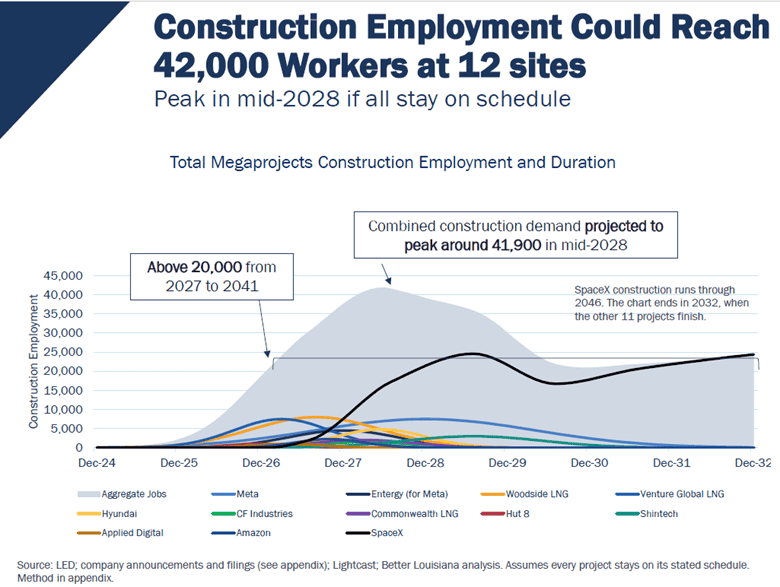
Louisiana Faces a Critical Shortage of Skilled Workers
Louisiana faces a critical shortage of skilled workers as twelve major industrial and technology projects totaling $282 billion...