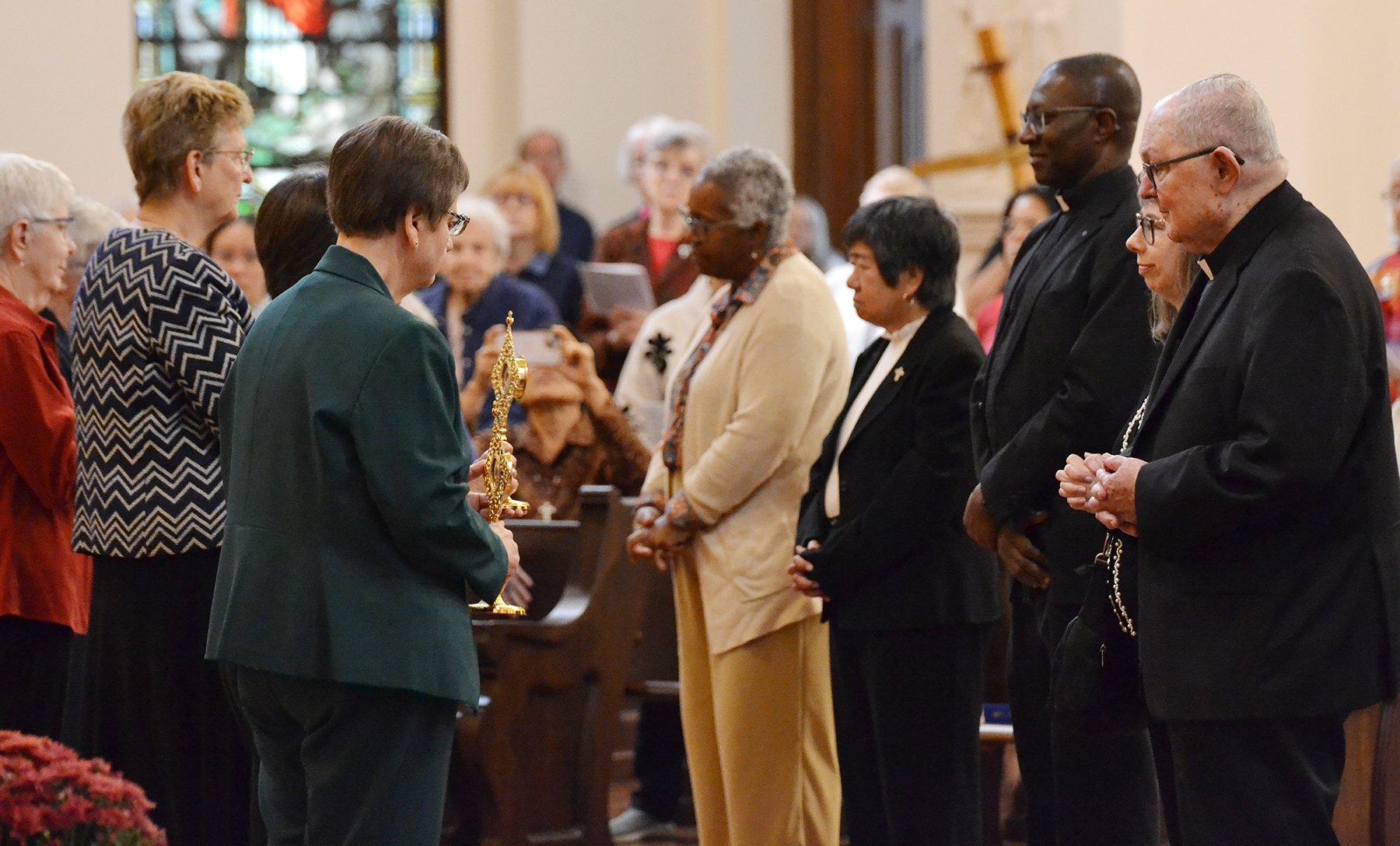
The Sisters of Providence of Saint Mary-of-the-Woods distributed first-class relics of St. Theodore Guérin to representatives from all five of Indiana’s Catholic dioceses on October 11, 2026, to mark the 20th anniversary of her canonization. The event, which included a pilgrimage and a special Eucharistic liturgy, serves to expand the public’s physical and spiritual connection to the woman who became the first canonized saint in the state of Indiana, OSV News reported.
For the faithful, these relics are more than historical curiosities; they are tangible links to a legacy of frontier education and care for the marginalized. By providing relics to representatives from each of Indiana’s five dioceses, the Church is offering the faithful a connection to St. Theodore and her story beyond the site at Saint Mary-of-the-Woods.
Relics move to five Indiana dioceses
During the anniversary liturgy, first-class relics—which the Catholic Church defines as portions of a saint’s body—were handed over to specific representatives. According to records from both OSV News and the Sisters of Providence of Saint Mary-of-the-Woods, the recipients included:
- Msgr. Fred Easton (Archdiocese of Indianapolis)
- Mary Gen Blittschau (Diocese of Evansville)
- Father Francis Chukwuma (Diocese of Fort Wayne-South Bend)
- Sister Evelyn Ovalles (Diocese of Gary)
- Marcia Murphy (Diocese of Lafayette)
The impact of this distribution is already manifesting in concrete plans for public veneration. Father Francis Chukwuma intends to bring the relic to the cathedral in Fort Wayne for public access. The Diocese of Fort Wayne-South Bend is also commissioning a statue of Mother Theodore from the same Italian firm that crafted the cathedral's statue of Blessed Solanus Casey. Once finished, the statue and relic will be positioned together at the back of the cathedral.
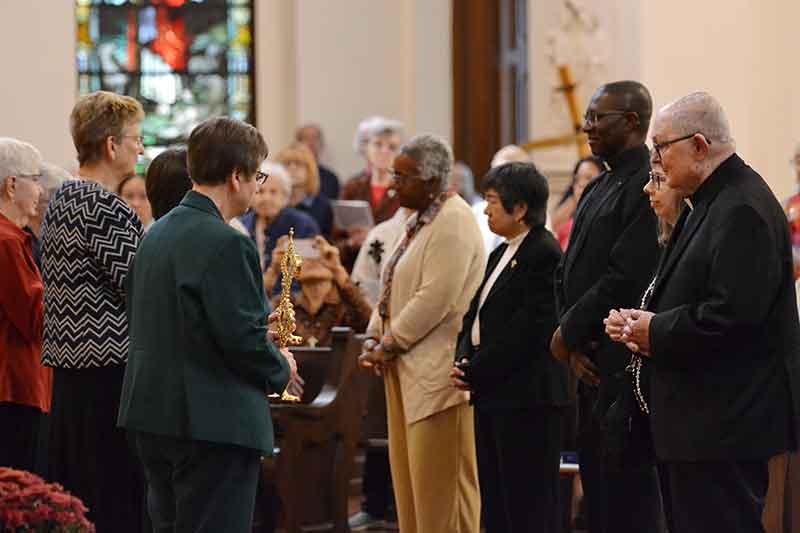
While the specific plans for each diocese remain varied, Sister Anne Therese Falkenstein told OSV News that the Sisters of Providence are developing a formal protocol. This will allow parishes, shrines, and other ecclesiastical institutions to request relics of St. Theodora to promote her story of relying on divine providence while caring for the vulnerable.
A legacy built on the Indiana frontier
The veneration of St. Theodore Guérin is rooted in a story of extreme scarcity and persistence. Born in France’s Brittany region in 1798, she joined the Sisters of Providence in 1823. In 1840, she led five other sisters to the Indiana frontier, arriving in Terre Haute to find nothing more than a “poor log cabin” that she described as their “ALL.”
The stakes were high; the sisters were operating in an unfamiliar environment with limited resources. Despite these hardships, they opened a school within a year. That institution survives today as St. Mary-of-the-Woods College. Throughout her tenure in Indiana, Mother Theodore established two orphanages and nearly a dozen schools, cementing a foundation for Catholic education in the Midwest.
“The hallmark of her life is just really reliance on God’s providence for everything she tried to accomplish, for everyone she tried to heal, for everyone whose needs she tried to meet,” Sister Anne Therese Falkenstein told OSV News. Indiana. She
This reliance on “Providence” isn’t just a theological point; it was a survival strategy. For a woman arriving from France in the mid-19th century, the lack of institutional support meant that every classroom and every meal for an orphan was the result of sheer will and community effort.
The tangible nature of sainthood
At the primary shrine in Saint Mary-of-the-Woods, the connection to the saint is visceral. As noted by the Sisters of Providence of Saint Mary-of-the-Woods, her remains are kept in a handmade walnut casket crafted from wood sourced directly from Saint Mary-of-the-Woods. Visitors can view a portion of her finger bones—the first-class relic—alongside the official decree from Rome.
The shrine also preserves the mundane items that highlight the human cost of her journey: her writing desk, her prayer book, her chaplet, and the shoes she wore when she traveled from France in 1840. These artifacts bridge the gap between the “saint” canonized by Pope Benedict XVI on October 15, 2006, and the woman who spent her days gathering linden blossoms in the Indiana forests.
The goal is to move the narrative from a textbook history of the 1840s into a living experience of “love, mercy, and justice” in the present day.
As the relics begin their journey to the various cathedrals and parishes across the state, the focus shifts from the anniversary of a title to the application of a life’s work. It is unclear whether these relics will spark a renewed interest in frontier education or simply serve as quiet points of prayer, but the infrastructure for that connection is now in place across all five dioceses.
Keep reading

John Ivory Trial: Blood Tests Negative for Drugs and Alcohol
John Ivory, a man facing charges in a fatal 2025 Anchorage crash, has had his blood tested by...

Obituary: Dennis Montgomery Sweatman of Macedonia Passes Away
Dennis Montgomery Sweatman, a 42-year-old resident of Macedonia, South Carolina, passed away on the morning of Wednesday, October...

Austin City Council 2026 Race: Final Campaign Finance Reports
With the November 3 election just days away, more than 20 candidates fighting for five Austin City Council...

Sober Living Homes in Utah: Licensing, Costs, and How to Choose
Finding a safe place to live during recovery in Utah is fundamentally different than in most other states...