
Thirty-seven freshmen flooded the Indiana Statehouse Tuesday, the largest Democratic freshman class since 2010, Indiana Capital Chronicle reported.
Republicans still control both chambers, but the margins have collapsed. Democrats picked up 16 House seats in November, shrinking the GOP majority to 54–46. In the Senate, five new Democrats cut the Republican edge to 35–15. Ben Smaltz of Auburn was elected House speaker without opposition after former Speaker Todd Huston lost his own re-election bid, and Chris Garten took over as Senate President Pro Tem.
The day’s ritual oaths and family photos masked a structural shift. Smaltz acknowledged the new math from the rostrum, telling Democrats they have “a greater opportunity to help shape the direction of this chamber and I encourage you to bring your ideas forward.”
To his own caucus he added, “We still hold the majority, but the dynamics have changed… I encourage you to listen, engage, and look for opportunities to work with our Democrat colleagues without abandoning our principles.”
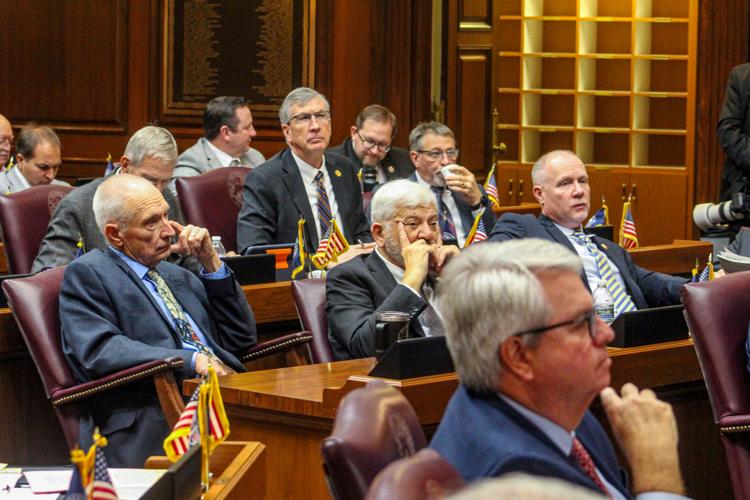
“We can be firm in our convictions without being disrespectful,” Garten told the Senate. “We can debate with passion without sacrificing professionalism, and we can disagree on policy without questioning one another’s character.”
Senate Democratic leader Shelli Yoder of Bloomington welcomed the tone but immediately pivoted to the budget session that begins in January.
She urged lawmakers to test whether the state’s economic policies are actually improving residents’ lives, naming affordability, public schools, and government transparency as places where common ground might exist. “That’s what we’re going to be finding common ground on and working very hard to the very end to make sure Hoosiers know that we are a chamber and a body that works for them,” she said.
The rules votes that followed
By afternoon, the bipartisan rhetoric hit its first hard test. House Republicans voted along party lines to reject two Democratic rules proposals aimed at transparency and minority influence.
One measure would have barred the chamber from considering conference-committee provisions that neither the House nor the Senate had previously approved — a check on the late-session, closed-door negotiations that often rewrite bills in the final hours.
Rep. Matt Pierce, D-Bloomington, pointed to language inserted into the 2025 budget in its closing moments that eliminated the election of some Indiana University trustees by IU alumni. “I’ve seen over and over again this process favor the insiders, favor the people who have influence, and we have an opportunity today to say we can do better,” Pierce said during debate.
The second proposal would have allowed “blast motions” — letting a bill stalled in committee reach the floor with 51 signatures. Rep. Alex Zimmerman, R-North Vernon, the new Rules Committee chair, argued the change would undermine committee work.
“This blast motion takes away the voice of the people that we are elected to serve,” Zimmerman said. “When they show up to a committee meeting, we let them testify on every bill that is heard in committee.”
Committee math settles at 8–6
A separate fight over committee composition appears resolved. For 14 years under Republican supermajorities, most House committees were split 9–4. Democrats demanded 7–6 parity to reflect the new 54–46 floor split. The pending agreement expands most panels to 14 members — eight Republicans, six Democrats. Smaltz called the split “a reasonable assumption” and said assignments would be finalized within about 10 days.
House Democratic leader Phil GiaQuinta of Fort Wayne said his caucus would not have accepted an 8–5 Republican edge. “The majority is going to want you know to have their two-person spread,” GiaQuinta said. “It is a reflection of where we’ve been in the past. Good number to land on.”
The 2027 budget session opens in January.

NYC Releases ‘Get Online NYC’ Draft Plan to Connect 1.25 Million by 2034, Opens 60-Day Comment Period
New York City published a draft roadmap to connect 1.25 million more residents to affordable high‑speed internet by...

New Jersey Awards $15M for 44 Electric School Buses and 40 Chargers in Third Grant Round
New Jersey’s Department of Environmental Protection awarded nearly $15 million on Wednesday for 44 electric school buses and...

DEA Whistleblowers Claim Two New Retaliation Probes After TV Interview
"This public pressure appears to have renewed DEA's motivation to retaliate and prompted not one but two retaliatory...

A Father’s Pride: A 14-Hour Drive and a Son’s Culinary Journey Home
In a column for The Dispatch published on Wednesday Mississippi restaurateur and columnist Robert St. John recounted a...