
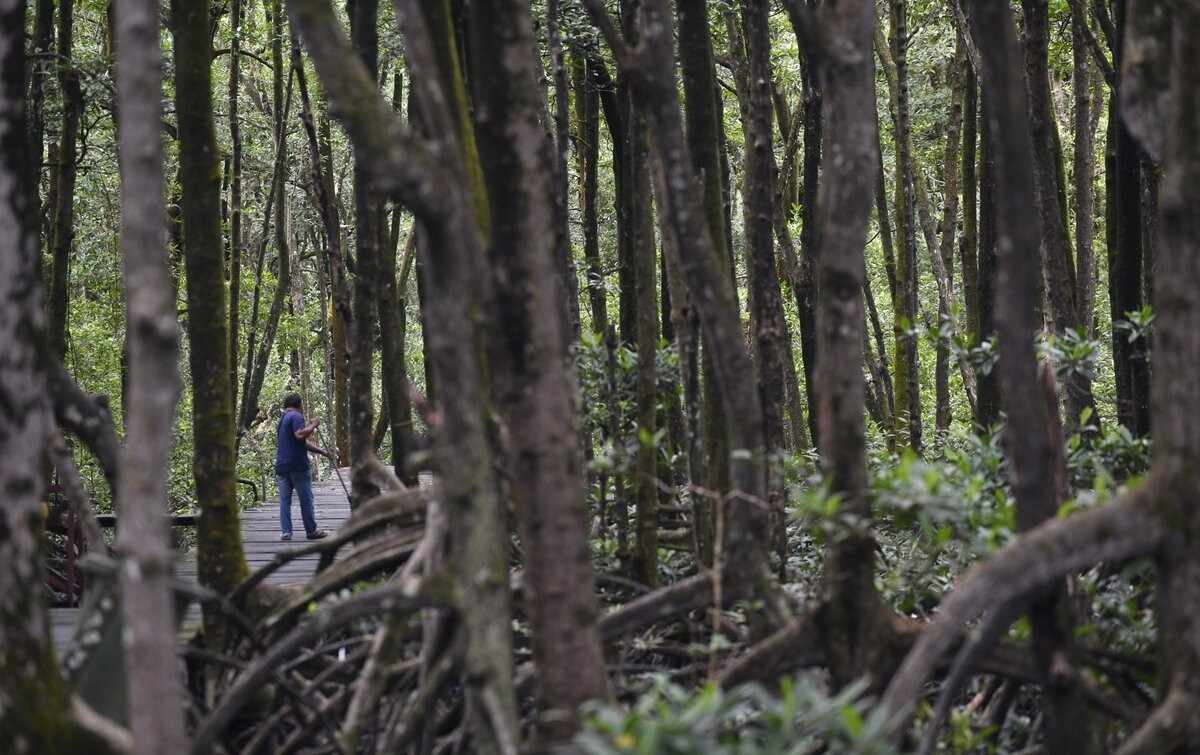
In the remote seaside village of Liagu, North Kalimantan, women lay out milkfish beside aquaculture ponds dotted with mangrove trees—trees that are slowly disappearing, taking the families’ livelihoods and shoreline protection with them. When world leaders gather in Antalya, Türkiye, on Nov. 9 for COP31, Liagu will not have a seat at the table, but its reality will hang over every negotiation about what a “just transition” actually means. Indonesia plans to use the summit to press wealthy nations for climate financing and to insist that emissions cuts account for development needs, ANTARA News reported.
Environment Minister Jumhur Hidayat told reporters in Jakarta on Wednesday that Indonesia would integrate fair energy transition priorities into all six negotiating tracks at the 31st Conference of the Parties to the UN Framework Convention on Climate Change, running Nov. 9-20.
“Our priorities are energy affordability, workers’ welfare, and protection of local communities. We also oppose unilateral measures that disadvantage developing countries,” Hidayat said.
Indonesia submitted its Second Nationally Determined Contribution to the UNFCCC on Oct. 27, 2025, estimating that greenhouse gas emissions will reach their maximum in 2030 at 1.35–1.49 gigatons of carbon dioxide equivalent and then decrease to 1.26–1.49 Gt CO₂e by 2035 depending on which low-carbon development scenario is followed. The document supports the Paris Agreement’s goal of keeping warming well below 2 degrees Celsius while pursuing efforts to limit the increase to 1.5 degrees, but Hidayat stressed that greater ambition must not create obligations beyond the agreement and must be backed by financing, technology transfer, and capacity-building from developed countries.
Hidayat said Indonesia would also follow up on the outcomes of the global stocktake—the five-yearly assessment of collective progress toward Paris Agreement goals—at the conference.
From Conference Halls to Coastal Villages
While COP31’s Climate Implementation Bridge aims to turn national climate plans into investment-ready projects, much of the groundwork in a country as vast as Indonesia happens at the provincial level. Since the early 2020s, under the guidance of the National Development Planning Agency, the Global Green Growth Institute has embedded teams in provincial administrations and local planning agencies, working closely with local investors to localize national decarbonization priorities.
To fund these transitions, Indonesia will push for expanded access to international climate financing through mechanisms such as the Green Climate Fund, the Global Environment Facility, and the Adaptation Fund. This demand reflects a long-standing divide in climate negotiations: developing nations argue they cannot cut emissions at the same pace as wealthy countries without the resources to do so.
Palm Oil Mandates Clash with Forest Fire Risks
A tension in Indonesia’s climate strategy is that since July, diesel sold in Indonesia has been required to contain 50% biodiesel made from palm oil under the B50 program, which reduces diesel imports but requires land. Meanwhile, government satellites recorded more than 20,000 fire hotspots in a single day this year, with haze crossing national borders and prompting Malaysia to close schools in Johor for two days.
The fires often start when land is cleared or peatlands are drained for plantations, making fire a land-use and energy problem rather than just a disaster-management issue. The government has formally acknowledged around 369,000 hectares of customary forests owned by 174 communities, setting a goal of 1.4 million hectares by 2029, but such legal recognition by itself does not channel money into village economies. Writing in Jakarta Globe, Bhima Yudhistira Adhinegara and Muhammad Zulfikar Rakhmat of CELIOS propose a just forest agenda that includes traceable palm oil supply chains, direct annual payments to villages that prevent fires verified by satellite, and a minimum 20% community share of revenue from carbon credits.
What Antalya Must Deliver
As delegates arrive in Antalya, Indonesia’s position is clear: the country will raise ambition only if developed nations provide the financing and technology promised under the Paris Agreement. The gap between the 369,000 hectares of customary forests recognized so far and the 1.4 million hectare target illustrates the scale of work ahead. Whether those commitments translate into investment-ready projects at the provincial level—or reach villages like Liagu before the mangroves disappear—remains the open question hanging over COP31.
More on Indonesia
Keep reading

NASA’s Swift Observatory Reenters Earth’s Atmosphere After 22 Years
NASA's Neil Gehrels Swift Observatory re-entered Earth's atmosphere at 7:39 a.m. EST on Wednesday over the North Sumatra...

MRA’s RARE Registry 2026 Report Reveals New Insights on Acral, Mucosal Melanoma
The Melanoma Research Alliance released its RARE Registry 2026 Data Report on July 30, 2026, giving researchers and...

11 Rescue Personnel Missing After Boats Capsize in Telangana’s Khammam District
The incident marks a grim turn in a rescue operation that began when five fishermen ventured into the...

Hackers Target French Blood Storage Freezers in Remote Attack
Hackers remotely changed the temperature settings on freezer units holding blood plasma at French Blood Establishment facilities in...