
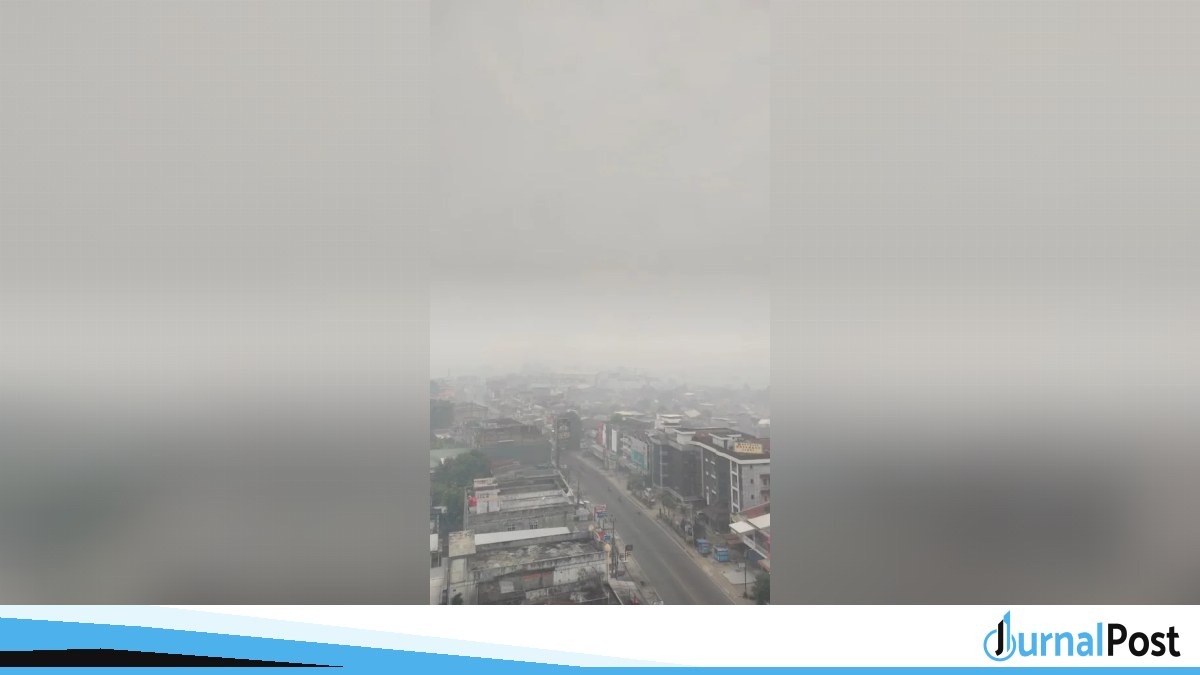
Indonesia’s 2026 forest and land fires have burned an estimated 2.9 million hectares through October, while regional budget cuts have forced village-level support for fire prevention to scale back. Smoke has put 17.4 million people at risk of respiratory illness across 12 provinces.
Forest firefighter Elva Yarsuri described conditions in South Sumatra’s Pulau Semambu village: “When land or forests catch fire, the blaze spreads rapidly because strong winds cause the flames to leap to other areas, igniting new fires.” Despite heavy rain the night before, smoke still rose from the roots of fallen trees, and the ground was cracked by extreme dryness.
How large are the fires?
Data from the independent geospatial platform Nusantara Atlas shows an estimated 2.9 million hectares burned between January and October, surpassing the 2.6 million hectares recorded in 2019. As of November 11, the number of hotspots was 67 percent higher than the same period in 2019, according to the platform. The Ministry of Forestry’s SiPongi monitoring system recorded 202,004.30 hectares affected nationwide from January to July, a 69 percent increase over the same period in 2025, JurnalPost reported.
Where are the worst affected areas?
Sumatra and Kalimantan have been hit hardest, but South Papua has emerged as a new epicenter. From January through October, 319,119.68 hectares burned in South Papua, exceeding the 277,127.29 hectares in Kalimantan during the same period, according to Nusantara Atlas data compiled by the Center for Economic and Law Studies (CELIOS), Dompet Dhuafa reported. Riau, Jambi, and South Sumatra remain priority regions for fire control, JurnalPost noted.
What role did budget cuts play?
The cuts to funding, aimed at financing priority programs such as a national free nutritious meal initiative, have “drastically diminished the regions’ capacity to handle forest and land fires,” said Nailul Huda, director of economics at the independent, nonprofit research institute the Center of Economic and Law Studies. In Pulau Semambu, village head Eka Rahmawati said budget constraints have forced her to scale back support for local fire prevention efforts.
She can now allocate only 350,000 to 500,000 rupiah ($19–$27) per month to cover the operational costs of a group of village volunteers, down from 1 million rupiah monthly over the previous two years. “There are a number of other villages that are unable to conduct patrols due to a lack of funds to purchase gasoline for their volunteers’ vehicles,” she said.

How has the government responded?
The government disputes that budget cuts hampered firefighting, saying the reductions apply strictly to routine institutional expenses such as official travel and administrative costs, not emergency operations. Officials maintain that actual disaster response has virtually unlimited financial backing through the state budget.
President Prabowo Subianto acknowledged at the ASEAN summit earlier this month that this year’s fires are the worst in Indonesia’s history and apologized to Singapore and Malaysia for the transboundary haze.
CELIOS estimates 17.4 million people face respiratory infection risk
CELIOS estimates 17.4 million people in 12 provinces are at risk of acute respiratory infections (ARI), with health costs linked to diagnosed upper respiratory tract infections estimated at 19.2 trillion rupiah ($1.1 billion), potentially rising to 224.65 trillion rupiah if undiagnosed cases are included. Smoke pollution is estimated to have caused 1,700 deaths in August alone, the Jakarta Globe reported.
The Health Ministry recorded 401,586 cumulative ARI cases linked to fires as of November 2 across seven provinces and 63 districts and cities, with 3,906 new cases on November 2 alone, JournalArta reported. Children and adults over 60 account for a large share of cases, along with 590 pregnant women, 1,530 people with asthma, and 8,086 outdoor workers.
Degraded peatlands and cheap land clearing drive fires
A joint study by Nusantara Atlas and Rainforest Action Network highlighted risks from degraded peatlands and inadequate fire management in rapidly expanding plantation concession areas. Ferdian Krisnanto, head of the Forest Fire Control Center for the Sumatra region, said: “It is difficult to prove who started the fire, and because land clearing by burning is the cheapest and fastest method, such practices continue.”
He emphasized that simply increasing the budget is not enough: “To address this, the central and regional governments need to place special emphasis on campaigns aimed at raising public awareness about the importance of not clearing land through burning.”
Worth a look

Rice University Launches Responsible Futures to Study AI, Faith
Grieving is one of the tasks we want to be filled with friction, said Elaine Howard Ecklund, director...
Trials Show Acute Toxicity Drops With Proton Therapy, but No Long-Term Function Gain; Late Bone Risk Noted
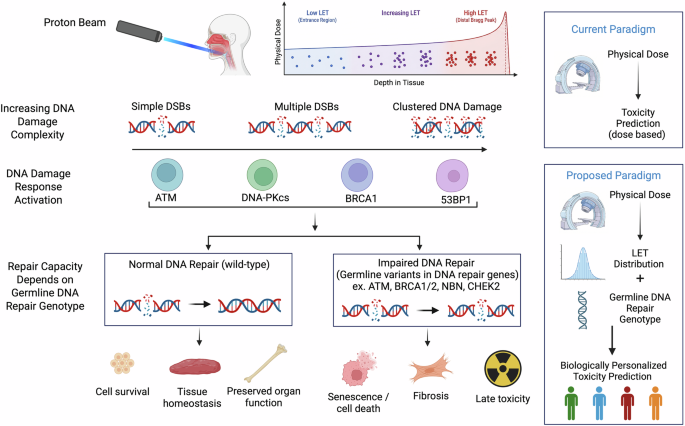
Two randomized trials found directionally similar drops in acute clinician-reported toxicities when intensity-modulated proton therapy (IMPT) was compared...

Taoiseach Acknowledges ‘Suffering and Sacrifice’ of Peterhead Men in Dáil
Taoiseach Micheál Martin acknowledged "the suffering and sacrifice" of the Peterhead Men in the Dáil on Friday, recognising...

Phase 1 Trial Opens for SAR445877 Combo With Chemo as First-Line MSS CRC Therapy
A phase 1 trial testing an experimental immunotherapy combination as first-line treatment for microsatellite-stable metastatic colorectal cancer opened...