
“Grieving is one of the tasks we want to be filled with friction,” said Elaine Howard Ecklund, director of Rice University’s Boniuk Institute for the Study and Advancement of Religious Tolerance, describing her own turn to ChatGPT after losing a loved one.
That personal reckoning now anchors Responsible Futures, a new international research initiative led by Rice’s Boniuk Institute with UC San Diego.
The project examines how religious beliefs, moral values and cultural traditions shape the development and use of emerging technologies such as artificial intelligence, human biotechnologies and tools affecting the natural world.
Technology Gets Personal
Ecklund spent nearly an hour coaxing an AI to write an obituary, only to realize she had shifted focus from mourning the person she lost to perfecting the text. The experience crystallized the initiative’s central tension: AI promises “frictionless efficiency, but human relationships and genuine community are inherently embodied, relational and often beautifully inefficient.”
Funding and Scope
Funded by the Templeton Religion Trust, Responsible Futures brings together 17 research projects spanning sociology, psychology, anthropology, philosophy, theology and other disciplines.

Ecklund and John H. Evans of the University of California, San Diego co-lead the effort. They deliberately cross the academy’s hedges, as Ecklund put it, to “make sure we’re giving back to society through our research.”
Credibility Versus Capability
At the launch conference, Harvard University assistant professor Joshua Conrad Jackson presented findings on how people respond to religious sermons delivered by a robot versus a human. Listeners judged the human speaker more credible, yet they did not dismiss the robot outright. Those who heard the robot were also more likely to give nothing when offered a chance to donate to the temple.
“There’s a difference between capability and credibility,” Jackson said, framing a question that runs through the initiative’s portfolio: even when machines can perform tasks traditionally carried out by humans, will people trust them in the same way?
Global Scope, Local Stakes
Projects will examine trust in AI to communicate religious and moral knowledge across China, Indonesia, India and the United States; how Christians in Singapore incorporate AI into spiritual practice; and how people in China and the U.S. use religious and secular beliefs to interpret AI’s effects on work, education and identity.
Ecklund’s own work will compare the moral perspectives of AI scientists and engineers with those of the general public.
Beyond AI, scholars will study public attitudes toward genetic and reproductive technologies and how religious and cultural values influence responses to environmental challenges.
At Rice, religion scholar Judith Brunton is examining how cultural narratives and moral frameworks shape communities moving away from fossil fuel dependence in Houston and Calgary.
Keeping People at the Center
Rice Provost Amy Dittmar told participants that “the research you are conducting will help society grapple with this new and ever changing landscape that makes us rethink not only how we use technology but who we are as human beings.”
For Ecklund, the goal is not to position science and religion as opposing forces but to bring different perspectives together. “The general public cares about the morality of these technologies,” she said. “So we need our religion scholars at the table. We need our philosophers and theologians as well as our social scientists.”
A Century-Long View
The BBC’s Tech Life programme recently featured the One Hundred Year Study on Artificial Intelligence, a project that charts the technology’s evolution over a century with expert progress reports every five years.
Rooted in Houston, the nation’s most ethnically diverse city, the Boniuk Institute for the Study and Advancement of Religious Tolerance holds a premier interdisciplinary charge since 2023 to advance religious tolerance globally through research, education, and community engagement.
Its founding gift of $28.5 million in 2013 established cutting-edge information technology to catalog hate speech and analyze how search-engine algorithms foster or deter religious pluralism, building a technical infrastructure directly applicable to studying AI’s societal impact.
Under Director Elaine Howard Ecklund since 2022, the institute operates as a sociological research hub convening cross-disciplinary experts to disseminate findings for meaningful change.
In that episode, Professor Gina Neff discussed the study’s long lens on a technology that is already reshaping daily rituals from obituaries to sermons.
Related reading
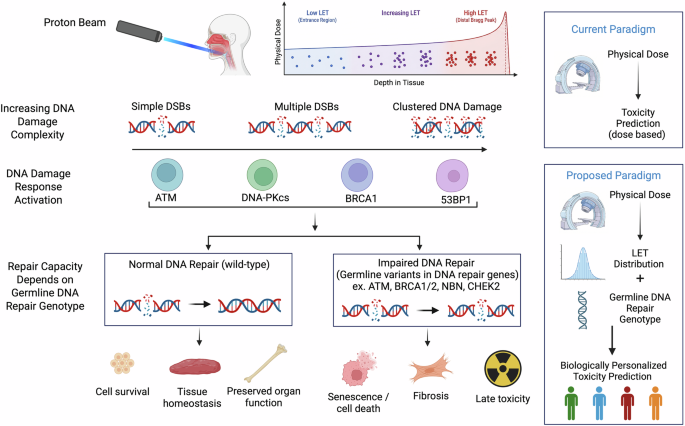
Trials Show Acute Toxicity Drops With Proton Therapy, but No Long-Term Function Gain; Late Bone Risk Noted
Two randomized trials found directionally similar drops in acute clinician-reported toxicities when intensity-modulated proton therapy (IMPT) was compared...

Indonesia’s 2026 Fires Burn Estimated 2.9M Hectares; Budget Cuts Blamed
Indonesia's 2026 forest and land fires have burned an estimated 2.9 million hectares through October, while regional budget...

Taoiseach Acknowledges ‘Suffering and Sacrifice’ of Peterhead Men in Dáil
Taoiseach Micheál Martin acknowledged "the suffering and sacrifice" of the Peterhead Men in the Dáil on Friday, recognising...

Phase 1 Trial Opens for SAR445877 Combo With Chemo as First-Line MSS CRC Therapy
A phase 1 trial testing an experimental immunotherapy combination as first-line treatment for microsatellite-stable metastatic colorectal cancer opened...