
According to ANTARA News on November 1, Nasaruddin Umar, Indonesia’s Minister of Religious Affairs, appealed for continuous programs and deeper involvement among MABIMS member countries during the 50th MABIMS Senior Officials Meeting held in Jakarta.
Shifting Beyond Annual Summits
The grouping brings together religious affairs ministers from Brunei Darussalam, Indonesia, Malaysia, and Singapore. Gathered alongside delegations at Syarif Hidayatullah State Islamic University (UIN) Jakarta, Umar pressed for a structural shift in how the four nations collaborate on regional religious life.
Menteri Agama (Menag) Nasaruddin Umar menjelaskan, hilal pada Selasa (17/2/2026) hari ini mustahil terlihat. Hilal masih dalam posisi minus 2 derajat.Posisi hilal tersebut masih di bawah kriteria yang ditetapkan negara-negara anggota MABIMS (Brunei Darussalam, Indonesia,… pic.twitter.com/SjXOBMgtsa
Annual summits alone no longer suffice for the region’s shared religious landscape. Umar outlined the core operational problem directly to the delegations.
We must not allow our meetings to take place only once a year, with no follow-up until we meet again the next year. What we need is intensive communication and continued cooperation,
Umar said.
The four nations share geographical proximity, cultural affinity, and deep historical and intellectual ties rooted in common scholarly traditions. Umar argued that these foundational links provide a natural platform for strengthening brotherhood, fostering interfaith harmony, and driving peace across Southeast Asia.
Formulating Criteria for a Civilized Society
Moving past diplomatic pleasantries, the Indonesian minister urged member states to formulate concrete criteria for a civilized Muslim society within the region. He pointed to specific regional advantages that make this development feasible.
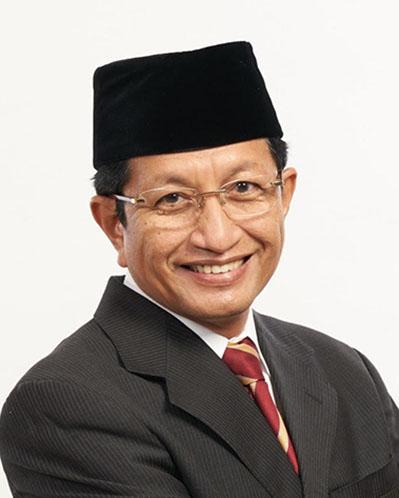
Umar stated that an area equipped with exceptional natural resource potential, optimal security stability, and relative economic security is best situated to uphold, foster, protect, and advance Islam.
Establishing a Centralized Hub for Cooperation
To anchor these ambitions, Umar proposed establishing a hub to facilitate MABIMS cooperation on Muslim community development. Alongside an administrative hub, he advocated for joint research initiatives, structured knowledge exchange programs, human resource upgrades, and recurring international academic forums.
Higher Education and International Diplomacy
Institutional backing for the minister’s agenda came from UIN Jakarta Rector Asep Saepudin Jahar. Expressing his university’s readiness to partner with the ministry and higher education networks across the other MABIMS countries, Jahar framed academic institutions as active participants in international diplomacy.
The role of higher education institutions extends beyond education, research, and community service. We can also make concrete contributions to strengthening religious diplomacy and international relations,
Jahar stated.
Related reading

Extreme Heat Linked to Surge in Cardiac Arrest ICU Admissions
When the Thermometer Climbs, ICU Admissions for Cardiac Arrest Follow As summer temperatures push past 90 degrees Fahrenheit,...

Supreme Court Refuses Urgent Hearing on 700% Airfare Hike, Tells Petitioner Don’t Travel by Air
The Supreme Court on Monday dismissed an urgent hearing request for a petition challenging a steep 700 percent...
Restricted IVF Insurance Coverage Doubles Likelihood of PGT-A Use
When patients face a hard ceiling on their in vitro fertilization coverage, the math changes instantly. According to...

Jackery Launches Ultra-Compact Explorer 100D Portable Power Station
Jackery has introduced the Explorer 100D, an ultra-compact portable power station measuring 4.6 by 3.4 by 3.4 inches...