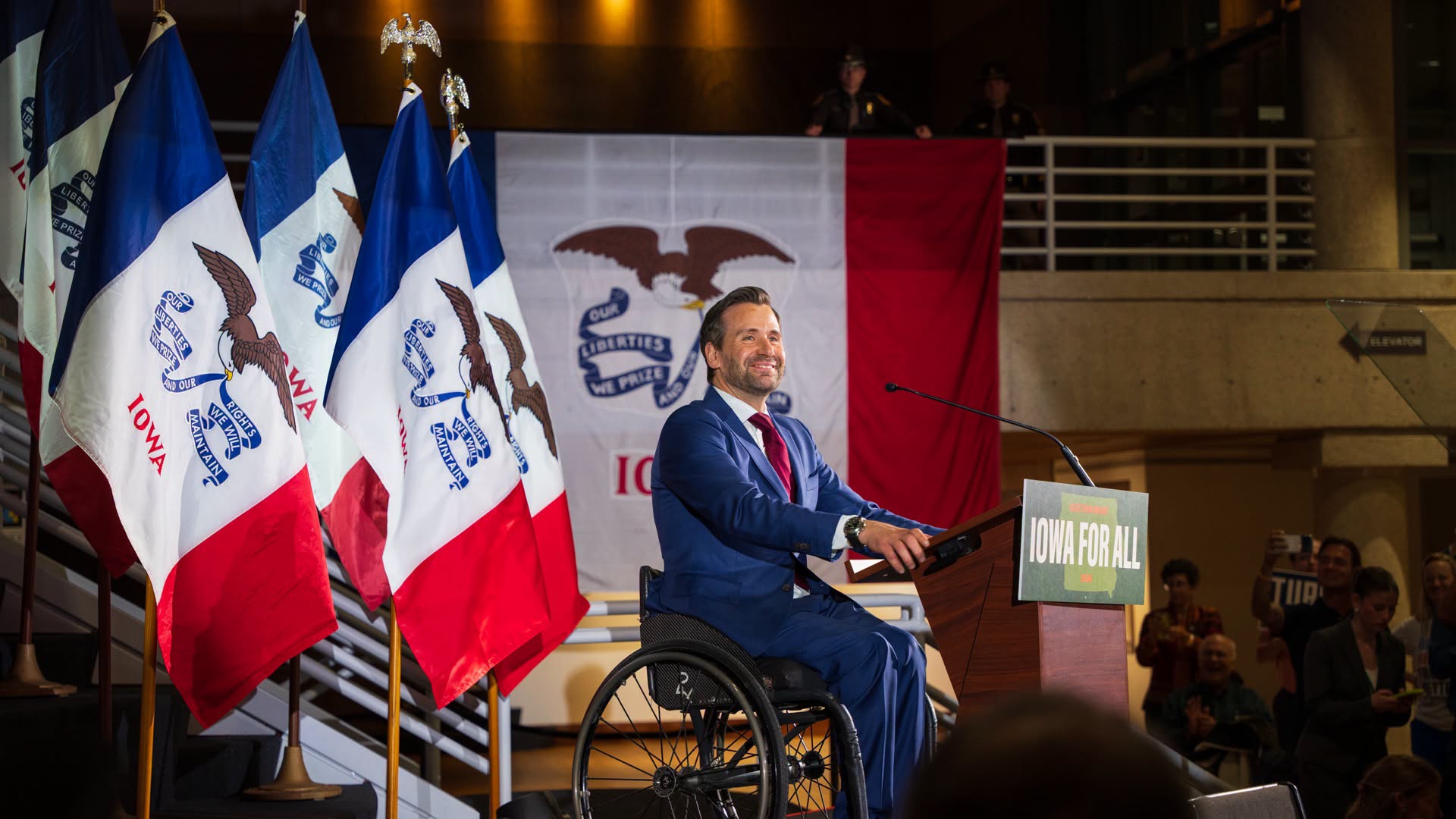
Iowa’s Political Map Shifts as Democrats Break the Trifecta
The Iowa political landscape underwent a seismic transformation this week, effectively dismantling the Republican trifecta and signaling a significant realignment in the state’s congressional delegation. As reported in the latest dispatch from Bleeding Heartland, the 2026 midterm results have moved Iowa from a solid six-Republican seat delegation to a 4-2 Democratic split. The shift comes on the heels of a cycle defined by high voter turnout and a surprising strength in Democratic performance that defied the conventional wisdom of state polling.
Laura Belin, writing for Bleeding Heartland, notes that the victory for Rob Sand in the gubernatorial race stands as the most striking indicator of this change. Despite a persistent Republican voter registration advantage of roughly 165,000, Sand secured 55.4 percent of the vote compared to 44.5 percent for his opponent, Zach Lahn. This 150,000-vote margin represents a stark departure from 2018, when Fred Hubbell lost the state despite carrying Polk County.
The Mechanics of the Democratic Surge
The scale of Sand’s victory was anchored in dominant performances across Iowa’s largest population centers. In Polk County, a traditional Democratic stronghold, Sand captured 67 percent of the vote, building a lead of nearly 75,000 ballots. This performance, coupled with substantial margins in Linn, Scott, Johnson, Story, and Black Hawk counties, suggests a highly effective get-out-the-vote operation, according to the analysis provided by Bleeding Heartland.
Perhaps more telling is the reclamation of mid-sized counties. Sand carried nine of the eleven counties home to micropolitan areas—regions with populations between 10,000 and 30,000 that had largely drifted away from Democratic candidates since the mid-2010s. By carrying counties like Boone, Cerro Gordo, and Marshall, the campaign demonstrated a reach far beyond the state’s primary urban hubs. Even in traditionally conservative-leaning areas, such as Woodbury County, Sand managed a narrow victory, while running nearly even with Lahn in Pottawattamie County.
Total turnout for the gubernatorial race reached 1,366,516, surpassing the levels seen in both 2018 and 2022. While official reports are pending, the data suggests that Democratic and no-party voters turned out in record numbers, while Republican participation likely dipped compared to previous cycles. You can review the unofficial state election results to see the precise breakdown of these shifts.
A New Dynamic in the U.S. Senate
The change at the federal level is equally profound. Josh Turek’s victory marks the first time a Democrat has won a U.S. Senate seat in Iowa since Tom Harkin’s 2008 campaign. Turek secured 50.5 percent of the vote, defeating Ashley Hinson, who garnered 46.3 percent. This outcome reflects a national trend in which Democrats picked up at least seven U.S. Senate seats, overturning the historical pattern where battleground races often lean toward a single party.
Turek’s path to victory involved flipping key counties that had leaned red during the Trump era, including Dubuque, Cerro Gordo, and Muscatine. His success in Pottawattamie County—his home base—was particularly notable, as he managed to carry the county by a slim margin, a feat rarely achieved by Democratic candidates in recent history.
Governing in a Divided State
With the dust settling, the focus now shifts to how the newly elected officials will navigate a legislature that remains under Republican control. In his victory remarks, Rob Sand emphasized a theme of compromise, suggesting that divided government could force leaders to focus on policies with broad appeal. He has explicitly invited Republican legislators to collaborate on common-sense solutions, promising that any legislator who supports a bill will be included in the formal signing ceremonies.
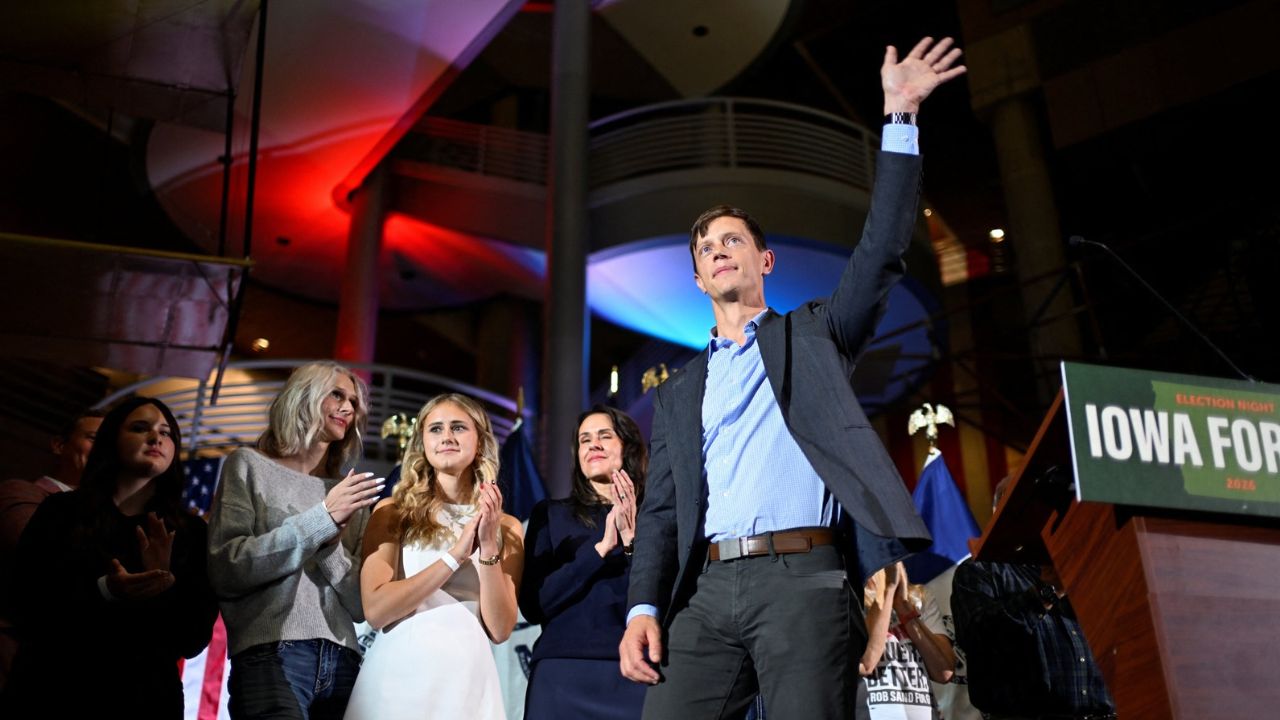
Conversely, the Republican response remains defiant. Zach Lahn, in his concession speech, framed the current political climate as the start of a long-term movement to protect the state’s culture. Republican Party of Iowa chair Jeff Kaufmann has signaled that the party intends to act as a firm check on the new administration, stating that the GOP will “fight back every step of the way” against any policies deemed too progressive.
The tension between these two visions will define the next legislative session. While history shows that governors in states with opposing legislative majorities can sometimes maintain popularity by pursuing centrist policies, the path ahead in Iowa is clearly contested. For now, the state is left to process a result that few, including seasoned political observers, anticipated just a few months ago.
Keep reading
- Soaring Fire Truck Costs Double Since 2020, Straining Local Budgets
- Financial Overview and Company Profile: Montpelier Park Close Management Limited
- Republicans Fear 2028 Election Defeat Amid Trump Midterm Fallout (archyde.com)
- Democratic victory spurs Texas data‑center ban, AI stocks adjust (newsarchyuk.com)
Soaring Fire Truck Costs Double Since 2020, Straining Local Budgets
For the Richmond Fire Department, the math of public safety has fundamentally broken. While the city has long...
Financial Overview and Company Profile: Montpelier Park Close Management Limited
The Financial Footprint of a 39-Year-Old Wembley Entity For nearly four decades, Montpelier Park Close Management Limited has...

Natural History Museum of Utah Hosts ScienceFest Nov. 7-8
ScienceFest returns to Salt Lake City The Natural History Museum of Utah opens its doors for a two-day...

Accutane Side Effects and Breakouts: What to Expect During Treatment
It is medically normal to experience occasional acne breakouts during the first two months of isotretinoin treatment, as...