
A Sinn Féin bill requiring a workforce plan for Irish-medium schools is expected to fail in a Stormont vote on Tuesday after the Democratic Unionist Party deployed a petition of concern, forcing the legislation to meet a cross-community threshold it cannot reach.
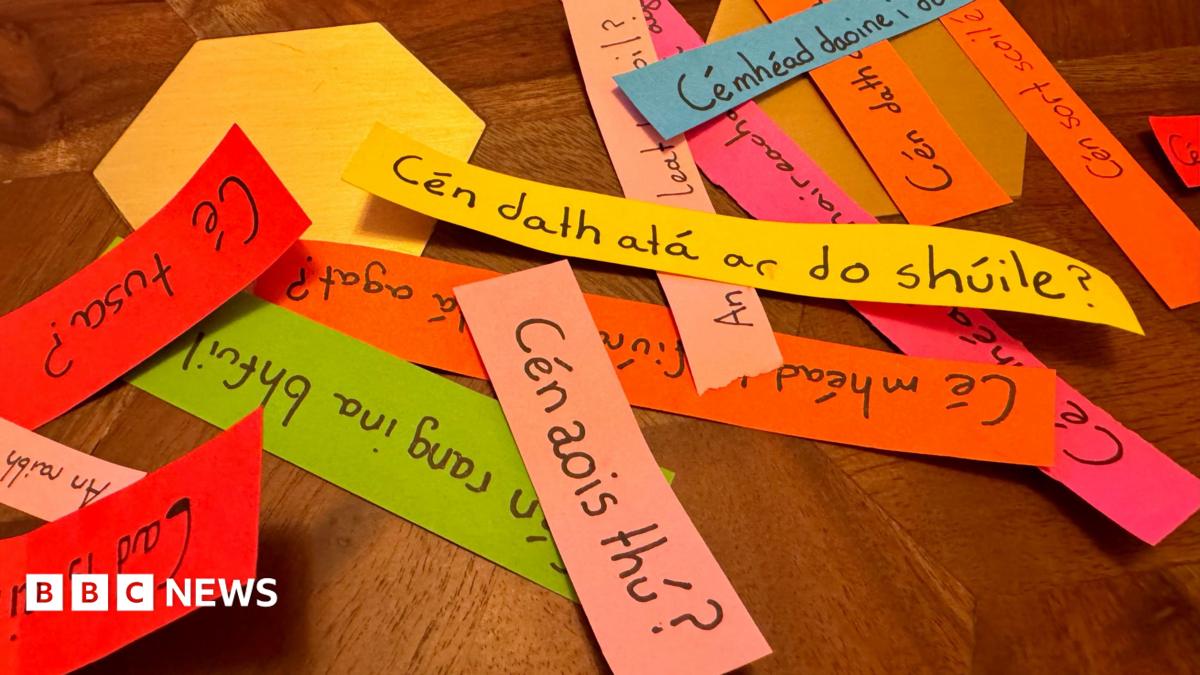
The Irish-medium Education (Workforce Plan) Bill, introduced by Sinn Féin MLA Pat Sheehan, would place a statutory duty on the Department of Education to prepare a long-term workforce strategy for the sector. A final-stage debate earlier this month ran nearly three hours past midnight, but a formal vote was delayed by the petition of concern, which triggers a mandatory 14-day consideration period under assembly rules, BBC News reported.
How the veto works
The petition of concern, introduced under the Good Friday Agreement to safeguard minority rights, requires any motion to secure cross-community support from a majority of both unionist and nationalist members present and voting, according to BBC News. Effectively, this allows either community to block legislation if enough of its members agree.
DUP says bill unnecessary
Education Minister Paul Givan, a DUP member, said his department has already provided “significant funding” for Irish-medium schools and is doing “all of the work that is contained within this bill,” telling the BBC’s Nolan Show the private member’s bill was “unnecessary.” A DUP spokesperson added that “no sector should be given a priority above others” and vowed to “use all tools available to frustrate Sinn Féin’s agenda, and that includes the political virtue signalling of this bill.”
In a further statement on Monday a DUP spokesperson said that “schools in all sectors of our education system should be supported according to their needs”. “The minister has already taken significant action for Irish-medium schools and much of this bill is unnecessary given those actions.”
Sinn Féin accuses DUP of bigotry
First Minister Michelle O’Neill accused the DUP of “punishing children” and being “anti-Irish in everything they do,” while Sheehan told the assembly the veto amounted to “nothing but anti-Irish bigotry,” BBC News reported. Earlier this month, O’Neill charged the DUP with “blatant disrespect” and “sectarianism” for attempting to block the bill.
Parading dispute fuels retaliation
The veto follows unionist anger over Sinn Féin’s involvement in protests on Garvaghy Road in Portadown, County Armagh, which blocked an Orange Order parade last month. DUP leader Gavin Robinson stated the petition of concern stemmed from his party’s response to Sinn Féin’s “arrogance” over the Drumcree parading dispute. The DUP subsequently announced it would block official engagements involving O’Neill.
Sector warns of staffing crisis
Pilib Mistéil, principal of Bunscoil an tSléibhe Dhuibh in west Belfast, said historically “it has been more difficult to employ and to train Irish-speaking specialists in the Irish medium sector, that’s why the bill was needed.” Speaking to BBC Radio Ulster, he called it “frustrating” that education was drawn into a “political squabble,” adding: “The [petition] mechanism was brought in to protect minorities against an abuse of power, and this is abusing the power that was brought in to stop an abuse of power.”
Pupils and teachers from the sector plan to attend Stormont on Tuesday to voice disappointment. “It’s just so frustrating in today’s day and age,” he said. “That’s why the children are going to go up there today,” he said. “We want them to look into those children’s eyes and explain to them how they can justify standing over their decision to use a petition of concern”.
Related reading

ASEAN Specialists Tour Moscow ATOM Museum During Fellowship
Specialists from five ASEAN countries toured the ATOM Museum at VDNKh in Moscow this week as part of...

Guterres Ends UN Term With 2024 at 1.55°C, 2025 Renewables Cheaper
António Guterres ends his UN term with the World Meteorological Organization reporting 2024 averaged about 1.55 °C above...

BRI Diplomatic Missions Endorse Hong Kong’s First Five-Year Plan and Policy Address
Diplomatic missions of Belt and Road Initiative countries in Hong Kong have endorsed the city's first Five-year Plan...

A24 Documentary You Can See Everything Crosses $100 Million
A24's documentary You Can See Everything crossed $100 million at the global box office this weekend, becoming one...