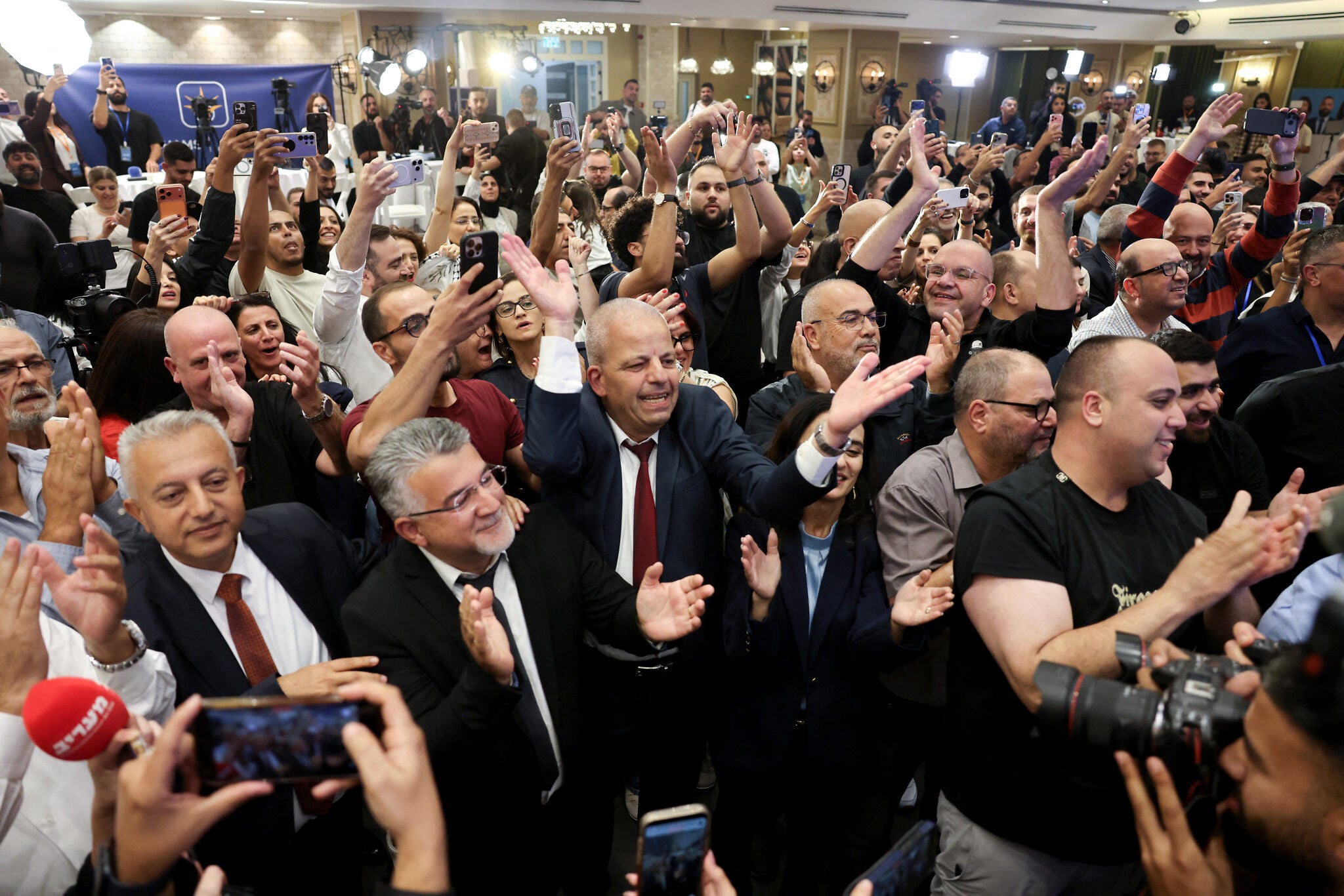
Israel’s October 27, 2026, legislative elections resulted in a surge of Arab voter turnout that has left the country’s political future in a deadlock, creating a sharp divide between how the results are viewed in Washington and how they are treated in Jerusalem. While pro-Israel U.S. lawmakers are citing the high participation of the Arab minority as proof of Israel’s democratic strength, the domestic political reality is that these votes may be functionally meaningless for the formation of a new government.
A majority of voters backed parties determined to replace Prime Minister Benjamin Netanyahu, bolstered by 19 seats won by the two Arab-majority parties. However, the leaders of the primary anti-Netanyahu bloc have largely ruled out forming a coalition with these parties, effectively neutralizing the impact of the turnout.
A Record Turnout Driven by Right-Wing Rhetoric
The scale of the participation was staggering. The overall voter turnout reached 77.7%, the highest since 1999, with exit polls from Channel 12 estimating that Arab voter turnout specifically neared 80%. This represents a massive shift from previous years of political apathy within the community.
Prime Minister Benjamin Netanyahu and his wife Sara Netanyahu voted at a Jerusalem polling station:"Go out and vote!" pic.twitter.com/rB0UofkG32
While campaign outreach played a role, some analysts argue the surge was a direct reaction to the far-right. The rhetoric of ministers Itamar Ben Gvir and Bezalel Smotrich acted as a catalyst. Smotrich’s plans to “Judaize” the Galilee and the Naqab, combined with AI-generated campaign videos designed to terrify Palestinian citizens, reportedly motivated many to the polls. Ben Gvir further highlighted the tension by warning his supporters about “insane turnout rates” among Arabs on election day.
This surge has created a mathematical paradox in the Knesset. The two main Jewish blocs—led by Netanyahu and Gadi Eisenkot—hold 53 and 48 seats respectively. With a 61-seat majority required to govern, the 19 seats held by the Arab bloc now hold the balance of power, even if the Jewish parties are reluctant to use them.
Today, 5.5 million Jewish, Christian, and, notably, Arab Israelis participated in the only democracy in the Middle East. This was the highest turnout the country has seen in nearly 3 decades. While we won’t know the final results tonight, today’s elections could make history,…
The Divide Between Diaspora Pride and Domestic Security
Outside Israel, the high turnout is being framed as a diplomatic victory. U.S. Representative Josh Gottheimer tweeted that the participation of Arab citizens shows Israel is a democracy where they can vote, run for office and serve in the Knesset — rights denied to many Arabs and women across much of the Middle East. For the pro-Israel diaspora, this narrative serves as a factual counter-argument to international accusations of apartheid.
Inside Israel, however, the narrative is inverted.
Israel’s Arab citizens, men and women, are turning out in historic numbers to vote. They can vote, run for office, and serve in the Knesset, rights denied to many Arabs and women across much of the Middle East. Our critical ally in the fight against terror, Israel, is the only…
This framing has migrated to Netanyahu’s rivals. Naftali Bennett and Avigdor Liberman have ruled out any coalition with Arab-led parties. Gadi Eisenkot has added further hurdles, demanding that any partner recognize Hamas as a terror group that must be destroyed.
Arab Parties Split over Coalition Requirements
Arab political parties are split between the nationalist Joint List, led by Yousef Jabareen, and the more pragmatic Ra’am, led by Mansour Abbas. While the Joint List is primarily interested in removing Netanyahu, Ra’am has actively sought to make itself palatable to Jewish partners. Abbas has recognized Israel’s Jewish character.

Friction exists in these requirements, noting that Gadi Eisenkot’s “Zionism test”—which includes a duty of military or civilian service—is a high bar. While Abbas supports voluntary civic service, he opposes the current national-service framework. It is also pointed out that some ultra-Orthodox parties currently in the coalition would likely fail the same Zionist loyalty tests applied to Arab parties.
The following table illustrates the current fragmented state of the Knesset based on partial results:
Today is election day in Israel, which is a national holiday. All voting is in person, ID required. No mail-in or absentee ballots. Arabs vote same as Israelis. Contentious process, but it's a democracy-not many of those in this region!
| Party/Bloc | Estimated Seats | Coalition Stance |
|---|---|---|
| Likud (Netanyahu) | 53 (Bloc) | Seeking right-wing majority |
| Anti-Netanyahu (Jewish) | 48 (Bloc) | Majority of leaders rule out Arab partners |
| Arab Bloc (Joint List/Ra’am) | 19 (Combined) | Willing to partner to remove Netanyahu |
Election Instability Complicates Gaza Conflict Management
Inconclusive election results that could lead to another election or a government reliant on certain blocs complicate efforts to manage the conflict in Gaza and prevent a wider regional war involving Hezbollah and Iran.
The difficulty of forming a coalition with Arab parties suggests a deep sensitivity and internal fracture in Israeli society.
Correct @BarakRavid & I should have stated it that way! 10 million ppl in @Israel 8m Jews, 2m Arabs. ALL are Israeli citizens-Jew, Muslim, or Christian. All vote, serve in IDF, in Knesset, & proudly have Israeli passports. Women equal to men. All have free speech. https://t.co/HRLT9lY94K
More on Gadi Eisenkot
Israel faces weeks of political wrangling after deadlocked election. My report on @axios https://t.co/BGeAFGeLHN
It’s always good to speak with my friend, Germany’s Foreign minister @AussenMinDE. 🇩🇪🇮🇱I updated my counterpart on the elections in Israel, the impressive voter turnout and the emerging results. The elections are a particularly impressive demonstration of the strength and… pic.twitter.com/afkxV0aWl3
Fulfilling the dream of the generations that came before us 🇮🇱#israel #democracy #homeland #govote #ivoted pic.twitter.com/2h8sHsXKRt
- US Sanctions North Korean IT Fraud Network Funding Weapons Programs
- Savannah Chrisley Announces Engagement to Convicted Fraudster Jason Galanis
- Missouri Faces New Ballot Measure to Overturn Voter-Approved Abortion Rights (world-today-news.com)
- Flávio Bolsonaro lands in Miami after Brazil election loss (newsarchyuk.com)
US Sanctions North Korean IT Fraud Network Funding Weapons Programs
The U.S. Treasury Department on Wednesday sanctioned 10 individuals and one entity to dismantle a North Korean state-run...

Savannah Chrisley Announces Engagement to Convicted Fraudster Jason Galanis
Reality star Savannah Chrisley announced her engagement and pregnancy on October 27, 2026, with fiancé Jason Galanis.

Why Wealthy Chinese Are Renouncing Citizenship for Foreign Passports
Wealthy Chinese nationals are increasingly renouncing their citizenship to secure foreign passports, driven by a combination of intensifying...
South Africa Boosts Agri Exports as US Trade Relations Decline
South Africa expanded its agricultural trade surplus by 11.6% in the second quarter of 2026, despite a sharp...