
The iron gates of Suropati Park in Jakarta have become more than just an entry point to a green sanctuary; this week, they serve as the backdrop for a stark conversation about the city’s vanishing open ground. As the capital faces relentless vertical development, the Pekaloka Public Space Art Exhibition—which opened on November 6—is forcing residents to confront a reality that is literally sinking beneath their feet.
The Independent Observer reported that the Jakarta Arts Council organized this contemporary visual arts showcase to highlight the precarious state of communal areas. Through November 10, the park hosts 15 distinct works that bridge the gap between urban research and creative expression. For a city often defined by its traffic and concrete density, the choice of a public park as the gallery space is a deliberate act of reclamation.
When Art Confronts Urban Decay
The exhibition does not shy away from the existential threats facing the capital. Installations like “Jakarta is Sinking” by Kilau Art Studio and “The Tree Laid Down by Concrete” by Cikini Art Stage provide a visual shorthand for the environmental pressures discussed in city planning offices. These pieces serve as a physical manifestation of the data regarding land subsidence and the rapid loss of permeable surfaces, which are critical for managing Jakarta’s flood risks.
Sobat Jakarta, akhir pekan ini mau cari tempat seru dan gratis? 👀 Pameran Pekaloka hadir di Taman Suropati sampai 10 November 2026! Nikmati beragam instalasi seni menarik, gratis untuk umum, setiap hari pukul 14.00–21.00 WIB. Karya atau spot mana yang paling bikin penasaran?… pic.twitter.com/pNAHm8GLWf
The stakes here are not merely aesthetic. As the city continues to densify, the psychological and physical health of its residents becomes tethered to the availability of accessible, non-commercialized spaces. When public parks are treated as an afterthought in urban planning, the social fabric often frays, leaving citizens with fewer places to gather, exercise, or simply breathe.
The “Carbon Carnival” by RajutKejut rounds out the thematic focus, pushing viewers to consider the intersection of human activity and environmental degradation. By placing these works in a public setting rather than a sterile gallery, the Jakarta Arts Council is attempting to democratize the discourse around urban development. The goal is to move the conversation from academic reports into the daily lives of the people who actually navigate the city’s shrinking footprint.
The Tension Between Growth and Greenery
There is, of course, a persistent counter-argument to the push for more public space: the economic necessity of high-density infrastructure. Developers and city planners often point to the urgent need for housing and commercial hubs to support a growing population. From this perspective, every square meter of land is a high-value asset, and the trade-off between private profit and public utility is a constant, difficult negotiation.
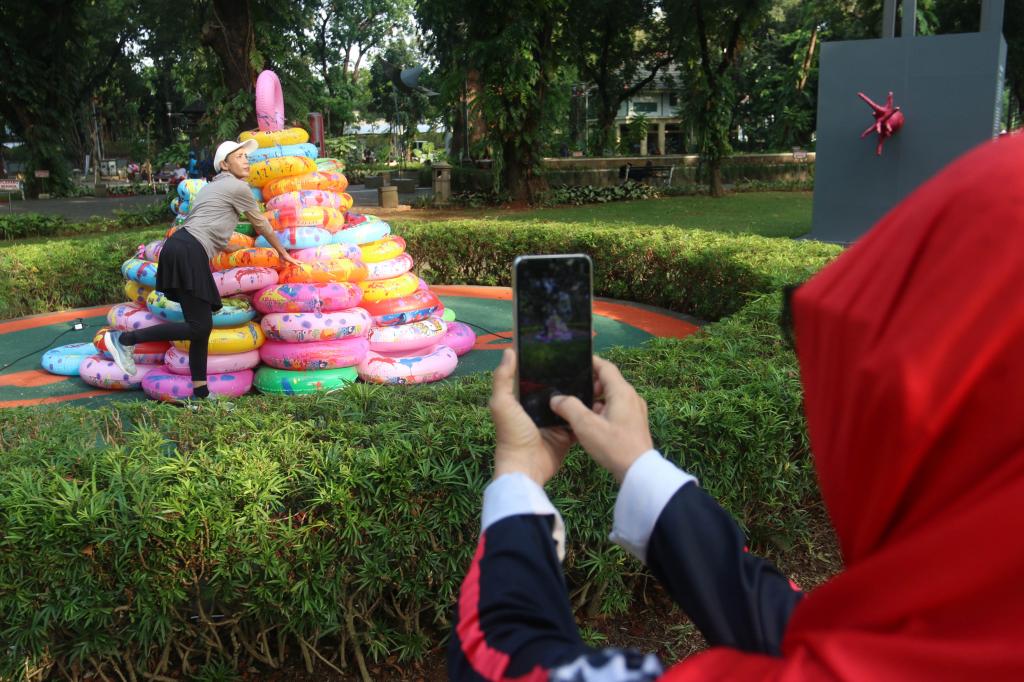
However, the Pekaloka exhibition suggests that this binary view of urban growth is fundamentally flawed. If the city becomes uninhabitable due to flooding or extreme heat—exacerbated by the lack of green buffers—the economic gains of rapid development may be negated by the long-term costs of disaster mitigation and public health crises. It is a tension that defines the modern metropolitan experience, where the demand for progress frequently clashes with the necessity of preservation.
This exhibition is a reminder that the spaces between buildings are just as important as the buildings themselves. As Jakarta moves toward the November 10 closing date, the exhibition remains a focal point for those questioning how the city can maintain its humanity while its landscape undergoes such dramatic transformation. The ability to find a quiet corner in a park like Suropati is becoming a rare commodity, and these artists are ensuring that the disappearance of such spaces does not go unnoticed.
Worth a look

New Research Links Cannabis Use to Increased Risk of Stroke and Cardiovascular Disease
The Heart Health Risks of Modern Cannabis Use As recreational marijuana legalization continues to reshape public habits, a...

KRAS::ETNK1 fusion found in MDS/MPN overlap syndrome case study
A Rare Genetic Signature in Myeloid Disease In the complex world of hematology, where researchers often hunt for...

Robinhood Leonard Passes Away in Leeds at Age 75
Michael Edward Leonard: Funeral Arrangements Announced Michael Edward Leonard, a native of Charlestown, County Mayo, passed away peacefully...
Five LLMs show 89.4% to 91.2% accuracy in pharmacy questions
LLM Accuracy in Infectious Disease Education Large language models—including ChatGPT-4.1, ChatGPT-4o-mini, Claude, Copilot, and Gemini—demonstrated an overall accuracy...