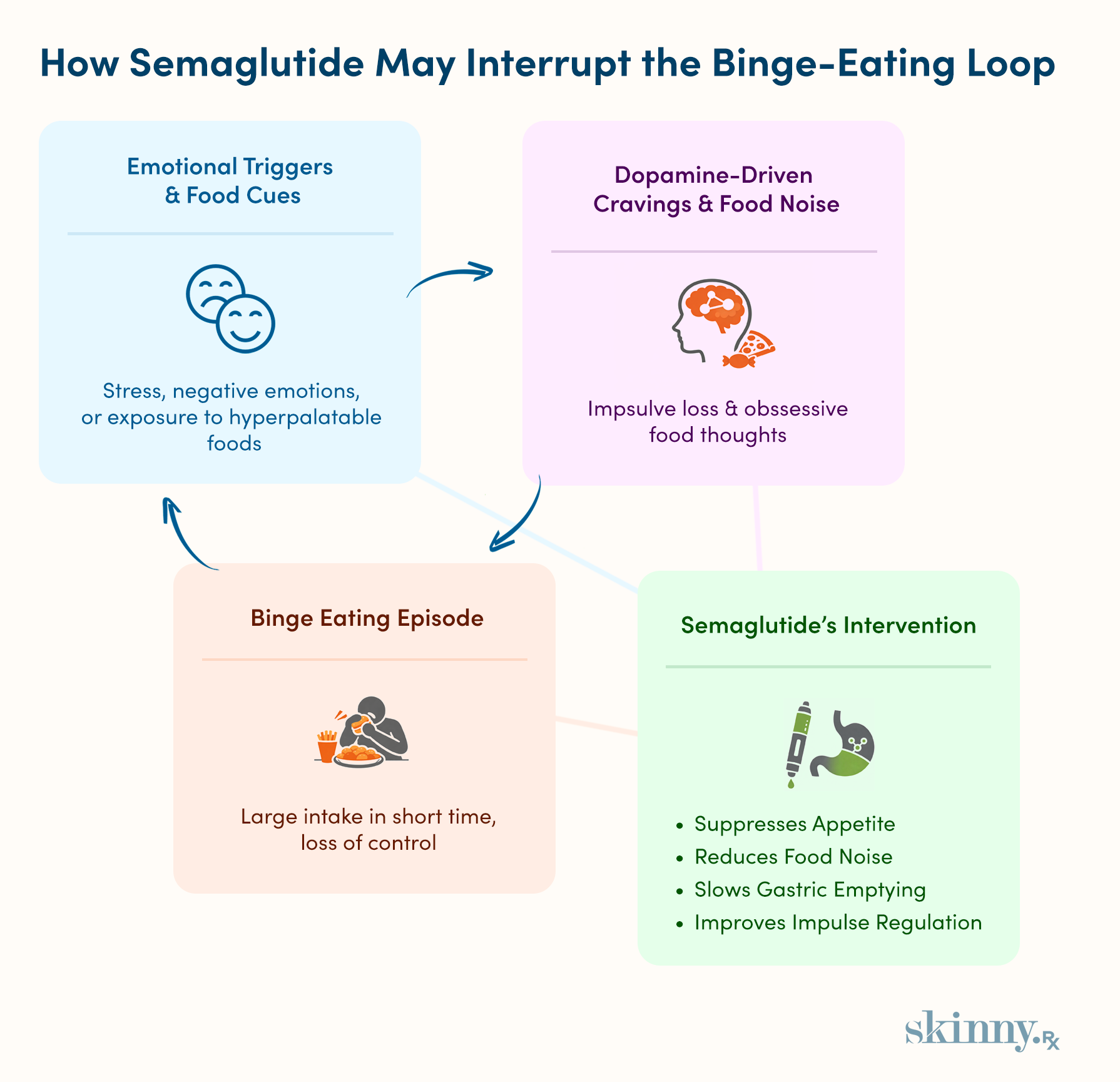
“Our findings suggest that semaglutide not only supports weight loss but may also improve several measures of eating disorder psychopathology and loss of control eating in many patients,” said Jena Tronieri, PhD, senior research investigator at Penn’s CWED and senior author of the study.
Adults taking semaglutide for obesity management experienced greater reductions in disordered eating attitudes, loss-of-control eating, and body image concerns compared with patients receiving a placebo, according to a randomized placebo-controlled trial published in the International Journal of Eating Disorders.
The study evaluated 120 adults seeking treatment for obesity, assigning participants at random in a 3-to-2 ratio to receive either semaglutide at a 2.4 mg dose or a placebo. Both groups also followed a structured lifestyle intervention that included physical activity guidance and dietary counseling.
Participants were assessed at baseline and at Weeks 20, 40, and 60. Clinicians used the Eating Disorder Examination to evaluate binge eating and eating disorder psychopathology, while questionnaires measured mood through the PHQ-9, body dissatisfaction via the Body Satisfaction Scale and Eating Disorder Inventory, and drive for thinness and loss of control through the Loss of Control Over Eating Scale.

Patients taking the medication achieved substantially greater weight reduction. Among those in the treatment group, body weight decreased by an average of about 15 percent by the 60-week mark, whereas the placebo group saw a reduction of roughly 3 percent.
Over the course of the 60-week study, participants in the treatment arm showed significantly greater improvements across multiple measures of psychological and eating-related health. The therapy was associated with larger reductions in global eating disorder pathology, weight and shape concerns, and loss-of-control eating, alongside reported improvements in body dissatisfaction and body image.
Although the two study arms did not differ significantly in overall reductions of binge frequency, participants who entered the trial with baseline binge episodes or with full or subthreshold binge-eating disorder showed distinct clinical responses. Those receiving the medication were more likely to achieve abstinence and remission from binge eating behaviors than participants in the placebo group.
New onset of binge eating, compensatory behaviors, and reliable deteriorations in eating psychopathology were rare across both treatment groups. Symptom emergence did not appear higher among participants receiving the medication, suggesting that the therapy was generally associated with improvements rather than worsening of eating-related outcomes.
Researchers said that a small number of participants still experienced disordered eating behaviors during the trial. Kelly C. Allison, director of the Center for Weight and Eating Disorders at the University of Pennsylvania and the study’s first author, presented the findings at ObesityWeek 2026 in Washington, D.C.
“These results are encouraging, particularly for patients who struggle with both obesity and binge eating,” Kelly C. Allison, director of the Center for Weight and Eating Disorders at the University of Pennsylvania and the study's first author, said.
Simultaneously, she said the data show why eating behaviors must be monitored regularly during treatment, especially for patients with a background of eating disorders, to ensure those who show problematic symptoms get the necessary support.
The study authors emphasized that larger trials will be required to further examine the connection between glucagon-like peptide-1 receptor agonists and eating disorders, particularly in populations with diagnosed binge-eating disorder or a history of other eating disorders.
Worth a look

Hugo Lloris Hails Harry Kane After 2026 Ballon d’Or Win
Harry Kane’s coronation as the 2026 Men’s Ballon d’Or winner has drawn significant praise from his former Tottenham...

Rassie Erasmus Launches Fan Watch-Along After Six-Match Ban for Referee Criticism
South Africa head coach Rassie Erasmus has moved to circumvent his six-match suspension by inviting supporters to join...

Zverev Faces Lawsuit From Ex-Partner Patea Over ‘Innocence Proven’ Claim
Alexander Zverev faces a civil lawsuit filed by his former partner Brenda Patea in Berlin that alleges he...

Defending Champions Arsenal Face Struggling Newcastle at St James’ Park Saturday 5:30 P.m
Defending Premier League champions Arsenal head to St James’ Park on Saturday for a 5:30 p.m. kickoff against...