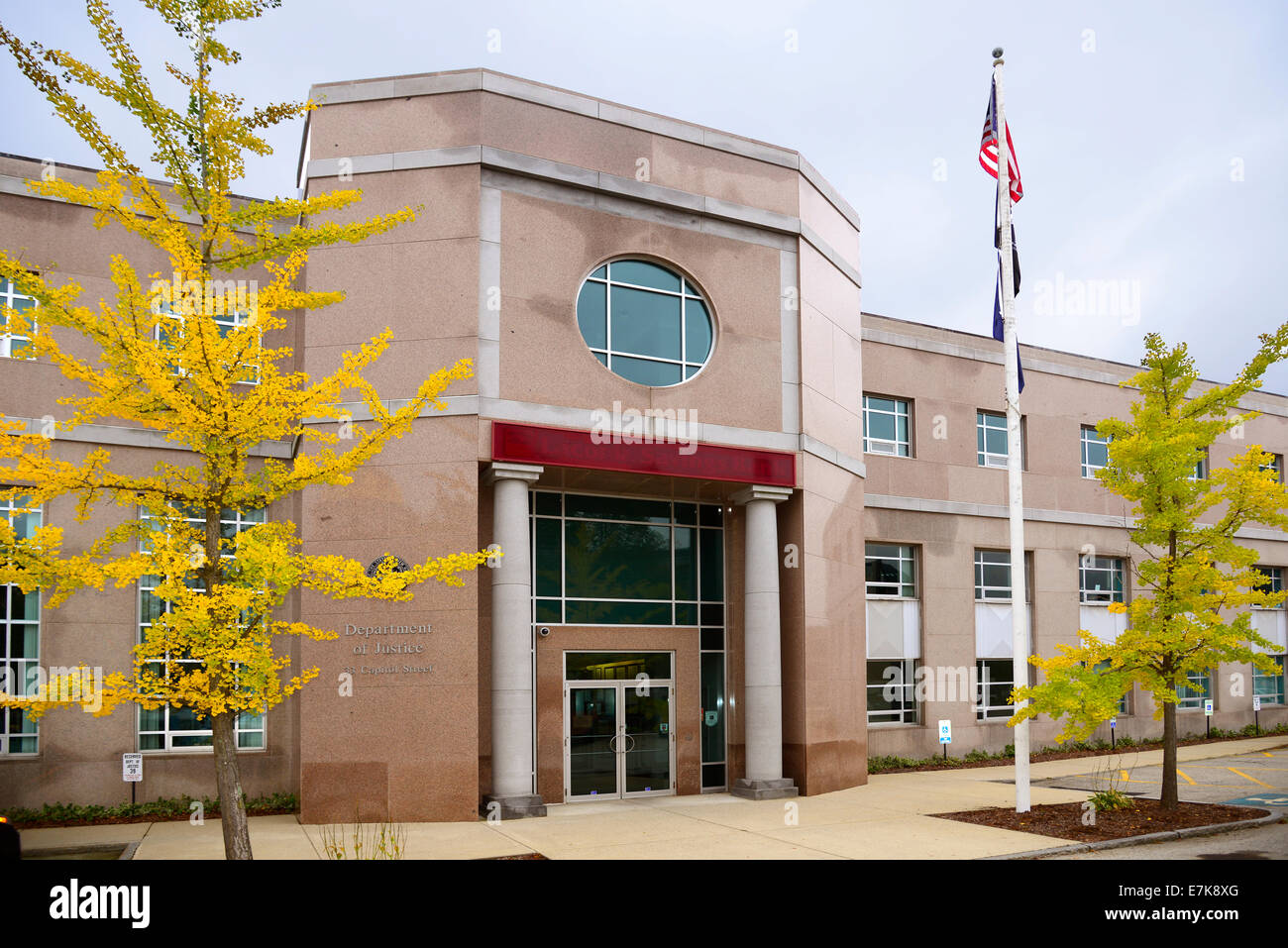
New Hampshire judges prepare for rapid response to Election Day disputes
As voters across the Granite State head to the polls this Tuesday, the New Hampshire Judicial Branch has activated a specialized framework to handle the legal friction that often accompanies high-stakes elections. The state’s Superior Court has established an Election Case Docket, a system specifically engineered to resolve legal challenges with the speed required by the immediate timeline of an election cycle.
The New Hampshire Judicial Branch reported that this expedited review process is designed to address a wide spectrum of potential conflicts, ranging from polling-place operational errors to disputes over the collection and counting of results. Because election outcomes can hinge on razor-thin margins, the court’s ability to act in real-time serves as a critical backstop for the democratic process.
The mechanism is not a broad, uncoordinated response. Instead, the court utilizes a centralized coordination point through the Merrimack County Superior Court Clerk’s Office. This office serves as the initial intake for election-related complaints from every corner of the state, ensuring that incoming petitions are funneled to the correct judicial authorities without delay.
The mechanics of emergency judicial review
When a dispute arises on Election Day, the court does not follow a standard, slow-moving litigation schedule. The Election Case Docket allows designated Superior Court judges to step in immediately to address emergency petitions. Depending on the urgency and nature of the complaint, an assigned judge has the authority to schedule an immediate hearing, hold a conference, issue a temporary order, or make a decision based on written filings submitted by the parties involved.
The scope of what these judges might face is broad. The court is prepared to intervene in matters concerning:
- The legality of election campaigns and their activities.
- The day-to-day operations of individual polling places.
- The integrity of the collection and counting of election results.
- Instances where voters are allegedly denied the ability to register or cast a ballot.
While the system is built for high-intensity conflict, the recent historical data suggests a period of relative calm. During the September state primary, the court received no election-related complaints, a fact that underscores the importance of having these procedures in place even when they are not immediately utilized.
Coordinating with political entities
To ensure the system functions smoothly during the heat of the day, the Judicial Branch is looking to political parties to facilitate communication. The court encourages these parties to identify specific attorneys who can act as designated points of contact on Election Day. This proactive step is intended to streamline the coordination process, allowing the court to reach the correct legal representatives quickly if a dispute necessitates a sudden judicial intervention.

For those seeking a deeper dive into the granular rules governing these processes, the New Hampshire Election Procedure Manual.pdf, published by the New Hampshire Secretary of State’s Office, provides the comprehensive regulatory framework that informs these judicial actions.
The stakes of this judicial readiness extend beyond mere administrative efficiency. In any election, the primary concern for voters, community leaders, and political campaigns is the certainty of the outcome. If a polling place in a high-density district faces a sudden equipment failure or a dispute over voter eligibility, the time it takes for a judge to issue a ruling can dictate whether those votes are counted or whether the entire local result is called into question.
Some critics of expedited judicial intervention argue that rapid-fire rulings can sometimes bypass the deep deliberation required for complex constitutional questions. However, the New Hampshire model is built on the premise that in the context of an election, the “so what” is time itself. A perfect legal ruling delivered forty-eight hours after the polls close is often functionally useless if the results have already been certified.
As the sun sets on Election Day and the counting begins, the eyes of the state will be on the Merrimack County Superior Court Clerk’s Office and the designated judges waiting to respond to the first wave of filings. Whether the docket remains empty as it did in September or becomes the center of a legal storm will depend entirely on the events unfolding at the precinct level.

Nonbinary Delaware Representative DeShanna Neal Wins Reelection
DeShanna Neal secures reelection to Delaware District 13 Nonbinary Delaware State Representative DeShanna Neal has won reelection to...

Luke Bronin claims victory in CT 1st District congressional race
“Tonight we work to take our country back,” Luke Bronin tells Hartford crowd “Tonight we can say that...

Kaden Matsuda and Jackson Donlon Died in Climbing Equipment Failure
Equipment failure caused the deaths of two Colorado college students, autopsy reveals The deaths of two Colorado Mountain...

Sarah Huckabee Sanders secures second term as Arkansas governor
Sarah Huckabee Sanders has won re-election to the Arkansas governorship, defeating Democratic state Senator Fred Love and Libertarian...