
Federal Judge Denies McDonald’s Dismissal Bid in McRib Consumer Fraud Lawsuit
A federal judge in Chicago has rejected McDonald’s request to dismiss a proposed class-action lawsuit accusing the fast-food giant of misleading customers regarding the ingredients inside its limited-time McRib sandwich. U.S. District Judge April Perry issued an opinion on October 30, 2026, allowing core claims of consumer deception, fraud, and unjust enrichment to proceed while dismissing five other claims without prejudice.
The Bottom Line:
- U.S. District Judge April Perry ruled it premature to accept that no reasonable consumer could expect the McRib to contain rib meat, allowing fraud and consumer deception claims to advance.
- Plaintiffs submitted consumer surveys alleging that 72% of respondents expected the sandwich to contain rib meat and 67% considered it important to their purchase.
- McDonald’s maintains the claims are meritless, stating the sandwich contains 100% pork and that ingredient lists have always been transparent.
The Core Allegations and Consumer Expectations
The lawsuit, initially filed in December 2025 in the U.S. District Court for the Northern Illinois by four consumers, alleges that McDonald’s designed the patty’s shape, chose its name, and utilized marketing tactics to trick buyers into believing they were purchasing expensive pork rib meat. Instead, the complaint asserts that the sandwich utilizes lower-grade pork products, including shoulder, heart, tripe, or stomach, causing buyers to overpay. The plaintiffs argued that reasonable consumers need not conduct research before purchasing a $7 fast-food menu item.
A federal judge has rejected McDonald's request to dismiss a proposed class action lawsuit accusing it of defrauding consumers by misrepresenting the contents of its McRib sandwich. The plaintiffs accused McDonald's of intentionally shaping McRib patties with ridges to resemble… pic.twitter.com/39ISBKTtFl
Judge Perry observed that McDonald’s website describes the sandwich merely as containing pork. However, she emphasized that the court cannot conclude a consumer’s belief in actual rib meat is entirely unreasonable or fanciful. Furthermore, the judge pointed out that advertisements highlighting the meat’s rib-like ridges could support an allegation of intent to defraud, though plaintiffs must still provide further proof.
Corporate Defense and Historical Context of the Menu Item
McDonald’s has firmly pushed back against the litigation. In statements provided to Reuters and FOX Business, the corporation stated that the lawsuit distorts the facts, maintains that it does not use hearts, tripe, or stomach in the product, and insists that it has always maintained transparency regarding its ingredients. McDonald’s argued that distinctive product names do not fool reasonable consumers, and a preference for a specific cut of pork does not turn truthful marketing into fraud.
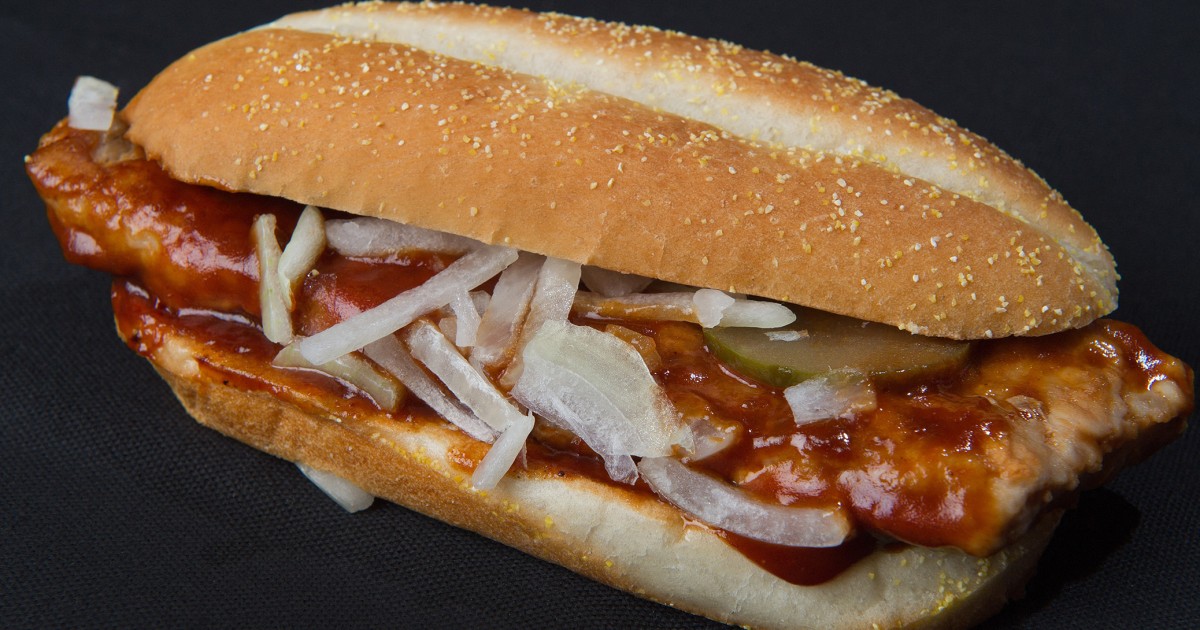
The McRib has a long, periodic history on American menus. Developed by McDonald’s chef René Arend as an alternative option during a chicken shortage, the sandwich features a boneless restructured pork patty covered in barbecue sauce, onions, and pickles. Over the decades, the corporation utilized marketing campaigns including farewell tours in 2005, 2006, and 2022, before returning the item to select U.S. markets in October 2026.
Legal Precedent and Next Steps
While the court dismissed five secondary claims without prejudice, the survival of the fraud and consumer deception claims means the litigation will move forward. Fast-food chains have frequently faced similar scrutiny over product depictions, including litigation accusing McDonald’s, Burger King, and Wendy’s of making burgers appear larger than they actually are. Thiago Coelho, an attorney representing the plaintiffs, stated that his clients will continue pursuing accountability for deceptive marketing practices as the case develops.

Disclaimer: The information provided in this article is for educational and market analysis purposes only and does not constitute financial, investment, or legal advice. Always consult with a certified financial professional before making investment decisions.

In a newly published article, the author explores the profound human challenge of navigating
When God Feels Silent Examines Seasons of Waiting In a newly published article, the author explores the profound...

Louisville vs Stanford Odds and How to Watch the Week 9 Matchup
Louisville football hosts the Stanford Cardinal at L&N Federal Credit Union Stadium on Saturday, October 31st, kicking off...

Kansas lawmaker Dan Goddard dies at 78
“I came to Kansas without a political thought in my mind,” Dan Goddard said as his final session...

Iowa State Beats No. 24 Oklahoma State 51-49 on Walk-Off Field Goal
Iowa State defeated No. 24 Oklahoma State 51-49 on Halloween night at Jack Trice Stadium, improving to 4-4...