
In a column for the Springfield Daily Citizen, Julie Blackmon argues that State Rep. Betsy Fogle is qualified to represent southwest Missouri in the State Senate due to her professional history in healthcare and her ability to build bipartisan coalitions to protect Medicaid and disability services.
Blackmon, whose daughter relies on Missouri’s self-directed supports program for in-home care, describes a scene from the Missouri Capitol last February where nearly a hundred parents and family members pleaded with lawmakers to maintain funding for essential disability services. According to Blackmon, the tension in the room shifted after a short break, when legislators returned with a renewed willingness to find common ground. She attributes this shift to Rep. Fogle, who she writes worked behind the scenes during that break to bring Republicans and Democrats together to protect overlooked populations.
Professional experience at Jordan Valley
The argument for Fogle’s candidacy rests heavily on her tenure at the Jordan Valley Community Health Center in Springfield. Blackmon notes that she has accompanied her adult son to numerous appointments at the center, where she observed staff helping patients understand and apply for Medicaid. She writes that Fogle’s commitment to healthcare access is not a calculated political position but is grounded in her years of professional experience working within the system that serves the community’s most vulnerable residents.
This firsthand experience, Blackmon argues, gives Fogle a grounded understanding of how budgetary decisions made in Jefferson City translate into real-world outcomes for families. While Blackmon acknowledges that Fogle’s Republican opponent, Melanie Stinnett, also played a role in the effort to restore disability funding, she contends that protecting a single program is not equivalent to defending the broader healthcare system.
The threat of 2027 budget cuts
A central concern raised in the piece is the timeline of upcoming fiscal restrictions. Blackmon recalls a warning from Fogle last year, stating that the initial rounds of funding reductions were merely a prelude to more significant cuts scheduled for 2027. Blackmon writes that these are not abstract policy debates but threats to the safety and stability of neighbors and parents who depend on these services to keep their children safe at home.
Blackmon writes that at a time when so much is at stake for Missouri families, the region needs someone who understands not just the cost of providing care, but the human cost of taking it away.
For families like Blackmon’s, the difference between a funded program and a budget cut is the difference between receiving care at home or losing the support necessary for a disabled adult to live safely.
Bipartisanship in a polarized legislature
Blackmon emphasizes that Fogle’s ability to operate across party lines is a critical asset. She points to the February hearing as evidence that politics can be set aside when lawmakers are forced to listen to the direct testimony of those affected by their votes. By combining her budget work in the House with her professional background, Blackmon argues that Fogle possesses the necessary combination of compassion and determination to lead in the Senate.
For Blackmon, the choice for the Senate is a matter of ensuring that southwest Missouri has a representative who views healthcare as a fundamental right rather than a line item in a budget. She concludes that the knowledge and professional history Fogle brings to the table are essential for protecting the healthcare system upon which thousands of Missouri families depend.
Worth a look

Tesla Driver Pleads Guilty to Murder in Fatal St. Paul Crash
Musab Kosar, a 23-year-old man from Fridley, Minnesota, pleaded guilty to third-degree murder this week after causing a...

Trunk-or-Treating Sparks Debate Over Halloween Traditions
The traditional American Halloween ritual of door-to-door trick-or-treating is facing a systemic shift as "trunk-or-treat" events—where children collect...

Massachusetts voters face nine ballot questions this election day
Massachusetts voters face nine distinct ballot questions this Election Day, covering a sweeping range of civic issues from...
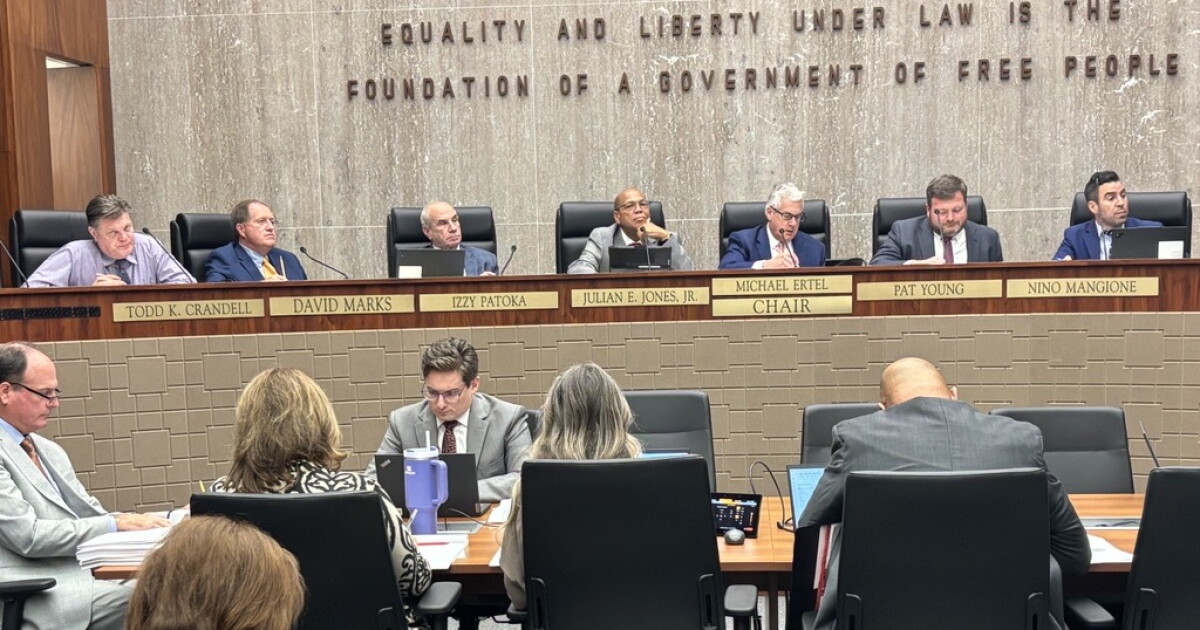
Baltimore County Council Approves Pay Hikes for Top County Officials
The Baltimore County Council is moving to significantly increase salaries for top county officials and future council members...