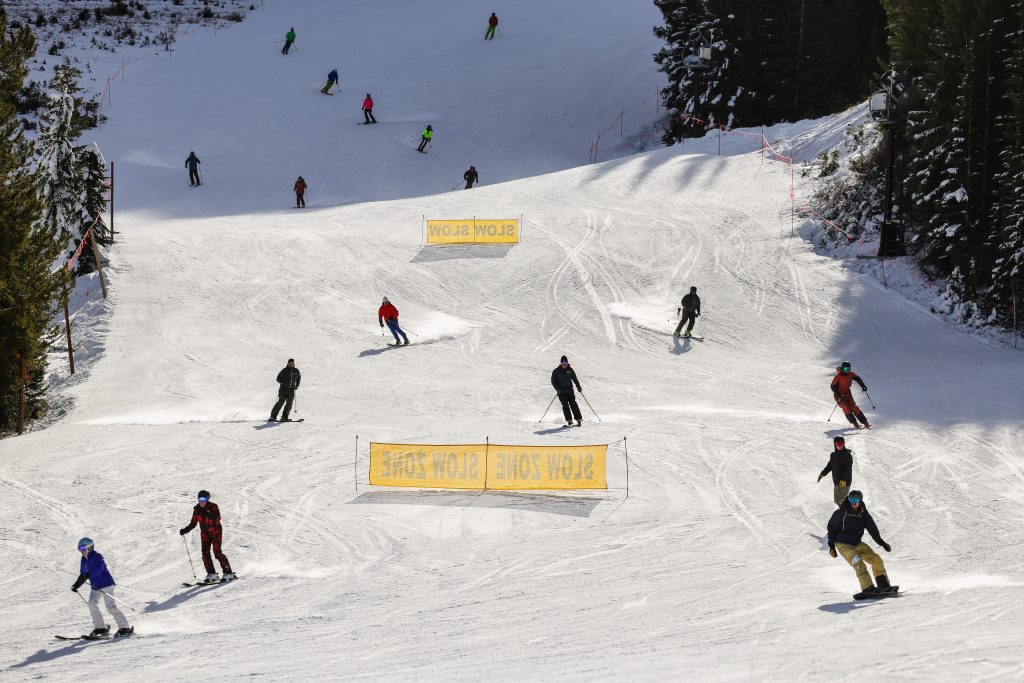
Kalshi traders put the odds of Colorado topping last season’s 10.5 million skier visits at 92%, a sharp reversal after drought cut visits roughly 25%.
Colorado ski areas recorded about 10.5 million skier days in the 2025-26 season, down approximately 25% from the prior year as record-low snowpack and warm temperatures gripped the state, the Vail Daily reported. Early storms at Vail and Beaver Creek have already improved conditions for 2026-27, and the federally regulated prediction market Kalshi now shows traders overwhelmingly betting on a rebound.
“The market prices are just determined by people trading against each other,” said Nelson Bellows, Kalshi’s director of hedging. “Everyone puts up their prices and then it kind of comes to a certain point, and that’s a forecast.”

Kalshi spokesperson Jacki McGavick said the platform’s midterm-election markets were 97% accurate and called the House seat count at 8:40 p.m. on election night. “With polls, a lot of the time, people just say what they want to happen,” McGavick said. “But with the prediction market, when you actually have to put money behind something, you do a little bit more research and you really think it through before you put money down.”
“So, with polls, a lot of the time, people just say what they want to happen,” McGavick said. “But with the prediction market, when you actually have to put money behind something, you do a little bit more research and you really think it through before you put money down.”
“People are a lot more careful espousing their beliefs when they’re backing them with money,” McGavick added. “(With) all the people trading and the wisdom of the crowds, it produces a more accurate result, we find,” McGavick said.
Bellows said restaurants, hotels and property owners in ski towns are actively trading snow contracts — cumulative December snowfall, pre-Christmas totals, seasonal accumulation — because a bad winter “drops off a cliff and so does business around the town.” Utility companies have also used Kalshi to hedge against extreme heat threatening power grids. “We’ve seen utility companies hedge against super high temperature threat to grids,” Bellows said.
“We’ve seen really all sorts of companies that can obviously have their economic impacts tied to weather.” Bellows said the platform can create markets on cumulative precipitation for droughts, consecutive heat days above a threshold, and economic indicators such as inflation, tourism, gas prices and diesel prices.
“We can basically create a market on most anything. We could do consecutive heat days above X threshold. We could do all sorts of these weather markets for sure.”
Vail Resorts has not yet joined them. CEO Rob Katz told Semafor in July he remained skeptical of prediction markets, and Bellows acknowledged the company previously said the markets lacked sufficient development. “Now they really are,” Bellows said. “We have liquidity and can originate markets around their needs.”
Kalshi withdrew from Utah this week amid mounting criminal and civil litigation. Colorado has taken a more cautious stance, urging the CFTC to recognize state authority over such markets. The platform remains active in Colorado but declines to list wildfire contracts. “Someone could go and commit arson and we would never want to encourage that,” McGavick said.
Asked whether a market might emerge on the Vail Resorts board proxy fight, Bellows said he had not heard of one but added, “We’re always looking for ideas.” “I grew up in the Northeast, so there’s a couple mountains in the Northeast that are (hedging) as well,” Bellows said. However, Kalshi maintains the privacy of its traders.

FAMU Volleyball Signs Azaria Ehima, Tamarria Mitchell to 2027 Class
Florida A&M volleyball added two players to its 2027 signing class Wednesday when head coach Gokhan Yilmaz announced...

Georgia Hunter Airlifted After 20-Foot Tree Stand Fall, 23 Hours Stranded in Woods
A deer hunter was airlifted after spending nearly 23 hours stranded in the woods following a 20-foot fall...

No. 5 Sacramento State Edges CSU Bakersfield 25-21 in Opening Set
No. 5 Sacramento State edged CSU Bakersfield 25-21 in the opening set of their women's volleyball match on...

AI Tools Shift Competitive Edge to Imagination, Entrepreneur Column Argues
AI tools are handing powerful capabilities to individuals, shifting the competitive edge toward imagination rather than technical execution,...