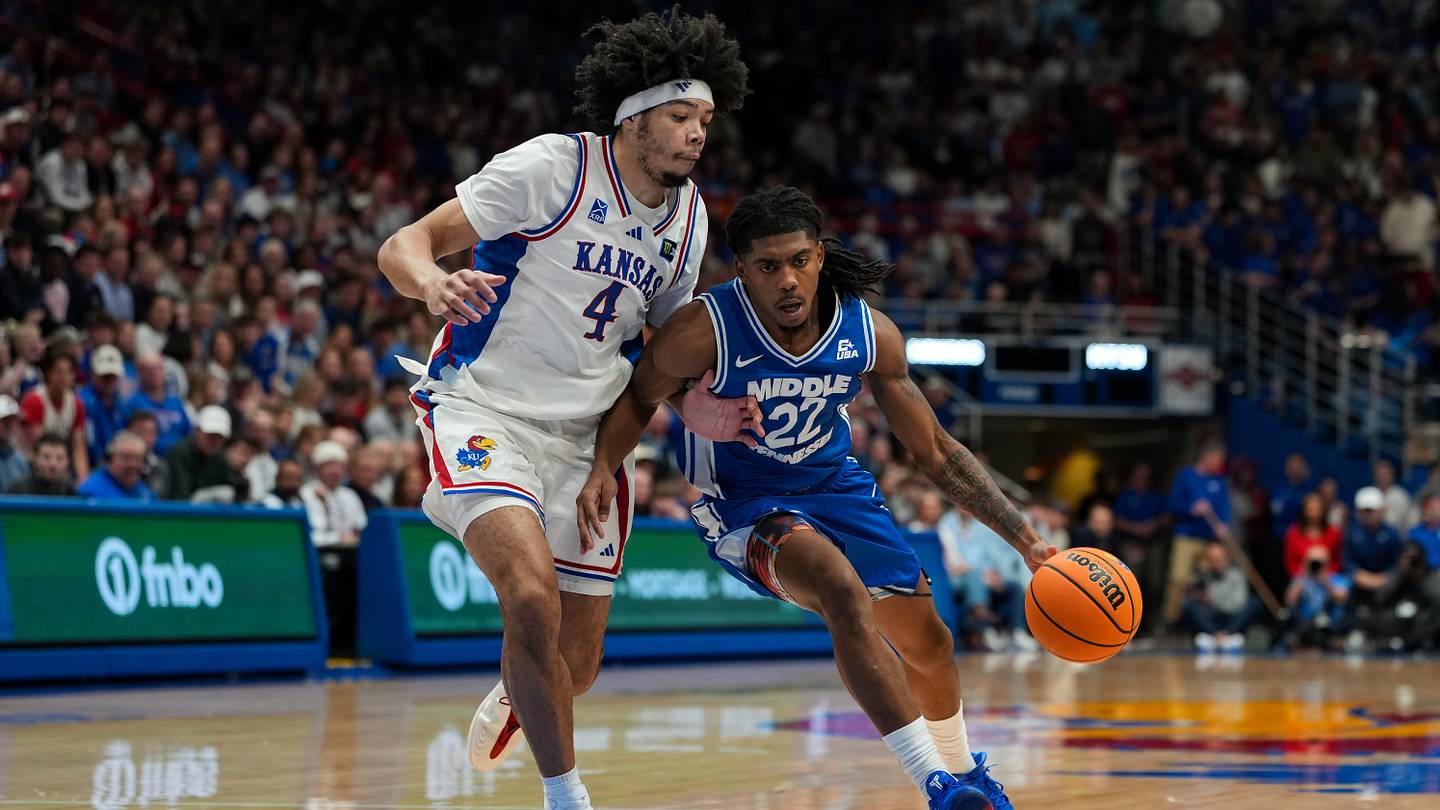
For a Bill Self-led Kansas basketball team, the start of the 2026-27 season has been defined by a stark, uncomfortable statistical reality. While the Jayhawks have secured two early regular-season victories—including a dominant 89-45 thrashing of Middle Tennessee State on November 6—the team’s performance at the charity stripe has become a glaring liability. According to reporting from Sports Illustrated, Kansas has connected on just 28-of-52 free throw attempts to open the campaign, a 53.8% clip that sits in the bottom 20 of the nation.
This is not merely a slump; it is a fundamental departure from the standard set by last year’s squad, which famously shattered the program’s single-season record for free-throw accuracy. For a roster that many analysts consider one of the deepest Bill Self has ever managed in Lawrence, the inability to convert easy points is a luxury a national title contender can ill afford.
The Arithmetic of a Modern Taboo
In an era where college basketball scoring is trending at historic highs, leaving points on the table is more than just a coaching frustration—it is an efficiency crisis. The Jayhawks’ current struggles present a paradox: the team is clearly capable of drawing contact and earning trips to the line, yet they are failing to capitalize on the resulting opportunities. The primary concern lies in the fact that this is a team-wide trend rather than an isolated issue.
Through two games (both against cupcake teams at home), Kansas is 28-for-52 (54%) at the free throw line. Tyran Stokes being 8-for-14 is the big story, but of the guys that figure to play prominent minutes, only Melvin Council (3-for-4) is shooting above 60% at the line so far.
While players like Melvin Council Jr. and Taylen Kinney have managed to shoot above 70% from the stripe, the rest of the rotation is dragging the team average into dangerous territory. Tyran Stokes, who commanded a high volume of trips to the line during the preseason, is currently converting at just 57.1%. When a team relies on a downhill, aggressive offensive approach, the free throw line serves as the safety valve for that strategy. If the shots don’t fall, the entire offensive identity loses its leverage.
History vs. Current Personnel
There is a segment of the fanbase holding onto the hope that these early-season figures are a statistical anomaly destined to correct themselves. However, a closer look at the roster suggests the problem may be more structural. As Sports Illustrated noted, several key contributors have established career-long patterns of inefficiency at the line. Players such as Trey Kaufman-Renn (62.7%), Christian Reeves (62.2%), and Dennis Parker Jr. (61.7%) have historically struggled in this department, suggesting that significant improvement may be difficult to engineer over the course of a single season.
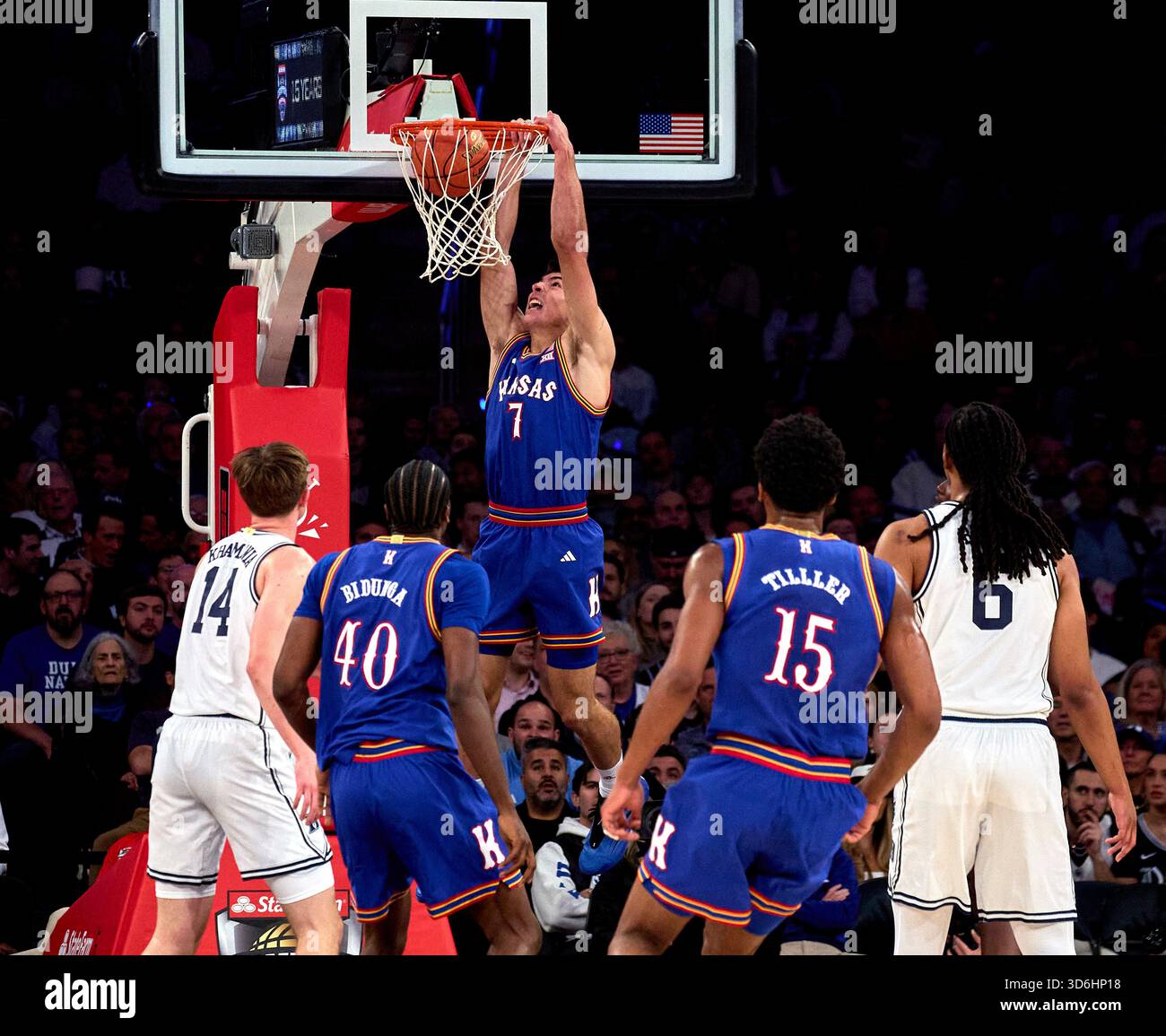
To put the stakes in perspective, even the 2022-23 national championship team recognized the necessity of basic competence, finishing the season at a 72.0% mark. While the current roster is not required to reach the 80% threshold to remain competitive in the Big 12, the current 53.8% rate is unsustainable for a team with championship aspirations. The coaching staff is banking on veterans like Tre White and Leroy Blyden Jr.—both of whom carry lifetime percentages above 75%—to stabilize the team’s overall output.
The Looming Test in the Champions Classic
The urgency of the situation is compounded by the schedule. Having faced only lower-level mid-major opponents at Allen Fieldhouse thus far, the Jayhawks have not yet been forced to win a game in the margins. That changes next week when Kansas faces Kentucky in the Champions Classic. In a high-stakes, neutral-site environment against an elite opponent, every missed free throw carries the weight of a potential tournament-defining loss.

The question remains: can Bill Self, a coach who has navigated these exact shooting woes with past rosters, force a mechanical or psychological adjustment before the competition level spikes? The team’s ability to refine their form and maintain composure under the bright lights of the Champions Classic will likely dictate whether this early-season weakness is a manageable hurdle or a fatal flaw that limits the ceiling of this talented group.
Related reading

Warm Winds and Rising Temperatures Hit Northern Rockies This Weekend
Billings Weather Shifts Toward Unseasonable Warmth Through the Weekend Residents across the Billings area are bracing for a...

Jefferson City Parks Seeks New Operator for Capital Region Amphitheater
Jefferson City Parks Initiates Search for New Amphitheater Operator The Capital Region Amphitheater is entering a period of...

San Jose Sharks lose 7-2 to Kings and drop six of last seven games
San Jose Sharks Struggle to Find Rhythm Amid Six-Loss Slide It is a difficult reality when a 4-1...
Chuck Jones used realistic animation for Michigan J. Frog
On December 31, 1955, moviegoers across the United States witnessed a debut that defied the conventions of mid-century...