
The Annapolis/Bremerton foot ferry remains docked indefinitely, a casualty of a mechanical failure that has exposed the fragility of the region’s hybrid-electric maritime fleet. Kitsap Transit suspended the service on October 22 after the M/V Waterman—a vessel once hailed as a technological milestone for the Pacific Northwest—suffered a critical propulsion system breakdown.
For commuters who rely on this waterborne link, the suspension represents more than a mere scheduling headache. It forces a reliance on alternative routes, specifically the Port Orchard/Bremerton crossing, where Kitsap Transit has been forced to shift resources to accommodate the influx of displaced passengers.
The Battery Dilemma
When the Waterman entered service in 2019, it was the first hybrid-electric commercial passenger ferry in the region. Its design utilized two battery banks, each consisting of seven water-cooled lithium-ion batteries, to power the vessel’s propulsion system. According to a release from Kitsap Transit marketing and public information director Sanjay Bhatt, the agency’s investigation traced the failure to one of these on-board batteries.
The situation turned into a logistical dead end when the repair facility deemed the battery damaged beyond recovery. Because the original manufacturer has exited the market, the agency has been unable to source a replacement that meets the specific software and hardware requirements of the Waterman’s unique propulsion system. This leaves the vessel, which features no direct connection between its diesel generators and propellers, effectively stranded.
Managing the Commuter Pipeline
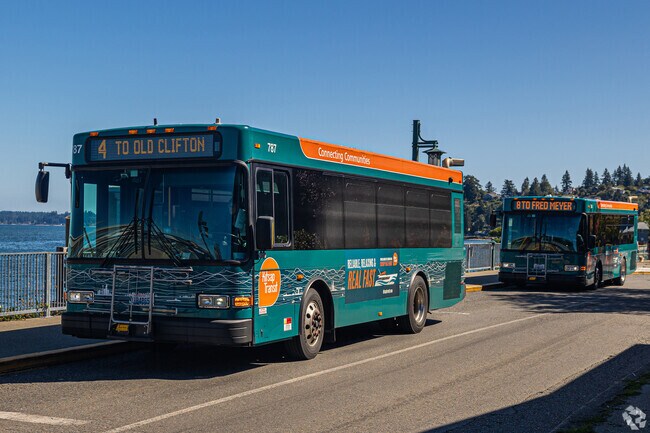
To mitigate the impact of the suspension, Kitsap Transit has increased the frequency of sailings on the Port Orchard/Bremerton route. However, this fix is temporary and carries its own looming deadline. The Admiral Pete, the current workhorse of the Port Orchard route, is scheduled to head to dry dock in mid-January for mandatory U.S. Coast Guard maintenance. Once that work begins, the agency will be forced to operate the Carlisle II on the route with no backup vessel available.

Agency officials are currently navigating a narrow path to restore service. They are working with a shipyard to expedite maintenance on the Carlisle II in hopes of bringing it into service by December. Additionally, the agency is scouting for commercial passenger vessels to charter that can meet their specific operating requirements.
We’re in discussion with Glosten, the naval architecture and marine engineering firm that designed Waterman, on a path forward for the one-of-a-kind vessel.
The reliance on such specialized, custom-engineered technology presents a stark lesson in the risks of early-adopter infrastructure. While the shift toward electric and hybrid propulsion is a central goal for modern transit agencies aiming to reduce their carbon footprint, the lack of secondary markets for proprietary marine components can leave agencies with little recourse when parts fail. As Kitsap Transit continues talks with Glosten to determine the future of the Waterman, the daily commute for those crossing the water remains subject to the limitations of a fleet currently running at its absolute maximum capacity.

Virginia Morales Cedeño Obituary: A Legacy of Family and Passion
Virginia Morales Cedeño: A Life Defined by Family and Community Virginia Morales Cedeño, whose life spanned nearly a...

Phil Scott Victory Highlights Why Pre-Election Polls Failed
The 14-Point Discrepancy in Vermont’s Gubernatorial Race When the final ballots were tallied on Tuesday, the results in...

Senfronia Thompson Claims Enough Votes to Become Texas House Speaker
A Historic Shift in the Texas House State Rep. Senfronia Thompson, a fixture of the Texas Legislature since...

Marsha Blackburn wins Tennessee governorship with 45.5% of vote
A Victory in the Reddest State That Felt Like a Warning The election night party for U.S. Senator...