
A University of Kansas professor and Wichita native played a key behind-the-scenes role in shaping Netflix’s hit adaptation of “Little House on the Prairie.” Robert Warrior, the Hall Distinguished Professor of American Literature and Culture at KU and a citizen of the Osage Nation, served as a story consultant for the series. Viewers can also spot him onscreen, making a brief appearance as an extra in one episode.
The adaptation quickly found a broad audience, ranking as the No. 1 most-watched program on Netflix during the week of its July 9 premiere. The project represents an opportunity for cultural reflection that reaches beyond entertainment, as Warrior hopes audiences will question what they see when engaging with historical narratives.
A Role in Story and on Screen
Robert Warrior both consulted for the new “Little House on the Prairie” series and appeared as an actor in an episode. In his consulting role, he worked to ensure the production accurately and authentically portrayed the Osage Nation. I read versions of every script of the eight episodes before they got sent to Netflix for final approval,
Warrior said. I had a good relationship with the showrunner, Rebecca Sonnenshine, and I felt like I was adding something to the process.
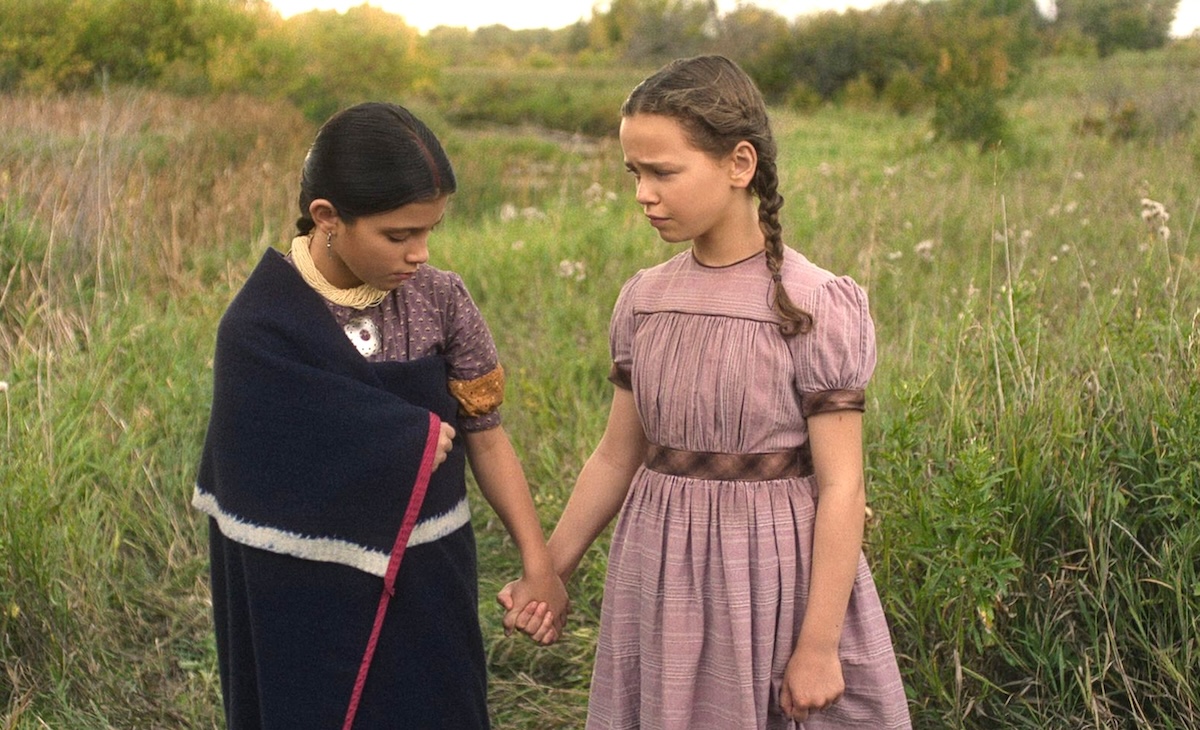
Filming of “Little House on the Prairie” began last summer in Winnipeg, Canada. Warrior spent five days there, including three on the set. Producers credited him as a “Special Skills Extra,” placing him into episode seven of the eight-part series. He portrays a member of the entourage of Osage leader Governor Joe, who is played by Talee Redcorn.
Balancing History with Modern Representation
The new adaptation faced the challenge of balancing historical accuracy with modern expectations for diverse representation while delivering a mainstream Hollywood production. They were interested more in my perspective. If I have any sort of creative talent in this process, it is in fixing story problems,
Warrior explained.
He described the narrative focus, noting In our series, the railroad industry people are trying to flood the zone with settlers so that they will be able to get easement through the Osage Reservation. The easiest way to do that is to get rid of the Osage Reservation and have it open for settlement. So the railroad puts up fliers in Northern states that say, ‘Free land in Kansas.’
A Connection to the Project
Warrior became involved with the project through Nicole Harjo, a senior vice president for development at Paramount Studios, who was specifically looking for an Osage consultant. She produced ‘13 Reasons Why’ on Netflix. I have kids who are of the age who watched the show when it came out. I found it to be really compelling,
he said.
His relationship to the original stories was complex. I grew up in Kansas, so I knew the books pretty well, not through my own reading of them but by the girls in my schools reading them. It was something that was definitely part of my social landscape,
Warrior recalled. On the one hand, I enjoyed Laura Ingalls Wilder’s empowering tales about her frontier family. On the other, I was uncomfortable with their portrayal of the Osage Nation.
Related reading

Big Red Holiday Ornaments Installed in Lansing
Downtown Lansing’s holiday season officially began Thursday morning with the installation of the iconic big red holiday ornaments...

Pennick Leads Navy Past Delaware State 66-60
Navy Edges Out Delaware State 66-60 in a Battle of Early-Season Form ANNAPOLIS, Md. — A gritty, back-and-forth...
Celtics Hold off Bucks Rally for 109-102 Win
Derrick White Seals the Deal as Celtics Hold Off Bucks Rally The Boston Celtics survived a furious Milwaukee...
Cincinnati Volleyball travels to Kansas for Big 12 Matches
Cincinnati volleyball travels to Manhattan, Kan., to face Kansas State on Friday, Nov. 6, at 6 p.m. ET...