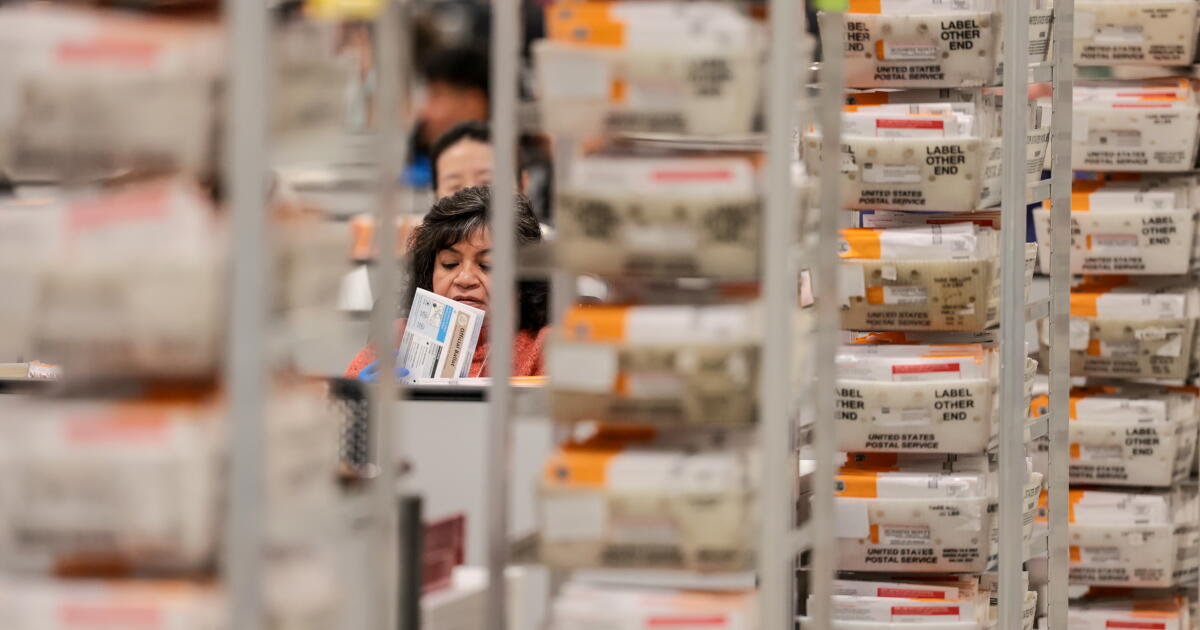
Los Angeles County officials have successfully accelerated their vote-counting operations for this month’s midterm elections, a move largely prompted by intense scrutiny from the Trump administration.
One week after polls closed on November 3, the county had processed approximately 99% of its nearly 3.2 million ballots, according to a statewide report on unprocessed ballots as of 5:41 p.m. Tuesday.
This rapid pace is faster than in previous election cycles. For context, the county had processed 96.9% of ballots a week after the 2024 general election and only 73.3% at the same point in 2022. The current efficiency is being viewed by election observers as a functional rebuttal to claims of systemic delays in California’s electoral process.
Investments and Infrastructure
The operational shift was supported by $29 million in state funding allocated for equipment, staffing, and voter education, with $6 million directed to Los Angeles County. These resources allowed the county to transition to around-the-clock ballot counting and acquire a third mail ballot processing machine.
L.A. County Registrar-Recorder/County Clerk Dean Logan said that the success was not just about recent funding, but also the culmination of years of institutional preparation, specifically the opening of a new $10 million, 144,000-square-foot processing facility in 2024.
“And even on election day, we had to stop processing vote by mail ballots so that we could process the ballots coming in from the vote centers,” Logan said. “Now we have a space that is designed and — provided we have the resources to staff it — we can keep those operations going on simultaneously.”
The Pressure of Federal Scrutiny
The drive to modernize California’s counting procedures follows a series of unfounded claims made by President Trump after the June primary. Trump alleged on social media that delays in vote tabulation were evidence of electoral interference, stating, “Why the vote counting DELAY???”
These comments were accompanied by a broader, coordinated effort by the administration to exert federal control over California’s voting rules, including mandates for stricter voter ID requirements and the segregation of specific ballots.
Kim Alexander, president of the nonpartisan California Voter Foundation, described the current situation as remarkable, given the high turnout and the complex nature of the state ballot.
“I feel this vote count in L.A. and across the state is remarkable in that it appears to be going smoothly and in L.A. clearly very efficiently, but it’s also remarkable given all of the hurdles that we had to overcome to conduct this election,” Alexander told the Los Angeles Times.
NEW: With Trump escalating attacks on free and fair elections, @CAGovernor Gavin Newsom just sent a letter to election officials in all 58 counties — thanking them and urging rapid, accurate counting to protect confidence in the results. pic.twitter.com/97FjAdmy2F
Judicial Defense of Local Process
The federal efforts to intervene in California’s election administration faced consistent pushback in the courts. The Supreme Court rejected attempts by the Trump administration to halt the counting of 20,000 ballots that federal officials alleged could be from noncitizens. Prior to the ruling, the Justice Department had sent letters to county officials threatening criminal prosecution if those ballots were included in the count.
Logan emphasized that the judiciary was central to preventing what he characterized as potential “chaos” during the election. Had county officials been required to segregate the flagged ballots in the final days of the cycle, the administrative burden would have disrupted the entire process.
Looking Toward 2028
While the current results show high efficiency, officials warn that the stability of the system remains contingent on continued investment. The state’s unique electoral framework—which includes extensive vote-by-mail options, a post-election grace period for postmarked ballots, and a "curing" process for signature discrepancies—requires much labor to manage accurately.
As the administration continues to focus on California’s election procedures, the debate over federal versus state control remains active. Logan said that the county should anticipate sustained external pressure ahead of the 2028 election cycle. “We will continue to be a target of the administration,” Logan said.
Keep reading

Missouri School Funding Lags Despite Lottery and Casino Revenue
Missouri's public schools are facing budget cuts despite hundreds of millions of dollars flowing into the state from...

South Dakota Women’s Basketball Defeats Creighton 54-49
Creighton women’s basketball hit a wall in Sioux Falls on Wednesday, November 11, falling 54-49 to South Dakota...

MS GOP Chair Mike Hurst Congratulates Scott Colom on Senate Win
Mississippi Republican Party Chairman Mike Hurst congratulated Senator-elect Scott Colom on Wednesday following his victory over incumbent Cindy...
BMI Promotes Shannon Sanders to AVP, Creative, Nashville
BMI is promoting Shannon Sanders to Assistant Vice President, Creative, Nashville, changing the organization’s leadership in one of...